
Artificial intelligence (AI) and machine learning (ML) technologies have revolutionized various industries, enabling businesses to automate processes, analyze vast amounts of data, and gain valuable insights.

Artificial intelligence (AI) and machine learning (ML) technologies have revolutionized various industries, enabling businesses to automate processes, analyze vast amounts of data, and gain valuable insights.
Get Started with Inf2 Instances The AWS Neuron SDK integrates AWS Inferentia2 into popular machine learning (ML) frameworks like PyTorch.

Pulumi Insights provides intelligence, search, and analytics over any infrastructure, in any cloud across your organization, leveraging the latest advances in generative AI and Large Language Models (LLMs). 🧠

Auto-GPT envisions a future where autonomous AI-driven tasks are the norm, achieved by chaining together Large Language Model (LLM) thoughts. As tasks are accomplished through a chain of thoughts, each
As artificial intelligence becomes a larger part of our world, it’s easy to get lost in its sea of jargon…. [time-brightcove not-tgx=”true”] Whether you’re a complete beginner or you already know your AGIs from your
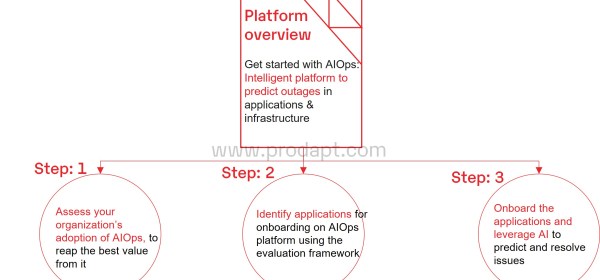
Infusing artificial intelligence capabilities into IT operations ( AIOps ) can raise efficiency through automation, improve security and make a significant impact in warding off downtime.
Machine learning companies have emerged as key players in enterprise IT over the past few years…. Machine learning capabilities are baked into many different kinds of enterprise software.

Now, with the recent addition of ChatGPT to Azure OpenAI Service as well as the preview of GPT-4, developers can build their own enterprise-grade conversational apps with state-of-the-art generative AI to solve
It’s a convenient user interface built around one specific language model, GPT-3.5, which has received some specialized training. Maybe it’s surprising that ChatGPT can write software, maybe it isn’t; we’ve had
Amazon Web Services provides a host of AI solutions, like facial recognition, detecting online fraud, identifying data anomalies, analyzing images, etc, that are helpful for end-users as well as large enterprises.
While the recently announced new Bing and Microsoft 365 Copilot products are already powered by GPT-4, today’s announcement allows businesses to take advantage of the same underlying advanced models

AIaaS provides out-of-the-box platforms and is easy to set up, making it simple to test out various public cloud platforms, services and machine learning (ML) algorithms . AIaaS platforms enable organizations to build
Deployment resource group – A deployment resource group hosts private Azure DevOps CI/CD agents (virtual machines) needed for the data management zone and a Key Vault for storing any deployment-related
This new wave of developers using Snowflake often requires more flexibility in the underlying compute infrastructure to unlock memory-intensive operations on large data sets such as ML training. With these