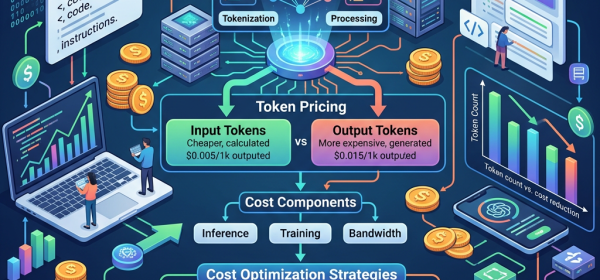
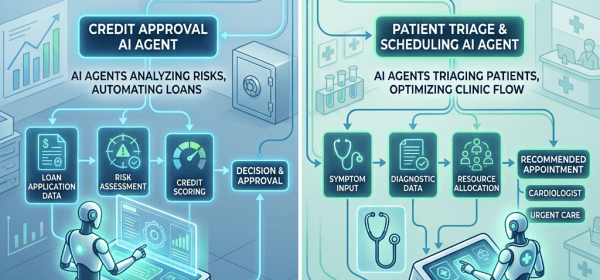
Person verifying ID card with AI access portal on computer screens

Anthropic’s Claude Rolls Out End-User Identity Verification

Anthropic is implementing a physical government-issued ID verification process for select users to enhance AI safety and address misuse risks. This process may impact user experience, leading to frustrations or migration to competitors. The company aims to secure operations, though challenges related to privacy, user attrition, and fairness in appeals remain.

Continue reading

AI agents overseeing enterprise security tasks including access control, multi-factor authentication, threat detection, and incident response within a governance hub.

Non-human identity sprawl is agentic AI’s real risk

Non-human identities (NHIs) are increasingly prevalent in enterprise systems, yet their governance is often inadequate, creating security risks as agentic AI systems evolve. Organizations must adapt existing security measures, ensuring defined permissions, ongoing reviews, and effective monitoring. Proactive governance is essential to mitigate risks associated with deploying AI agents in business processes.

Continue reading

People outside Prague Congress Centre under SUSECON 2026 conference sign

SUSECON 2026: From Open Infrastructure To Operational Sovereignty

SUSECON 2026 in Prague highlighted SUSE’s focus on choice, sovereignty, and resilience in its infrastructure offerings. CEO Dirk-Peter van Leeuwen emphasized the importance of operational control amidst technical and geopolitical challenges. The launch of SUSE AI Factory showcased a commitment to responsible AI integration, while strategic partnerships aim to enhance market reach without sacrificing architectural independence.

Continue reading

Glowing digital brain with swirling data streams and network connections

A silent erosion of enterprise AI by data poisoning

The rise of generative AI is causing data environments to fill with synthetic content, risking “data poisoning” and leading to a phenomenon called “model collapse.” As AI models increasingly learn from their own approximations, performance degrades. To combat this, organizations must prioritize disciplined data governance and maintain high-quality, traceable training data.

Continue reading

Business team reviewing global operational risk and recovery status on screen

Why disaster recovery plans fail in geopolitical crises

Geopolitical tensions are prompting CIOs to reassess disaster recovery plans, particularly following recent conflicts involving Iran. Traditional approaches often overlook rare, cascading risks from such disruptions. Organizations need to enhance operational resilience through cross-functional collaboration, geographic redundancy, and proactive risk management, especially in light of increased cybersecurity and infrastructure vulnerabilities.

Continue reading

A woman signing a document titled Agreement for AI Research, Development, and Deployment

The AI contract gaps the Google-Pentagon deal just made visible

Google has allowed the U.S. Department of Defense to use its Gemini AI models for classified work, raising concerns about the enforceability of contract restrictions against misuse. Experts urge a shift from static contracts to ongoing governance to effectively manage AI’s evolving nature, emphasizing the need for real-time monitoring and clear data handling practices.

Continue reading

Comparison infographic showing agentic AI growth with increasing graph and innovation versus cost reduction with decreasing graph and efficiency tools.

Building an agentic AI strategy that pays off – without risking business failure

The article discusses the strategic choices organizations face with agentic AI: a safe option for cost reduction versus a daring approach for substantial growth. It highlights the risks of implementation, including rising costs, unpredictable results, and potential operational failures. A cautious, structured approach with clear goals and governance is recommended for successful deployment.

Continue reading

Diagram showing IT transformation from outdated systems to future-ready IT with key pillars like cloud infrastructure, DevOps, analytics, cybersecurity, and agile culture leading to increased efficiency and innovation

In An AI World, High-Performance IT Is Mandatory For Business Success

Technology leaders face disruptive challenges requiring a transformative approach to IT. High Performance IT (HPIT) emphasizes alignment with business goals, building trust, and adapting to change for tangible outcomes. By enhancing core capabilities, IT can foster business confidence, ensuring sustained investment and navigating evolving market demands effectively for long-term success.

Continue reading

People collaborating in a conference room with laptops and a screen showing a Microsoft Teams meeting and strategy data

Microsoft Unveils AI-Powered Innovations Across Microsoft Teams And SharePoint: Highlights Of The M365 Community Conference 2026

Attending the Microsoft 365 Community Conference in Orlando, I noted key innovations focusing on AI-powered collaboration, particularly through M365 Copilot, Teams, and SharePoint. Microsoft aims to enhance user experiences with new AI features, including the evolving Teams Facilitator agent and improved SharePoint governance. Forrester clients are encouraged to engage for further insights.

Continue reading

Bar chart showing IT budget allocation from 2021 to 2025 with rising costs in AI, software licenses, infrastructure, and core IT operations

The AI spend hangover companies didn’t plan for

As global IT spending increases, organizations shift focus to the rising costs of AI, now consuming significant IT budgets. With untracked usage of AI tools, hidden risks emerge, leading to data breaches and inefficiency. Companies must prioritize governance, assess AI tool usage, and foster flexibility to manage costs effectively and mitigate risks.

Continue reading

Speaker on stage at AI cloud platform conference with large screens and audience

Google Cloud Next 2026: The End Of The AI Pilot Era

Google Cloud Next 2026 introduced the Gemini Enterprise Agent Platform, consolidating various AI tools into a unified framework for managing enterprise agents. Key announcements included expanded cloud capabilities, enhanced developer tools, and the introduction of the Agentic Data Cloud for AI-driven processes. Google emphasized AI’s value in enterprise success, showcasing notable client use cases.

Continue reading

Woman using empathy chatbot app on tablet while sitting on a couch

Could AI Tools Actually Help Us Feel Better?

Chatbots are increasingly being used for emotional support, potentially transforming mental healthcare as over one billion people live with mental health disorders. Though concerns exist regarding AI’s impact, early evidence suggests that structured interactions with chatbots can enhance well-being and accessibility, particularly for underserved communities, sparking interest in traditional therapy.

Continue reading

1 5 6 7 8 9 57