
Creative solutions that could recreate Silicon Valley in Africa and Asia. Loading the Elevenlabs Text to Speech AudioNative Player… While exact estimates vary, the size

Creative solutions that could recreate Silicon Valley in Africa and Asia. Loading the Elevenlabs Text to Speech AudioNative Player… While exact estimates vary, the size

We attended IBM’s APAC Analysts Insights event in Bangalore this week. The event surfaced a thesis worth examining: digital sovereignty, the rise of agentic AI,
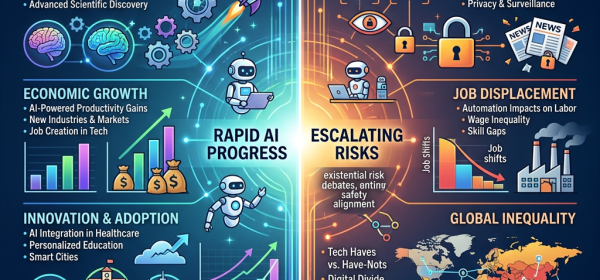
The 2026 Stanford AI Index reveals a divide between experts and the public regarding AI’s impact, with experts showing optimism while the public fears job losses. Key findings include the US dominance in AI data centers and reliance on Taiwan’s TSMC for chip manufacturing. AI capabilities vary significantly, leading to mixed perceptions.

Microsoft has enhanced its Copilot AI features, integrating them into enterprise workflows. Concurrently, Google is embedding AI into Chrome, turning it into a proactive tool. This advancement highlights security challenges for CIOs, as AI transforms data interactions in ways traditional security measures can’t track, necessitating a new approach to managing AI-related risks.

Application security testing (AST) is evolving amid a crowded market where detection is no longer sufficient. The rise of AI-driven coding presents new risks, necessitating a shift to Agentic Development Security (ADS), which emphasizes continuous, autonomous protection of AI-powered software. The focus is on risk understanding and actionable findings, highlighting the need for integrated security solutions that adapt to agentic development.
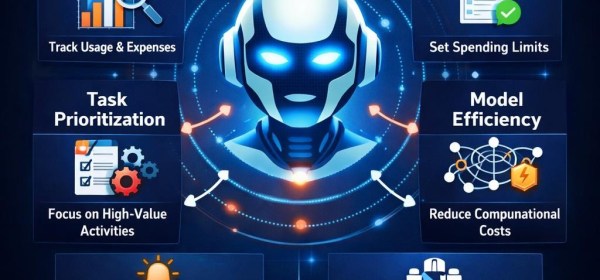
The rapid growth of the agentic AI software market requires enterprises to manage costs effectively as they allocate budgets to AI agents. Key cost categories include software pricing, token fees, infrastructure, and IT management. Companies can control expenses by selecting flexible platforms, predicting costs, and monitoring usage, ensuring AI value surpasses spending.

Murray Cantor, a veteran in defense systems and IT, advocates for a reevaluation of how organizations manage technical debt, framing it as “technical liability.” Through conversations with Charles Betz, he emphasizes the importance of addressing uncertainty as a valuable investment opportunity, suggesting organizations need better mathematical tools for informed decision-making.
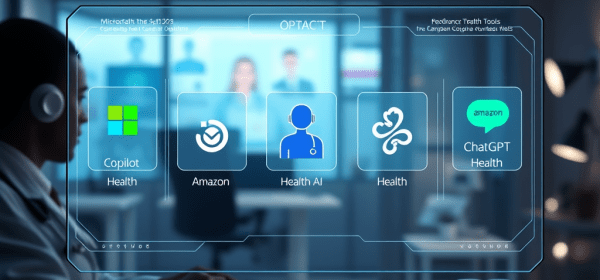
Microsoft has launched Copilot Health for managing medical inquiries, joined by Amazon’s Health AI and OpenAI’s ChatGPT Health. While demand for such tools is high due to accessibility issues, experts note that rigorous independent evaluations are essential for safety. Current studies reveal potential risks and limitations in providing accurate medical advice.

“What coding?” Vibe-coding is the cute term for using genAI systems to create, debug, or update programming code. People can use it without knowing how to write a line of code

OpenAI’s Sora application was recently shut down, along with its $1 billion partnership with Disney, highlighting the fragility of AI products despite vendor stability. As AI markets evolve, CIOs face new challenges, including the risk of dependency on specific tools. Experts urge resilience through modular design and the careful selection of AI models.

AI vendor lock-in poses significant risks for organizations, yet many overlook this dependency amidst their reliance on AI models. Companies must prioritize AI continuity planning, including contract reviews, performance baselines, and switchover procedures. Without such strategies, businesses may face disruptions that could compromise their operations and strategic objectives.

Software development is shifting to “vibe coding,” where natural language prompts generate code via AI. This boosts productivity but creates security risks, as organizations struggle to fix vulnerabilities quickly. The lack of oversight leads to technical debt and critical gaps. To succeed, firms must prioritize security alongside innovation.

At NVIDIA GTC 2026, the focus shifted from faster chips to a comprehensive AI infrastructure strategy. Jensen Huang emphasized vertical integration across hardware, software, and data, aimed at transforming AI from episodic tasks to sustainable infrastructure. The concept of “AI factories” emerged as a central theme, highlighting operational discipline and the necessity for dedicated environments in AI deployment.

The future of AI revenue will largely come from private models rather than public ones, which currently dominate attention and investment. Trust and data security drive companies to develop private AIs tailored to their needs. Public models will still play an important role in innovation and general knowledge but will be overshadowed by the private model’s business potential.