Claude Code Security Causes A SaaS-pocalypse In Cybersecurity

The cybersecurity market faced a significant shift on February 20, 2026, after the launch of Claude Code Security, causing major companies like JFrog and Okta to drop in value. AI-driven tools are reshaping application security by enhancing vulnerability detection while threatening traditional methods. Enterprises must reassess their security strategies amid evolving AI risks.
Continue reading

ChatGPT Health: What You’re Meant to Use the AI for, and Everything You Should Avoid

OpenAI’s ChatGPT Health, launched in January 2026, is a dedicated feature for health-related inquiries within ChatGPT, designed to assist users in understanding medical information without replacing professional advice. It utilizes advanced AI models while adhering to stricter information guidelines, aiming to empower users in health discussions, albeit with crucial limitations.

Continue reading

Conductors to Orchestrators: The Future of Agentic Coding

AI coding assistants are evolving from novel tools to essential resources in software development. This shift introduces roles such as conductors, who manage single AI agents interactively, and orchestrators, who oversee multiple agents working concurrently. The transition emphasizes delegation, coordination, and strategic oversight while maintaining human creativity and judgment in coding processes.

Continue reading

Will AI Eat Your RevTech Stack?

The recent $285 billion selloff in SaaS shares raises questions about the relevance of seat-based RevTech in an era of AI. While some believe AI will replace jobs, others argue it will augment productivity. RevOps leaders should focus on designing flexible tech stacks that adapt to varied AI impacts rather than adopting rigid strategies.

Continue reading

SaaS As We Know It Is Dead: How To Survive The SaaS-pocalypse!

In early February 2026, SaaS companies experienced a dramatic sell-off, erasing over $1 trillion in market value due to fears of AI innovation disrupting traditional models. While investors anticipate a shift towards AI-native firms, the SaaS market will continue evolving, emphasizing the need for strategic adaptation and partnership amidst these transformations.

Continue reading

How Businesses Use AI Chatbots to Generate More Leads and Boost Revenue

AI chatbots have evolved into essential tools for businesses, transforming visitor interactions into active sales opportunities. By utilizing natural language processing and behavioral tracking, they engage users in real time, qualify leads, and drive revenue through upselling and personalized guidance, significantly enhancing conversion rates and optimizing sales efforts.

Continue reading

AI‑Assisted Coding Assistants in 2026: How They Speed Up Development Without Writing Full Apps

By 2026, AI-assisted coding assistants have evolved into essential tools for developers, automating repetitive tasks and generating code snippets while maintaining human oversight. They enhance productivity, allowing teams to onboard faster and improve code quality, though they come with risks like potential errors and over-reliance. The tools do not create complete applications but support design and architecture, marking a shift in software development dynamics.

Continue reading

Is SaaS dead — or just becoming AI?

The emergence of agentic AI has reshaped the narrative around SaaS, challenging claims of its decline. While SaaS isn’t disappearing, its role is evolving from systems of record to systems of action, enhancing data value and business transformation. CIOs and investors must focus on strategic data maturity to thrive in this changing landscape.

Continue reading

Slamming the door on AI-based cybersecurity threats

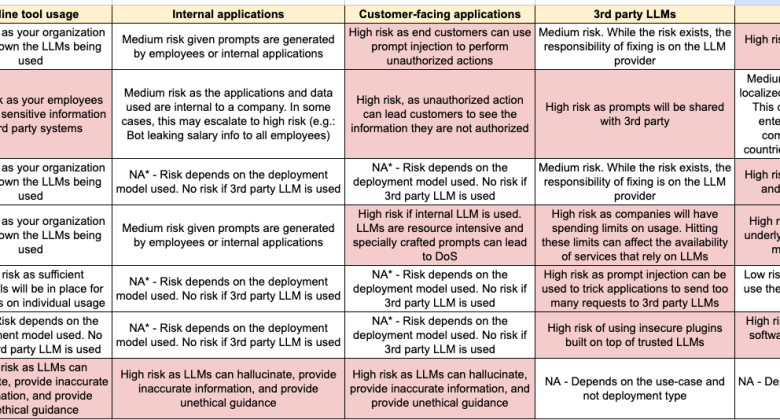
The emergence of AI poses significant cybersecurity challenges for CIOs and CISOs, including internal vulnerabilities from poorly governed AI use. As AI automation enhances attack capabilities, organizations must address data security, application risks, and user access management. Proactive measures like automated responses and employee training are essential to combat evolving threats, including deepfakes.

Continue reading

The SOC of the future: How teams can see, know and protect more

The modern Security Operations Center (SOC) faces challenges due to disjointed tools and overwhelming alert volumes, hindering effective threat response. Future SOCs should embrace Detection-as-Code, continuous validation, and unified operations, integrating offensive tactics to enhance security. Investing in these strategies will transform SOCs into resilient, proactive entities by 2026.

Continue reading

The Complete Guide to How Online Marketplace Systems Process Digital Transactions Securely

Online marketplaces are crucial in modern commerce, enabling transactions between multiple buyers and sellers. They employ complex payment processing systems to handle logistics, security, and compliance, including PCI DSS and PSD2 regulations. Advanced technologies like tokenization and real-time tracking enhance efficiency and trust, positioning payment processing as a strategic advantage for growth.

Continue reading

When earnings calls demand AI ROI, how can CIOs meet the challenge?

Earnings calls for tech companies are increasingly focused on AI ROI, as stakeholders demand tangible results from investments. CIOs face pressure to validate AI initiatives, transitioning from experimental enthusiasm to operational scrutiny. Effective communication of metrics and aligning AI projects with financial goals are crucial to maintaining support amid evolving expectations.

Continue reading

The crucial first step for designing a successful enterprise AI system

Mistral AI emphasizes the importance of selecting an impactful, strategic, and urgent use case for successful generative AI deployments. Their methodology involves collaborative workshops to identify optimal projects that can quickly deliver measurable outcomes. By co-designing tailored solutions, Mistral AI aims to transform organizations’ AI capabilities, ensuring sustainability and value.

Continue reading

AI coding is now everywhere. But not everyone is convinced.

AI-powered coding tools have rapidly evolved, promising increased productivity for developers. However, many face limitations, leading to skepticism about their actual benefits. While some tasks show efficiency gains, overall quality and maintainability suffer. Adoption persists despite disillusionment, raising concerns about job displacement and the diminishing skillset among developers.

Continue reading

Cyber experts warn AI will accelerate attacks and overwhelm defenders in 2026

Cybersecurity experts predict a transformative landscape in 2026, driven by AI. Attacks will escalate in speed and sophistication, potentially outpacing defenses. Autonomous systems will empower cybercriminals, leading to increased vulnerabilities, extortion, and ransomware. Organizations must adapt, balancing automation with human oversight to counter evolving threats effectively. AI’s impact is undeniable.

Continue reading

It’s time to revamp IT security to deal with AI

In May, a security breach exposed personal data of over 483,000 patients due to an unsecured database. A report revealed that 90% of organizations are unprepared for AI-related threats. Key threats include AI-driven social engineering, prompt injection attacks, and data poisoning. Companies must enhance cybersecurity strategies immediately.

Continue reading

Your Architecture Isn’t Ready For What Visual AI Is Becoming

Generative AI for visual content is rapidly advancing to deliver personalized, immersive experiences, but existing architectures struggle to keep pace. As businesses demand more from visual AI, challenges like latency, data management, and security risks arise. A modernized, multi-layered architecture is essential to support evolving requirements and ensure brand safety.

Continue reading

The Data-Centric Revolution: Simplicity and Complexity

The article explores the transition from simplistic to complex solutions in enterprise information systems, highlighting the dangers of oversimplification and the need for elegant solutions. It emphasizes the importance of addressing root causes of complexity, particularly within application schemas, and suggests that a data-centric approach can simplify systems and enhance understanding.

Continue reading

AI终究也需要请咨询顾问

许多AI公司面临着将AI深入融入企业运营的挑战,为此OpenAI和Anthropic与咨询公司合作,推动AI的广泛应用。调查显示,企业尚未充分利用AI,且咨询行业的模式正发生变化,愈加依赖基于成果的定价。科技的进步使得传统咨询面临潜在威胁。

Continue reading

Will 2026 be the year of data center restructuring?

Edge computing is rapidly evolving, prompting a reevaluation of data center strategies as we approach 2026. This shift towards decentralized micro data centers enhances IT operations, especially in areas like IoT and telemedicine. Challenges include standardization, container consistency, and security, particularly with the rise of zero-trust networks, requiring significant investment in new technologies.

Continue reading

IT hiring is under relentless pressure. Here’s how leaders are responding

As talent strategies evolve, companies must adapt to new workforce needs, offering meaningful benefits beyond traditional compensation. IT and HR collaboration is essential for effective recruiting and training. Organizations should prioritize clear career paths and foster a supportive culture, emphasizing skills over titles to enhance employee retention and engagement.

Continue reading

How Philip Morris International’s Outcome‑Driven EA Practice Won The 2025 Forrester EA Award In EMEA

Philip Morris International (PMI) established an AI Factory and deployed generative AI tools to 35,000 employees, leading to over 450 AI use cases, and winning Forrester’s 2025 Enterprise Architecture Award. Their Enterprise Architecture and Technology Transformation team prioritized governance, enabling scalable AI use with 40% faster value realization and enhanced employee engagement.

Continue reading

How On‑Demand AI Assistance Undermines Learning

Research indicates that on-demand AI assistance can hinder long-term learning by fostering over-reliance among students. While students benefit from immediate help, this reduces productive struggle necessary for skill development. A study with chess students found those with regulated AI support learned significantly more than those with unrestricted access, highlighting the importance of system design in education.

Continue reading

We Are All AI Immigrants Now: A New Land, A Proven Mindset

Jayshree Seth reflects on her immigrant experience in the U.S. and parallels it with navigating generative AI. She emphasizes the importance of the GRANT mindset—Grit, Resourcefulness, Adaptability, Navigation skills, and Transcendence—for success in this unfamiliar territory. Leaders can cultivate this mindset within their teams to thrive amidst uncertainty.

Continue reading

The Courage to Tackle Fear as a Leader

Leadership requires confronting fear by building a cohesive organization and maintaining a moral compass. Embracing diversity enhances decision-making and fosters resilience among employees. Trust, based on performance and integrity, is essential, as is the clarity of guiding principles. Ultimately, leaders should be remembered for their values rather than mere outcomes.

Continue reading

The Leadership Aspiration Gap

Leadership is facing a crisis as younger generations prioritize autonomy, meaningful work, and social impact over traditional roles. The current volatile environment deters many from aspiring to leadership, with only 6% of millennials and Gen Z viewing such positions as primary career goals. A shift toward hope-centric leadership is essential for attracting future leaders.

Continue reading

Tech nationalism is reshaping CIO infrastructure strategy

Tech nationalism is reshaping CIOs’ strategies as they navigate complex regulatory environments affecting data management. Vendors often conflate key concepts, complicating compliance. The rise of sovereign clouds offers data control but incurs higher costs and risks such as vendor lock-in. Future strategies must integrate geopolitical considerations to enhance business resilience.

Continue reading

Chief AI Officer on course-correcting when AI moves too fast

Rob T. Lee, chief AI officer at SANS Institute, highlights the challenges organizations face when rapidly adopting AI technologies. He emphasizes the importance of fostering a learning mindset and adapting workflows while being sensitive to existing team processes. Lee advocates for daily engagement with AI and promoting curiosity in technology to overcome resistance and drive progress.

Continue reading

1 2 3 1,099