Team monitoring network with alerts about AI agent flood and critical server loads

Agent AI Sprawl Nobody Owns

By 2028, Fortune 500 companies are projected to manage over 150,000 AI agents, up from fewer than 15 in 2025. This rapid growth creates “agent sprawl,” where agents proliferate without oversight or accountability, leading to governance challenges and security risks, exacerbated by fragmented protocols and uncoordinated usage across departments.


Continue reading

Neural network pipeline showing layered AI hallucination outputs and related failures

The Four Layers of AI Failure

AI failures often labeled as “hallucinations” can stem from various issues, including context-tracking, reasoning, and verification failures. Understanding these failures requires analyzing different layers: internal token generation, autoregressive trajectories, and external orchestration. Properly diagnosing the source of failure is crucial for improving AI performance and ensuring alignment with human goals.

Continue reading

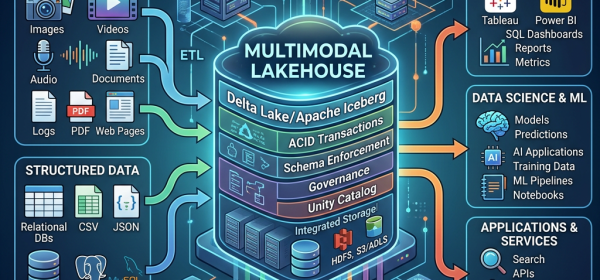
Diagram showing multimodal lakehouse architecture integrating structured and unstructured data with compute engines and data consumers

The Multimodal Lakehouse: Data Engineering’s Answer to AI’s Messiest Problem

The article discusses the growing imbalance between structured and unstructured data in enterprise environments, highlighting that unstructured data now constitutes 80-90% of new data. This shift necessitates the development of multimodal lakehouses that accommodate diverse data types, enabling AI-driven queries and proper governance, yet raises challenges in data management and classification.

Continue reading

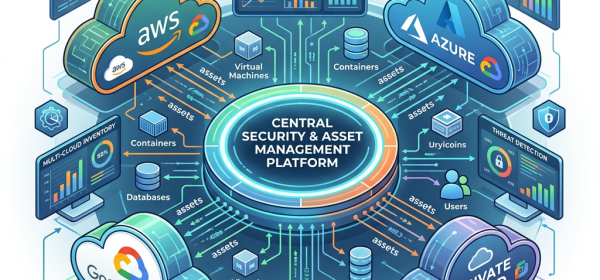
Diagram showing a central security and asset management platform connecting AWS, Azure, Google Cloud, and Private Cloud with assets flow and security features

How Enterprise IT Teams Are Using CMDB Tools to Tame Multi-Cloud Complexity in 2026

Managing multiple cloud environments without effective asset tracking poses significant security and operational challenges for enterprises. This guide details how engineering leaders can restructure their configuration management strategies to enhance visibility, eliminate configuration drift, and ensure compliance. The shift towards automated discovery and centralized management is crucial for success in complex, multi-cloud ecosystems.

Continue reading

Developer using multiple screens displaying DevOps pipeline and API testing dashboard with charts and build logs

How to Automate API Testing in CI/CD Pipelines

In the modern DevOps landscape, effective API testing is crucial as APIs are integral to application functionality. Automating API tests within CI/CD pipelines enhances bug detection early in development, preventing costly issues in production. With a significant market growth forecast, teams must prioritize API testing to safeguard user experience and revenue.

Continue reading

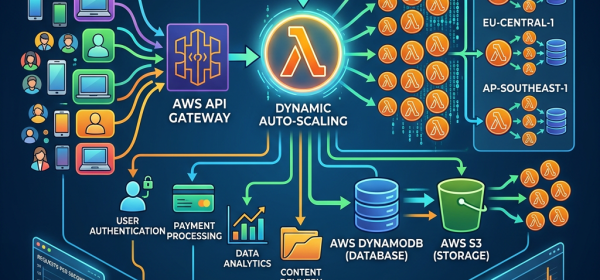
Diagram showing serverless SaaS scaling with AWS Lambda, API Gateway, DynamoDB, S3, and multi-region scaling.

Lessons learned from scaling to 1 million Lambda functions

This post details ProGlove’s journey in scaling a serverless SaaS platform from zero to over a million AWS Lambda functions across thousands of accounts. Key challenges included quota management, observability costs, and architectural optimizations. Emphasizing efficiency, the authors highlight lessons learned in automation, collaboration with AWS, and leveraging native services for operational success.

Continue reading

Diagram showing cloud infrastructure with centralized database syncing data with local databases at branch office, remote location factory, and regional office

Rediscovering RocksDB – Embedded Storage in Cloud-Native Applications

Cloud-native architecture discussions have focused on centralized services for data storage, revealing hidden costs in network latency and operational complexity. RocksDB, an embedded key-value store, mitigates these issues by allowing local data access within applications, enhancing performance for temporary states. While not a replacement for all databases, it emphasizes the importance of data locality in modern systems.

Continue reading

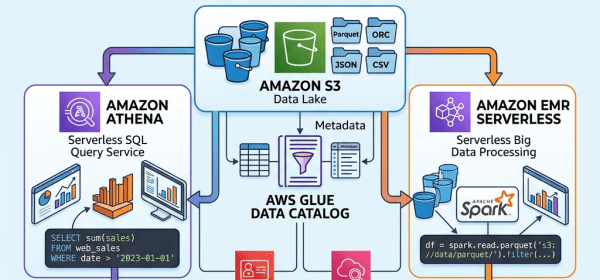
Serverless data analytics architecture with Amazon Athena, EMR Serverless, S3, AWS Glue, IAM, and CloudWatch

Serverless analytics pipelines using the Apache Spark engine in Amazon Athena

Building clusters for Apache Spark data processing is often burdensome for organizations due to high operational overhead and cost. This post introduces three integration patterns using Amazon Athena with Apache Spark, which offers a serverless environment for efficient data analysis, allowing teams to focus on analytics rather than infrastructure management.

Continue reading

Dashboard showing critical infrastructure AI governance with system status, risk scores, and alerts

IT Professional Weekly Wrap-Up — Week of June 29–July 4, 2026

This week’s roundup highlights the integration of AI into critical infrastructure, emphasizing the need for governance and control as adoption accelerates. Key updates include Cloudflare’s OAuth expansion, ChatGPT’s Lockdown mode, and insights on AI in DevOps. The focus remains on creating safeguards while leveraging AI’s potential effectively.

Continue reading

Two professionals collaborating on AI governance framework displayed on transparent digital screen

IT Professional Weekly Overview — Week of June 29–July 4, 2026

This week’s IT Professional coverage highlighted the gap between rapid AI adoption and necessary governance and operational practices. It emphasized the cultural barriers hindering AI’s workplace integration, the importance of implementing control measures for AI systems, and the need for rigorous verification in AI development. The overarching theme is the call for accountability in AI deployment.

Continue reading

Team analyzing AI demand forecasting and system metrics on large monitors in a high-tech workspace

IT Management Weekly Overview — Week of June 29–July 4, 2026

This week in IT Management highlights the transition of enterprise AI from pilot projects to full production. Key issues include budget management, infrastructure demands, and the need for employee engagement amid leadership enthusiasm. Additionally, advancements in chips and data infrastructure, along with regulatory challenges, test the industry’s ability to adapt and govern effectively.

Continue reading

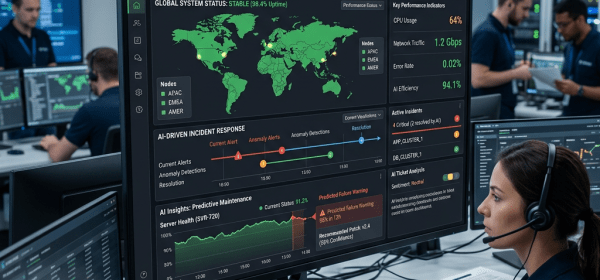
Dashboard showing global system status, AI-driven incident response, predictive maintenance, and performance metrics

IT Management Weekly Wrap-Up — Week of June 29–July 4, 2026

This week’s IT Management roundup highlights a shift in enterprise AI from experimentation to practical application, emphasizing the integration of AI in operations. Key themes include the need for robust AI infrastructure, cost management in AI deployments, and the importance of bridging the gap between executive enthusiasm and employee concerns regarding AI integration.

Continue reading

Business team discussing AI risks and opportunities in a conference room

Bridging the gap between leadership’s AI enthusiasm and employee pushback

A survey reveals that while executives see AI as beneficial for efficiency and innovation, many employees express concern over job security and its impact on work. This gap necessitates CIOs to engage with employees, address their fears, and foster a culture of transparency to effectively implement AI strategies without alienating staff.

Continue reading

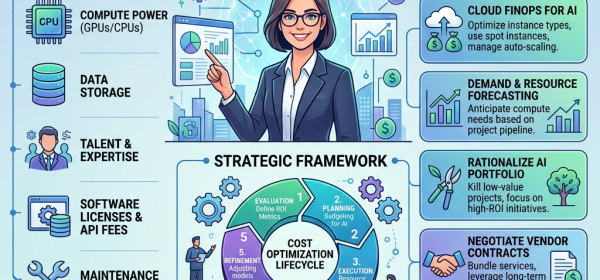
Infographic showing CFO managing AI costs strategy with cost drivers, strategic framework, and actionable strategies

You CAN Manage, Forecast, and Evaluate AI Costs

A former CFO outlines a financial approach to managing AI costs, emphasizing the need for strategic model selection, waste elimination, and prompt optimization. CFOs must focus on forecasting, measuring results, and linking spending to business outcomes. Despite AI’s costs, its potential ROI can significantly impact financial performance.

Continue reading

1 16 17 18 19 20 331