Two people looking concerned while discussing AI payment systems legal risks and user trust

AI Agents Can Buy, Hire, and Pay Other Agents — US Consumers Have No Dispute Rights When They Do

Five months after OpenAI introduced ChatGPT’s Instant Checkout, it was discontinued due to various operational issues, revealing challenges in consumer trust. Meanwhile, Amazon Web Services launched AgentCore Payments, signaling rapid infrastructure consolidation for AI agents. However, significant gaps in legal protection for consumers and transaction accountability remain, hindering broader adoption.


Continue reading

Person creating AI video ad for 'Pesk Pulse' shoes on computer

Vidu Claw AI Can Turn a Simple Text Prompt Into a Complete Advertisement

ShengShu Technology has launched Vidu Claw, an AI-powered platform designed to streamline video advertisement creation. It transforms simple text prompts into fully completed ads, automating the entire production process. Vidu Claw aims to reduce costs and time while eliminating the need for multiple tools, positioning itself as an innovative solution in AI marketing.

Continue reading

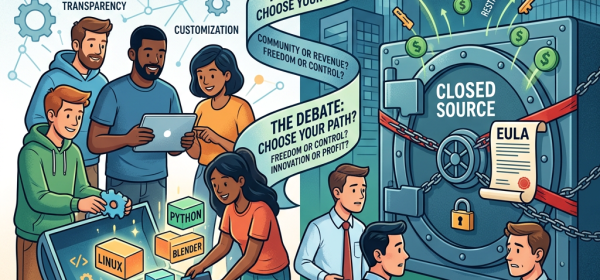
Open-source software collaboration with community and customization versus proprietary closed-source software with restrictions and fees.

Open-Source vs Proprietary Software: Key Differences, Pros, Cons, and Which One to Choose

The ongoing debate between open-source and proprietary software highlights their distinct characteristics. Open-source fosters community innovation and flexibility, while proprietary systems focus on stability and vendor support. Choosing the right software depends on individual needs, including customization, budget, and long-term support, often leading to hybrid approaches.

Continue reading

Futuristic data center with holographic AI agents managing network security and threats

AI agents push infrastructure beyond human-centric design

Autonomous agents are revolutionizing enterprise security and infrastructure, creating challenges as their machine-driven activities exceed human-centric designs. Organizations must adapt by embedding security directly into agent workflows and leveraging real-time behavioral analysis to combat emerging threats. This paradigm shift necessitates instant integration of security tools to maintain effectiveness against evolving AI risks.

Continue reading

Team members using various devices connected to a cloud virtual desktop platform

What Are Virtual Desktops? Benefits, Uses & How They Actually Work in 2026

Virtual desktops are transforming access to computing by providing users with centralized desktop environments that can be accessed from any device with internet connectivity. This technology enhances security, scalability, and flexibility, making it essential for modern workplaces, particularly in supporting remote work and AI workloads. Their adoption is poised to rise significantly by 2026.

Continue reading

Interactive AI finance chatbot dashboard showing bank data, portfolio performance, asset allocation, market trends, and transaction history

OpenAI previews personal finance features in ChatGPT Pro

OpenAI Group PBC has introduced personal finance features in ChatGPT Pro for select U.S. users. Users must link their bank accounts via Plaid to access a dashboard showcasing financial data. The chatbot, powered by GPT-5.5, can analyze spending trends and assist with financial decisions, with future capabilities planned to evolve further.

Continue reading

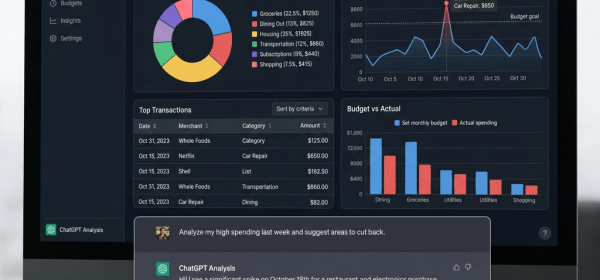
Computer screen displaying a finance dashboard with spending categories, monthly spending trend, top transactions, and budget vs actual comparison charts

Cyber Threats to DevOps Platforms Rising Fast, GitProtect Report Finds

Cyberattacks on software developers and CI/CD pipelines are escalating, with a reported 21% increase in incidents targeting DevOps environments in 2025. Attackers exploit open-source packages and trusted platforms, resulting in significant downtime and financial losses. Traditional defenses are inadequate, necessitating enhanced resilience measures in the face of evolving threats.

Continue reading

A group of professionals in a meeting room analyzing AI integration framework data on a screen

7 Surprising Truths About Evaluating Generative AI: Why Technical Accuracy Isn’t Enough

Organizations invest heavily in Generative AI but often face implementation failures due to a disconnect between evaluation frameworks and real-world operations. This Evaluation Paradox highlights the need for a pragmatic approach focused on applicability rather than technical perfection. Understanding AI’s role, uncertainty management, accountability, and organizational readiness is crucial for successful integration.

Continue reading

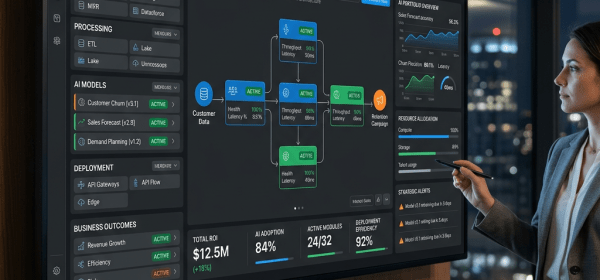
AI innovation dashboard showing data ingestion, AI models, modular AI pipeline, ROI, and performance statistics

Beyond the Hype: 5 Surprising Rules for Picking the Perfect AI Model

In an era saturated with AI models, decision-making for leaders has shifted from mere selection to a strategic necessity focused on ROI. Success lies in discerning architecture suitability over brand reputation and recognizing when to halt model search. Emphasizing a modular approach will ensure efficiency, adaptability, and effective resource use in production environments.

Continue reading

Woman operating futuristic AI interfaces with data charts in modern office

The 12-Day Empire: How 2026’s ‘One-Person Companies’ are Rewriting the Rules of Business

The 2024 startup landscape shifts from traditional models to the One Person Company (OPC), utilizing AI to enhance efficiency and accelerate market entry. OPCs can validate ideas swiftly, replace expensive payrolls with affordable AI tools, and achieve significant market insights. As the economy transitions to a focus on individual creativity, the ability to ask the right questions becomes paramount.

Continue reading

Stock market trading floor with falling tech stocks and rising AI growth charts

The Post-Software Era: 5 Surprising Realities Reshaping the Digital World

As of 2026, the tech industry faces a sharp correction following years of growth, with SaaS giants losing significant stock value. The rise of “vibe coding” is reshaping software’s role, transitioning from products to interfaces. Control now lies in defining problems and ensuring data sovereignty, while AI begins to dominate traditional tasks.

Continue reading

Team of professionals collaborating on AI project data shown on a large screen.

Fostering breakthrough AI innovation through customer-back engineering

Organizations often fail to realize the full potential of digital investments due to a lack of customer-centricity. By adopting a “customer-back engineering” approach, companies can efficiently address customer needs and foster innovation. This requires empowering engineers to engage with customers, leveraging AI-informed data techniques to enhance customer experiences and drive transformation.

Continue reading

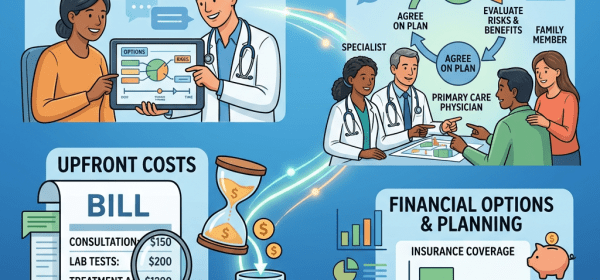
Healthcare professionals and patients discussing options, costs, and financial planning for transparent decision-making

The Power Of Clear Information In Healthcare

Transparency in healthcare enhances decision-making by providing clear, timely, and understandable information regarding costs and options. This clarity helps individuals navigate the complex system with confidence and aids employers in managing healthcare expenses effectively. Ultimately, clear communication leads to better health outcomes and a more sustainable healthcare system.

Continue reading

1 29 30 31 32 33 331