
This reference architecture shows how to train a recommendation model using Azure Databricks and deploy it as an API by using Azure Cosmos DB, Azure Machine Learning, and Azure Kubernetes Service (AKS).
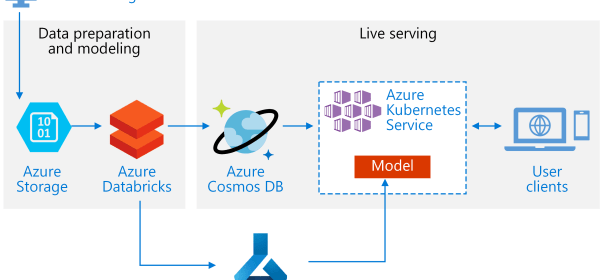
This reference architecture shows how to train a recommendation model using Azure Databricks and deploy it as an API by using Azure Cosmos DB, Azure Machine Learning, and Azure Kubernetes Service (AKS).

In this post, we demonstrate the use of the AWS Analytics Automation Toolkit for JMeter load tests on cloud benchmark data, using Amazon Redshift as a target environment
To use the AWS Analytics Automation Toolkit to run a JMeter load test, deploy the toolkit with the JMeter option, load data into your Amazon Redshift cluster, and customize the default test plan as you see fit.

The right cybersecurity company for you is first determined by the cybersecurity domains applicable to your use case. For example, getting to know whether you or your organization needs application security or storage security helps you avoid subscribing to solutions that are ineffective to you.

Amazon Web Services (AWS) provides several tools for architects, including resources that can analyze your environment for creating a visual diagram and a community of builders who can answer your technical questions.
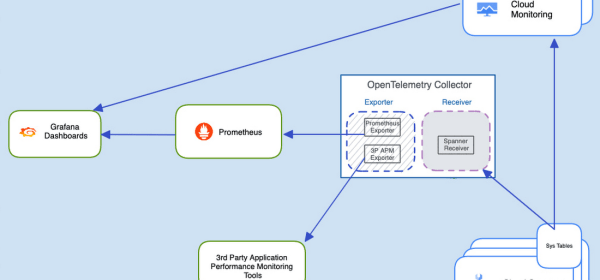
However, some of our customers would like to have the flexibility of consuming Cloud Spanner metrics in their own observability tooling, which could be either an open source combination of a time-series database like Prometheus coupled with a Grafana dashboard, or it could be a commercial Application Monitoring (APM) tool like Splunk, Datadog, Dynatrace, NewRelic or AppDynamics

Service-mesh-based architectures provide visibility and control for microservices (a group of loosely coupled services that function together to make an application operate) by providing a consistent way to route and monitor traffic between them
In this post, we’ll explain how to use AWS App Mesh to provide visibility and control for microservices by providing a consistent way to route and monitor traffic between them.
Dave Walters, CTO at Hired, explains that HR department executives will help lead the charge to choreograph talent searches cross-country and globally, but adds that an organization’s tech heads will also have a major role to play.
“For myself, as the head of technology of an organization, I see myself equally responsible, working with our HR executives to set that strategy, define the approach and open myself up and my team up to be the opportunity to work with remote talent, within the U.S. and then beyond the US,” he says.

Your employees at this moment need reassurance and comfort and a way to alleviate the crushing disempowerment that comes with not knowing how to help—and they’re looking to your executives.

The relentless twin demands of performing for today and transforming for tomorrow, mean that leaders are grappling with an accelerated phase of workforce and industry change and disruption, but is enough being done to elevate leadership attention? Hack Future Lab founder and future of leadership thinker Terence Mauri sets out why attention is the new oil in a world of overload, distraction and burnout.

Oftentimes, succession planning is reactive event-driven and focuses heavily on identifying a replacement rather than a leader with traits and competencies to fulfill future business needs. Financial institutions should instead align their succession planning strategy with the firm’s future business needs and goals, and identify the leadership traits that will best accelerate those goals.

For example, if one of the CIO’s formal performance goals is tied to the rollout of inclusive language across the IT organization, that offers more specific and actionable motivation to progress DEI across the broader enterprise.
Once the alternative word list is complete, the task force can start the process of rectifying non-inclusive language.

A software container makes applications portable, packaging an application’s code, configuration files, libraries, system tools and everything else needed to execute that app into a self-contained unit, so you can get it up and running quickly.
Containers isolate the app from its environment, making sure it will run the same way in production as it does in staging, regardless of operating system, network topology, security policies or other differences.

The Covid-19 pandemic brought many challenges and required the Virginia Office of Data Governance and Analytics to leverage data for actionable intelligence.
Automation truly allows our internal processes to be executed in a more efficient manner, particularly as it relates to the movement of data between systems or sources.

For example, real-time data gleaned from IoT sensors on bridges, tunnels, roads, and other critical infrastructure, as well as surveillance video from drones, helps government organizations analyze the condition of these assets and anticipate when assets will fail.
The increasing volume of relevant data from sensors and IoT demands the use of advanced analytics and AI to address climate challenges.