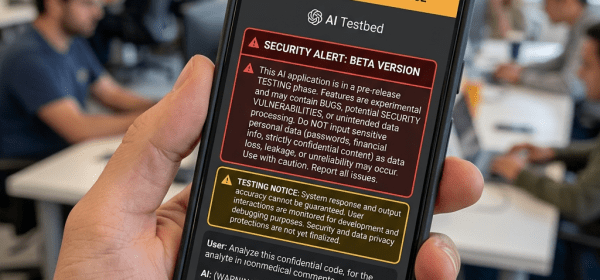
Smartphone screen showing AI assistant beta version security and testing alert with warning messages

AI-Generated Apps Without DevOps: A Security Disaster Waiting to Happen

AI-generated applications can be developed quickly but often neglect critical DevOps practices like testing, security, and structured deployment. This lack of oversight can lead to hidden vulnerabilities and significant risks, as issues might go unnoticed until after damage occurs. Effective DevOps remains essential for reliable software, regardless of speed.
Continue reading

Woman booking personalized flights on laptop in airport lounge

Mindtrip’s AI Flight Agent Wants to Solve the Messy Travel Plans Search Engines Can’t

Mindtrip is launching an AI-powered flight feature to address complex travel searches that traditional booking tools struggle with. Unlike existing platforms that focus on simple routes, Mindtrip tailors results based on user-defined conditions, aiming for a personalized travel planning experience. It seeks to simplify the navigation of an increasingly complicated travel landscape.

Continue reading

Person verifying ID card with AI access portal on computer screens

Anthropic’s Claude Rolls Out End-User Identity Verification

Anthropic is implementing a physical government-issued ID verification process for select users to enhance AI safety and address misuse risks. This process may impact user experience, leading to frustrations or migration to competitors. The company aims to secure operations, though challenges related to privacy, user attrition, and fairness in appeals remain.

Continue reading

AI agents overseeing enterprise security tasks including access control, multi-factor authentication, threat detection, and incident response within a governance hub.

Non-human identity sprawl is agentic AI’s real risk

Non-human identities (NHIs) are increasingly prevalent in enterprise systems, yet their governance is often inadequate, creating security risks as agentic AI systems evolve. Organizations must adapt existing security measures, ensuring defined permissions, ongoing reviews, and effective monitoring. Proactive governance is essential to mitigate risks associated with deploying AI agents in business processes.

Continue reading

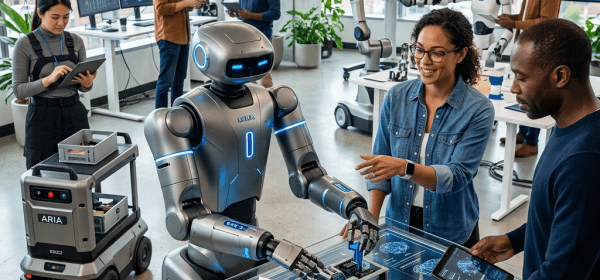
Scientists working with humanoid and robotic arm robots on digital touchscreen tables in a modern lab

AI & Jobs: What Workers Can Do to Protect Themselves

AI is transforming the labor market by redesigning jobs rather than making them obsolete, particularly affecting entry-level positions. As tech companies increasingly rely on automation, workers must cultivate “meta-skills” and deep domain knowledge to thrive. Those who adapt quickly and leverage AI effectively will enhance their career resilience and visibility.

Continue reading

People outside Prague Congress Centre under SUSECON 2026 conference sign

SUSECON 2026: From Open Infrastructure To Operational Sovereignty

SUSECON 2026 in Prague highlighted SUSE’s focus on choice, sovereignty, and resilience in its infrastructure offerings. CEO Dirk-Peter van Leeuwen emphasized the importance of operational control amidst technical and geopolitical challenges. The launch of SUSE AI Factory showcased a commitment to responsible AI integration, while strategic partnerships aim to enhance market reach without sacrificing architectural independence.

Continue reading

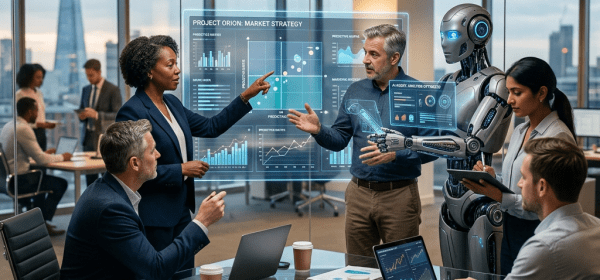
Business team and AI robot collaborating on market strategy with holographic charts

Where CIOs get stuck rebuilding the enterprise: What ‘Rewired’ reveals

Recent executive changes at major companies highlight a critical need for leadership to adapt to AI advancements. “Rewired” emphasizes that competitive advantage now lies in reimagining business processes with AI integration. CIOs and CEOs must collaborate, evolving their roles to ensure successful transformation and sustainable growth in this rapidly changing landscape.

Continue reading

Glowing digital brain with swirling data streams and network connections

A silent erosion of enterprise AI by data poisoning

The rise of generative AI is causing data environments to fill with synthetic content, risking “data poisoning” and leading to a phenomenon called “model collapse.” As AI models increasingly learn from their own approximations, performance degrades. To combat this, organizations must prioritize disciplined data governance and maintain high-quality, traceable training data.

Continue reading

Team collaborating around a digital table with AI analytics and workflow optimization graphics

As AI makes projects harder to track, will CIOs need new controls?

AI is transforming project workflows, complicating tracking and governance for CIOs who lack visibility from inception. As AI becomes embedded in business processes, traditional project management models fail to align. Governance must encourage innovation while ensuring accountability, requiring CIOs to shift focus from delivery to stewardship and responsible oversight.

Continue reading

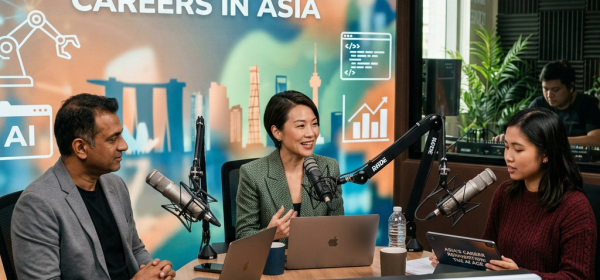
Three people hosting a podcast about future-proofing careers in Asia with microphones and laptops

AI and Career Reinvention

Sameer Hasija and Winnie Jiang discuss the transformation of careers in Asia in the podcast “Asia AI and Career Reinvention.” They highlight a shift towards “uninstitutionalised” career paths amid technological disruption and anxiety. Jiang advocates embracing AI and experimentation to create fulfilling work, empowering individuals and enhancing productivity.

Continue reading

Business team discussing empowerment and innovation in a conference room

Leading Organisational Change Without a Roadmap

A case study of a pharmaceutical company, Pharma Global, illustrates how leadership can navigate organizational transformation without a clear plan. The executives shifted their mindset to embrace uncertainty, empower employees, and redefine their roles as enablers rather than controllers. This approach allowed the company to move forward confidently, fostering a culture of adaptability.

Continue reading

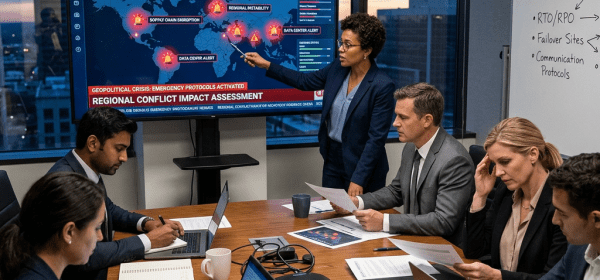
Business team reviewing global operational risk and recovery status on screen

Why disaster recovery plans fail in geopolitical crises

Geopolitical tensions are prompting CIOs to reassess disaster recovery plans, particularly following recent conflicts involving Iran. Traditional approaches often overlook rare, cascading risks from such disruptions. Organizations need to enhance operational resilience through cross-functional collaboration, geographic redundancy, and proactive risk management, especially in light of increased cybersecurity and infrastructure vulnerabilities.

Continue reading

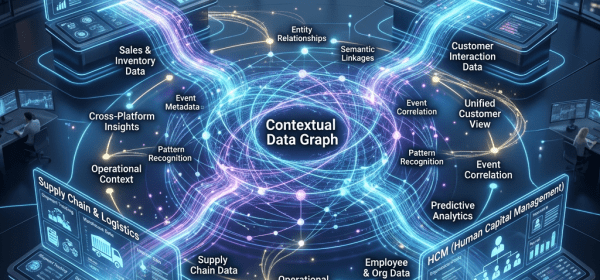
Diagram showing integration of ERP, CRM, Supply Chain, and HCM platforms with central contextual data graph

Atlassian And ServiceNow: The Dominant AI-Enabled IT Management Platforms Lean Into Context Graphs

The follow-up examines the evolution of IT management platforms like ServiceNow and Atlassian, emphasizing the importance of context graphs over mere AI model development. It highlights the dominance of these vendors in organizing enterprise data, revealing operational insights that can drive AI value. However, challenges remain regarding semantic interoperability and data governance across different systems.

Continue reading

1 32 33 34 35 36 331