Deploying service-mesh-based architectures using AWS App Mesh and Amazon ECS

Service-mesh-based architectures provide visibility and control for microservices (a group of loosely coupled services that function together to make an application operate) by providing a consistent way to route and monitor traffic between them

In this post, we’ll explain how to use AWS App Mesh to provide visibility and control for microservices by providing a consistent way to route and monitor traffic between them.
Continue reading

Disaster recovery approaches for Db2 databases on AWS

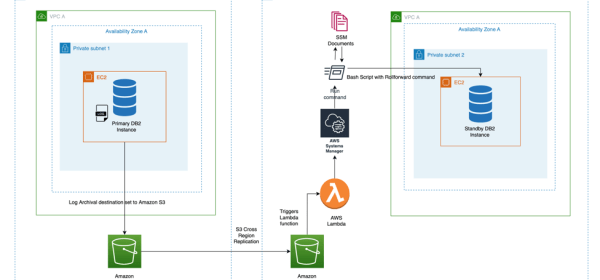
The transaction logs from the archive location can be replayed on the standby database by manually applying the Rollforward command, or by setting up user exit programs.

In this approach, we configure the database parameter LOGARCHMETH1 with Amazon EFS as an archive location for transaction logs using the DISK option.

Continue reading

Let Your IPv6-only Workloads Connect to IPv4 Services

Today we are announcing two new capabilities for Amazon Virtual Private Cloud (VPC) NAT gateway and Amazon Route 53, allowing your IPv6-only workloads to transparently communicate with IPV4-only services.

This is why we are launching two new capabilities allowing your IPv6 workloads to transparently communicate with IPv4 services: NAT64 (read “six to four”) for the VPC NAT gateway and DNS64 (also “six to four”) for the Amazon Route 53 resolver.

Continue reading

New Amazon RDS for MySQL & PostgreSQL Multi-AZ Deployment Option: Improved Write Performance & Faster Failover

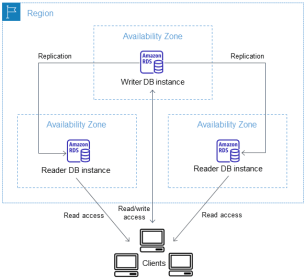
Today, we are announcing a new Amazon Relational Database Service (RDS) Multi-AZ deployment option with up to 2x faster transaction commit latency, automated failovers typically under 35 seconds, and readable standby instances.

When the new Multi-AZ DB cluster deployment option is enabled, RDS configures a primary database and two read replicas in three distinct Availability Zones.

Continue reading

Top 10 PaaS providers of 2022 and what they offer you

PaaS is a cloud computing platform designed to enable organizations to deploy, provision and run applications without needing to build out the underlying infrastructure

Like many of the other PaaS options discussed here, Elastic Beanstalk is designed to act as a managed service that frees you from having to build out infrastructure or perform any complex configurations

Continue reading

Doing more with less: Moving from transactional to stateful batch processing

Our new architecture needed to address the deficiencies while preserving the core goal of our service: update stateful artifacts based on incoming financial events.

We used an Apache Spark application on a long-running Amazon EMR cluster to simultaneously ingest input batch data and perform reduce operations to produce the stateless artifacts and a corresponding index file for the stateful processing to use.

Continue reading

1 44 45 46 47 48 49