
Zero-trust is a framework and approach to security that assumes an organization’s IT assets — software, networks, data — are constantly at risk and must be secured through continuous verification of the identity, and the

Zero-trust is a framework and approach to security that assumes an organization’s IT assets — software, networks, data — are constantly at risk and must be secured through continuous verification of the identity, and the

One that enables cloud teams to focus limited resources on their application, market, and business mission rather than on procuring, deploying, configuring, testing, and auditing a production cloud security infrastructure environment. This is because cloud enablement, infrastructure & operations,

Static (source code) analysis tools are designed to look for bugs, poor coding practices, potential security vulnerabilities and coding standard compliance.
The use of tools and techniques like source code analysis (or SAST) during coding is also considered a form of software security testing.

The right cybersecurity company for you is first determined by the cybersecurity domains applicable to your use case. For example, getting to know whether you or your organization needs application security or storage security helps you avoid subscribing to solutions that are ineffective to you.
In this post, you’ll learn about the most important microservices security principles and some best practices.
In a traditional monolithic application, you usually restrict access to the database by specifying the allowed IP address.
VMware unveiled new container runtime security capabilities that build upon a strong end-to-end security offering to help customers better secure modern applications at scale.
While most people think of digitally signing (code signing) program executables (because operating systems often require it), digital signatures can be applied to any intermediate artifact like source code, build scripts, recipes, deployment containers, and third-party tools used by the development team.

We are going to be chatting about the Kubernetes environment, and more specifically about container security and observability.

So organisations need to protect their cloud applications while considering the special characteristics of public cloud environments and the security challenges that they pose.
Fastly is executing on its strategy to provide security anywhere, making it an important choice for organizations needing a flexible WAF that protects business-critical apps and APIs in a breadth of deployment options.
The CI/CD pipeline, like any system, can be vulnerable to data leakage, and security steps must be taken to prevent this wherever possible.
However, this level of automation and the speed with which the pipeline develops can leave it vulnerable to data leakage, which is why it’s crucial to ensure the CI/CD pipeline is secure.
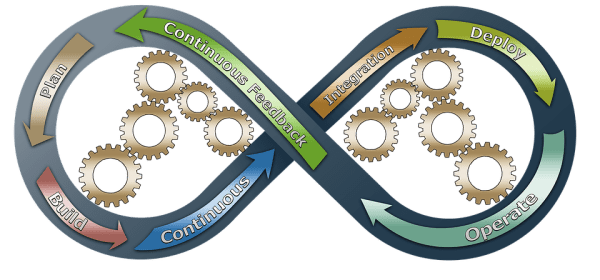
DevOps and DevSecOps have created controlled, easily deployable, secure and automated development-to-production processes that allow software updates multiple times per day with less risk.
Because enterprise network security relies on static firewall rules that can only be updated in maintenance windows after a change approval process, securely deploying applications in an automated way will not work in dynamic cloud environments

We are starting to see alternative use cases emerge for blockchain technology, especially in areas such as cybersecurity identity management, food industry supply chains, healthcare, property records and digital voting.
AppSec teams may need to coordinate with security and ops teams from cloud service providers (CSPs) to ensure proper coverage and to adapt cloud-specific best practices.