
Industrial IoT applications integrate physical machinery with networked sensors and software to collect and analyze data for operational insights. They drive efficiency, cost savings, safety improvements, and quality enhancements across industries from manufacturing to healthcare. Challenges include connectivity and security, but the benefits outweigh the risks, transforming traditional industries and creating new opportunities.
Tag: IT IoT solution
A Comprehensive Project Plan For Building A Smart Home Using IoT
The rise of IoT has transformed traditional homes into smart, automated spaces. This comprehensive project plan covers goal setting, device selection, network architecture, security, integration, testing, optimization, and maintenance. It highlights the role of IoT in promoting sustainability through energy efficiency, resource management, waste reduction, environmental monitoring, and renewable energy integration.

Enhancing Remote Monitoring through IoT Connectivity: Trends and Innovations
By the POND IoT team. The realm of Internet of Things (IoT) is witnessing a remarkable transformation, particularly in the field of remote

How Transformative Are eSIMs?
eSIM technology, short for Embedded SIM, has become the standard for IoT (Internet of Things) connectivity across industries such as transportation, healthcare, and utilities. eSIMs offer advantages over traditional SIM cards, including versatility, remote management, scalability, and future-proofing. Primarily used in the machine-to-machine field, eSIMs lead the automotive sector in active connections and revenue. The technology also aids tracking functions in various sectors. Experts anticipate exponential growth in the global revenue of the eSIM market in the coming years.

IoT data powers the metaverse
Samuel Taylor Coleridge’s The Rime of the Ancient Mariner is used as an analogy for the current state of the metaverse, a digital universe under development. With IoT data as its engine, the metaverse aims to mirror and augment physical spaces via digital twins. Challenges, however, include large-scale data management, privacy, security, and economic equity. It is argued that technological development and policy making should be carried out simultaneously to address these risks.
Cellular vs WiFi: Which is Better for Your IoT Project?
WiFi and cellular connectivity are the primary choices for IoT projects. While WiFi, with its lower costs and high bandwidth, has dominated IoT for years, cellular connectivity is increasingly popular due to superior security, broader coverage, and comparable bandwidth with recent 5G developments. The decision hinges on factors like data volume, mobility, location, and security requirements.

IIoT Explained: Examples, Technologies, Benefits and Challenges
The Industrial Internet of Things (IIoT) is the application of IoT technology in industrial settings, gathering and analyzing data for real-time decision-making and predictive analytics. IIoT integrates sensors, software, and machinery with internet connectivity to improve efficiency, reduce costs, and enhance product quality. It’s transforming industries such as manufacturing, energy, and transportation by optimizing operations and revolutionizing processes. IIoT also plays a significant role in healthcare, logistics, and the utility sector. However, implementing IIoT faces challenges including security, integration, data management, and a skills gap.
IoT and IT: Bridging the Gap
We all are a bit more tech oriented, started a couple of years ago and got into this technology and now everybody’s using IoT and maybe sometimes with a little technology background and that’s also not needed because you want to
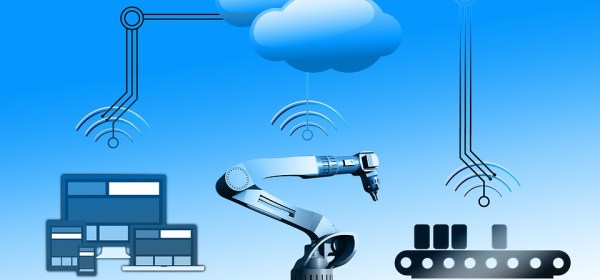
Preparing the Energy Grid for EVs with IoT
Nick Tumilowicz, Director of Product Management at Itron, joins Ryan Chacon on the IoT For All Podcast to discuss the role of IoT in preparing the energy grid for EVs. They talk about the risks of not preparing the grid for EVs, IoT solutions for preparing the grid for EVs, EV heterogeneity, standardization in
machine vision
These systems enable the machine vision cameras and processing system to communicate with other elements of the bigger system, usually using a discrete input/output signal or a serial connection. By using computer
IoT devices (internet of things devices)
Internet of things ( IoT ) devices are nonstandard computing hardware — such as sensors, actuators or appliances — that connect wirelessly to a network and can transmit data. IoT and IoT devices aid in making daily activities
6 IoT architecture layers and components explained
For example, in an IoT architecture, those components are likely to include connected devices, smart devices, sensors and actuators . Speaking of layers, architects often think in terms of component layers,

How Next Gen Connectivity Solutions Power Global Mining
One of the key enablers of IoT technology in mining is eSIM (eUICC), which is replacing traditional SIM cards to provide more secure and flexible connectivity for IoT devices that are making a huge impact on

What is Computer Vision?
“Computer vision relies on a combination of algorithms and artificial intelligence to process information like shapes, colors, and textures to understand what is before it.” Computer vision relies on a combination of