The sunsetting of Sora: A hard lesson in AI portfolio resilience

OpenAI’s Sora application was recently shut down, along with its $1 billion partnership with Disney, highlighting the fragility of AI products despite vendor stability. As AI markets evolve, CIOs face new challenges, including the risk of dependency on specific tools. Experts urge resilience through modular design and the careful selection of AI models.

Continue reading

ChatGPT Health: What You’re Meant to Use the AI for, and Everything You Should Avoid

OpenAI’s ChatGPT Health, launched in January 2026, is a dedicated feature for health-related inquiries within ChatGPT, designed to assist users in understanding medical information without replacing professional advice. It utilizes advanced AI models while adhering to stricter information guidelines, aiming to empower users in health discussions, albeit with crucial limitations.

Continue reading

Is an AI subscription worth it? How to choose your premium chatbot plan – and what not to do

A friend seeks advice on selecting AI chatbots after exploring several. The article reviews various chatbots, emphasizing free versions for budget users and recommending upgrades for advanced features. Key options include ChatGPT for versatility, Copilot for Microsoft integration, and Gemini for Google ecosystem benefits. Users should consider their needs before subscribing.

Continue reading

The Complete Guide to How Online Marketplace Systems Process Digital Transactions Securely

Online marketplaces are crucial in modern commerce, enabling transactions between multiple buyers and sellers. They employ complex payment processing systems to handle logistics, security, and compliance, including PCI DSS and PSD2 regulations. Advanced technologies like tokenization and real-time tracking enhance efficiency and trust, positioning payment processing as a strategic advantage for growth.

Continue reading

When earnings calls demand AI ROI, how can CIOs meet the challenge?

Earnings calls for tech companies are increasingly focused on AI ROI, as stakeholders demand tangible results from investments. CIOs face pressure to validate AI initiatives, transitioning from experimental enthusiasm to operational scrutiny. Effective communication of metrics and aligning AI projects with financial goals are crucial to maintaining support amid evolving expectations.

Continue reading

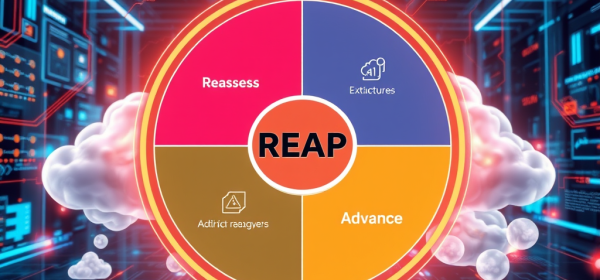
REAP: A Modern Application Disposition Model For An AI And Cloud Economy

Legacy application disposition frameworks are inadequate in today’s fast-paced tech landscape, which demands continuous adaptation and modernization. Forrester’s REAP model—Reassess, Extract, Advance, and Prune—offers a dynamic approach that emphasizes business and technical fitness, enabling organizations to navigate the complexities of AI-driven environments more effectively and sustainably.

Continue reading

The crucial first step for designing a successful enterprise AI system

Mistral AI emphasizes the importance of selecting an impactful, strategic, and urgent use case for successful generative AI deployments. Their methodology involves collaborative workshops to identify optimal projects that can quickly deliver measurable outcomes. By co-designing tailored solutions, Mistral AI aims to transform organizations’ AI capabilities, ensuring sustainability and value.

Continue reading

Most Organizations Can’t Use AI Agents Across Teams—Here’s Why

AI agents struggle to collaborate across teams due to a lack of domain knowledge. Effective agent-to-agent collaboration allows specialized agents from different teams to communicate through structured requests, maintaining their own domain context. Key to success are well-documented business rules, architecture, and escalation policies, which facilitate streamlined coordination and quality assurance.

Continue reading

AI is rewriting the CEO job description: Are you ready?

The CEO role is evolving due to AI’s transformative impact. Traditional tasks remain, but leaders must now orchestrate AI initiatives, ensure value alignment, navigate tensions, and consider broader ecosystem implications. Success requires balancing quick wins with long-term strategy while understanding AI’s ethical and cultural consequences for sustained viability in a changing economy.

Continue reading

CIO role in unlocking strategic value: How to determine and implement AI use cases

CIOs are pivotal in identifying valuable AI use cases, bridging technology and business value. They must educate business leaders, co-create initiatives, and align with CEOs to foster AI’s transformative potential. With a grasp of analytical, generative, and agentic AI, CIOs can drive operational efficiency and substantial business improvements.

Continue reading

“Dr. Google” had its issues. Can ChatGPT Health do better?

Over the past two decades, many people have sought medical advice online, often referred to as “Dr. Google.” With the launch of ChatGPT Health, users now rely on AI for health information, raising concerns about potential risks. While LLMs may enhance medical literacy and reduce misinformation, they cannot replace human doctors entirely.

Continue reading

OpenAI, Anthropic, and Google all have new AI healthcare tools – here’s how they work

Three leading AI labs have launched healthcare products aimed at improving patient interactions and democratizing access to medical advice. OpenAI’s ChatGPT Health and Anthropic’s Claude for Healthcare allow users to upload health records for personalized advice, while Google’s MedGemma 1.5 supports developers in analyzing medical text. However, concerns over data privacy and the potential for inaccuracies remain.

Continue reading

The Agentic AI Handbook: Production-Ready Patterns

During the 2025 holiday season, a surge in interest for AI coding agents emerged, particularly within the GitHub repository “Awesome Agentic Patterns,” which gained nearly 2,500 stars. Key tech leaders shifted from skepticism to advocacy, driven by newfound time to explore agentic patterns that improved productivity and collaboration, marking a significant developmental milestone.

Continue reading

8 CIO recommendations for ERP implementation in 2026: Think agentic

Agentic AI is revolutionizing enterprise resource planning (ERP) by enhancing business processes and decision-making across various functions such as finance, supply chain, and HR. This integration enables organizations to transition from passive ERP tools to proactive AI-driven processes, potentially transforming business operations and influencing CIOs’ strategies for 2026.

Continue reading

1 2 3