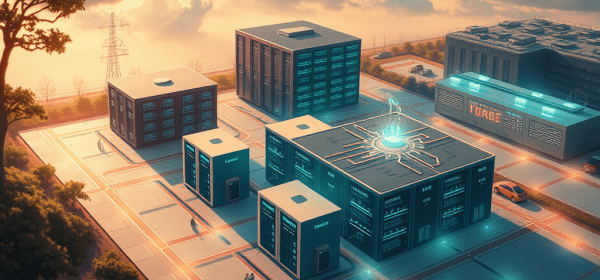
Beyond boundaries: The future of Azure Storage in 2026

Azure Storage is evolving to support the full AI lifecycle, enhancing performance for training and inference at enterprise scale. Investments focus on automation, partnerships, and optimizing workloads for AI, mission critical applications, and cloud native solutions. Looking ahead to 2026, Azure aims to deliver efficient, intelligent storage solutions for diverse customer needs.


Continue reading

Hybrid Cloud Solutions for Enterprise IT: Cost Savings, Security, and Flexibility Combined

Enterprises are increasingly adopting hybrid cloud solutions, projected to grow from $114.83 billion in 2026 to $230.36 billion by 2032. This model combines public and private resources, enhancing scalability, security, and cost efficiency. Its popularity stems from seamless integration, workload portability, and effective disaster recovery capabilities while addressing regulatory demands.

Continue reading

Why B2B software companies need to rethink integrations for the AI era [Q&A]

Integrations are critical for B2B software, influencing customer engagement and retention. Tanner Burson from Prismatic emphasizes that treating integrations as product features, ensuring an AI-ready architecture, and fostering visibility can enhance performance and reduce tech debt. Effective integration strategies contribute to revenue growth by improving customer satisfaction and shortening implementation timelines.

Continue reading

The era of agentic chaos and how data will save us

AI agents are evolving from simple tasks to integral roles within enterprises, promising substantial ROI. However, without proper data alignment and governance, companies risk chaos and inefficiency. Effective leaders establish strong data foundations, enabling autonomous agents to function reliably and enhance business operations, ultimately leading to greater success and minimized operational risks.

Continue reading

The CIO hot seat: How to lead AI without becoming the scapegoat

CIOs have gained influence through AI but face increased accountability for AI outcomes, often without control over use cases. This misalignment creates pressure and highlights the need for clear ownership and governance. Embracing shared responsibilities and strategic foundations is essential for CIOs to thrive in their roles amidst AI challenges.

Continue reading

Mastering the architecture of hybrid edge environments

Rapid expansion of edge systems, networks, and IoT poses challenges for IT teams in architecture design. Key considerations include defining IT and user roles, ensuring security, and integrating edge and central IT. A hybrid approach, involving tech-savvy users and AI, enables efficient operations, data management, and disaster recovery in edge environments.

Continue reading

7 cloud computing trends for leaders to watch in 2026

As we enter 2026, cloud technology continues to evolve rapidly, impacting how businesses manage and consume services. Key trends include optimizing AI infrastructure, pivoting to AI as a service, adopting AI agent meshes, navigating stricter regulations, facing rising costs, emphasizing cloud cost management, and investing in network optimization to enhance performance and efficiency.

Continue reading

Meet the new biologists treating LLMs like aliens

Large language models (LLMs) are vast and complex, filled with billions of parameters that challenge our understanding. Recent research reveals they operate unpredictably, processing information in ways unlike human reasoning. As we explore mechanistic interpretability and chain-of-thought monitoring, the need for clarity grows, impacting how we trust and interact with these advanced technologies.

Continue reading

Focused language models: A solution for GenAI hallucinations

Generative AI tools still face challenges with hallucinations, undermining their potential adoption. Recent large language models are producing high error rates. Focused language models (FLMs) offer a solution by delivering consistent, compliant answers through curated training data and task specificity, enhancing accuracy while mitigating hallucination risks in applications like financial services.

Continue reading

Using unstructured data to fuel enterprise AI success

Enterprises possess significant unstructured data, often unused due to analysis challenges. However, effectively managing this data can enhance AI systems and provide actionable insights. The Charlotte Hornets used AI and computer vision to analyze gameplay footage, identifying valuable draft picks. Preparing data and adjusting AI models to specific contexts are crucial for success.

Continue reading

8 CIO recommendations for ERP implementation in 2026: Think agentic

Agentic AI is revolutionizing enterprise resource planning (ERP) by enhancing business processes and decision-making across various functions such as finance, supply chain, and HR. This integration enables organizations to transition from passive ERP tools to proactive AI-driven processes, potentially transforming business operations and influencing CIOs’ strategies for 2026.

Continue reading

2026 enterprise AI predictions — fragmentation, commodification and the agent push facing CIOs

Three years post-ChatGPT, enterprises are increasingly prioritizing agentic systems built on large language models (LLMs). Predictions for the coming year include heightened competition among automation approaches, a shift towards strategic investment in agentic solutions, and necessities surrounding data quality and compliance. Challenges, such as rogue agents and unstructured data, persist.

Continue reading

Why Leaders Need to Take Play Seriously

Play is essential for creativity, resilience, and innovation, not just a childhood pastime. As adults, we often neglect play, which can lead to burnout and stress. Rediscovering play enhances well-being and fosters deeper connections among leaders, encouraging a culture of curiosity and creativity in workplaces. Thus, play is vital for survival and fulfillment.

Continue reading

What will IT transformation look like in 2026, and how do you know if you’re on the right track?

As enterprises focus on digital transformation, IT departments must evolve culturally, operationally, technologically, and structurally by 2026. Current challenges include fragmented data and legacy systems. Successful transformation requires better alignment with business goals, measuring performance in terms of business value, and fostering strong partnerships across departments.

Continue reading

1 2 3 4 371