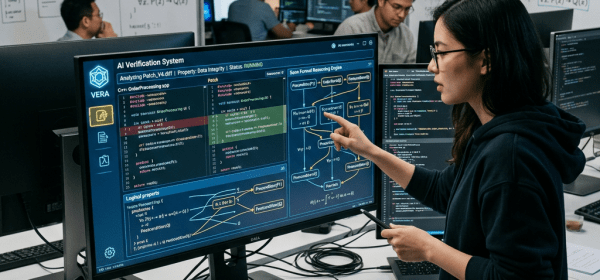
Engineer analyzing AI verification system software code on desktop monitor in office

Meta Researchers Show AI Agents Can Verify Code Without Running It — and Hit 93% Accuracy

Meta researchers Shubham Ugare and Satish Chandra have introduced “semi-formal reasoning,” a method that enhances AI agents’ ability to verify code patches without execution. This approach achieved up to 93% accuracy in evaluating patch equivalence, significantly improving error reduction in DevOps processes and lowering the costs associated with traditional code verification methods.

Continue reading

Team collaborating around interactive digital table showing world map and AI cybersecurity data

Apple, Google, and Microsoft join Anthropic’s Project Glasswing to defend world’s most critical software

A coalition of major tech firms, including Amazon and Google, has launched Project Glasswing, an AI-driven initiative aimed at enhancing global cybersecurity due to escalating threats. The project utilizes advanced AI capabilities and significant financial investments to tackle hidden vulnerabilities in critical software, reflecting urgent concerns about infrastructure risks and collaborative defense.

Continue reading

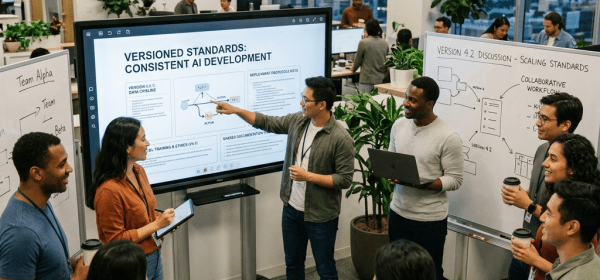
Team presenting and discussing AI development standards and workflow on screen and whiteboard

Encoding Team Standards

As teams work together, invaluable tacit knowledge often becomes embedded and unseen, leading to inconsistent AI interactions across developers. This can result in varied code quality and technical debt. Establishing executable, versioned standards as shared team infrastructure can effectively encode and distribute this knowledge, ensuring consistent application across all developers.

Continue reading

Journalist working with AI interface and multiple screens in newsroom

How AI agents are changing journalism

The author shares how using Claude Cowork has significantly boosted productivity by automating routine tasks. This shift allows workers, including journalists, to focus on higher-value activities while AI handles execution. However, this raises concerns about job security and the reduction of roles in journalism, emphasizing a transition toward more meaningful work centered on human skills and creativity.

Continue reading

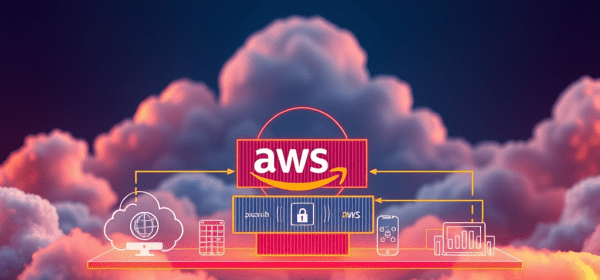
Architecting for agentic AI development on AWS

Architecting cloud systems for AI on AWS can introduce friction due to traditional models. This article outlines strategies for enhancing AI development through agentic workflows, emphasizing the need for fast feedback and clear boundaries. It suggests architectural changes that enable AI agents to validate, iterate, and deploy code efficiently while minimizing operational risks.

Continue reading

How Generali Malaysia optimizes operations with Amazon EKS

Generali Malaysia has embraced cloud computing to enhance its digital services by migrating to Amazon EKS Auto Mode. This transition has improved operational efficiency, security, and cost optimization while allowing the DevOps team to focus on application support. The integration of various AWS services has transformed their container management and operational practices significantly.

Continue reading

From cloud native to AI native: The role of context density

At KubeCon + CloudNativeCon Europe 2026, discussions highlighted the shift from cloud-native to AI-native computing, emphasizing the importance of context in agentic AI. The focus is on leveraging low-density context from metadata to ensure efficient AI agent behavior and workflow scalability, which is critical for successful AI-native infrastructure.

Continue reading

Hope, Hype or Horror? ‘The AI Doc’ Director Charlie Tyrell Questions What Comes Next

The documentary “The AI Doc: Or How I Became an Apocaloptimist” explores the duality of artificial intelligence, showcasing contrasting views on its potential harms and benefits. Directed by Daniel Roher and Charlie Tyrell, the film combines personal experiences of fatherhood with insights from global AI experts, aiming to engage a broad audience in understanding AI’s impact on society.

Continue reading

Why Software Testing and QA Services Are Crucial for Digital Business Success

In today’s competitive market, businesses increasingly rely on software for operations, making software testing and quality assurance (QA) essential. These processes ensure software stability, security, and performance, ultimately reducing costs and enhancing user satisfaction. By prioritizing effective testing strategies, organizations can mitigate risks, strengthen systems, and foster successful digital transformations.

Continue reading

AI is creating the first generation of cognitively outsourced humans

Society is gradually outsourcing cognitive tasks to external aids like AI, risking the erosion of judgment and critical thinking. While generative AI enhances productivity, it obscures the distinction between genuine understanding and superficial fluency. The cultural challenge lies in preserving human judgment amidst this dependency, particularly in education.

Continue reading

A top AI researcher explains the limitations of current models

AI Decoded is Fast Company’s weekly newsletter focusing on AI news. This week, François Chollet introduced ARC-AGI-3, a benchmark designed to expose limitations in AI models’ abilities to tackle novel problems, emphasizing the need for continual learning and world modeling akin to human intelligence. OpenAI also plans to pivot its focus toward world modeling by shutting down its Sora app.

Continue reading

Oracle Expands AI Agent Studio for Fusion Applications with Agentic Applications Builder and New Intelligent Workflow Tools

Oracle has updated its AI Agent Studio for Fusion Applications, enhancing features for creating and managing outcome-driven AI applications. The additions include a new agentic applications builder, workflow orchestration, content intelligence, and ROI measurement capabilities. These advancements enable enterprises to operationalize AI effectively, fostering automated, context-aware applications tailored to unique business needs.

Continue reading

Gemini just made it super easy for you to switch from ChatGPT  – here’s how

Google’s new Gemini AI service introduces a memory import feature, allowing users to transfer memories, chat history, and preferences from other AI platforms like ChatGPT or Claude AI. This feature enhances personalization by leveraging users’ past interactions, making the transition smoother for newcomers. It is available for personal accounts globally, with some restrictions.

Continue reading

New Features Make NotebookLM More Flexible and Easier to Use

NotebookLM is enhancing its features, improving flexibility and user experience. Recent updates include Cinematic Video Overviews, slide revisions, new infographic styles, and quiz/flashcard improvements. It now supports EPUB files and allows PPTX export, enabling easier collaboration with PowerPoint. Users can directly create outputs from chat interactions, streamlining the process.

Continue reading

1 15 16 17 18 19 172