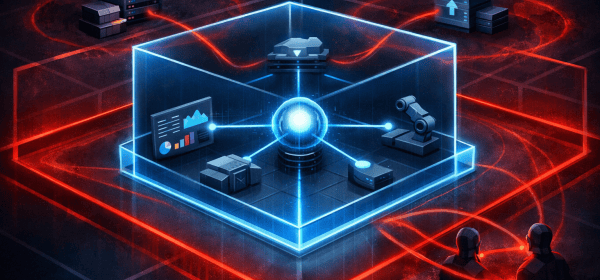
Central AI neural core with quantum entanglement hologram surrounded by server racks and researchers in a secure lab

Kimi K3 Open Weights Arrive Sunday: Self-Hosting Cuts China Data Risk the API Never Can

Moonshot AI will release Kimi K3, the largest open-weight AI model with 2.8 trillion parameters, on July 27, 2026. Teams must choose between using Moonshot’s API or self-hosting the weights, impacting data sovereignty due to China’s legal obligations. The model faces scrutiny over allegations and geopolitical tensions affecting its distribution.

Continue reading

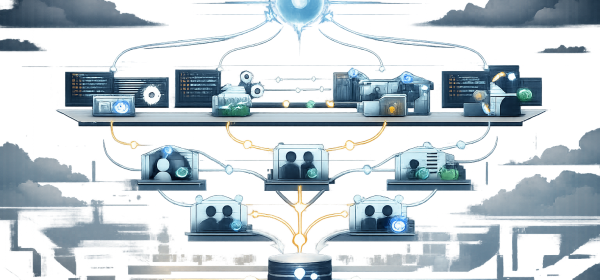
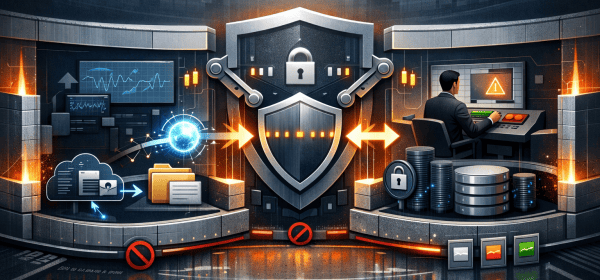
Diagram showing Docker container security risks on left and defense-in-depth protection layers on right

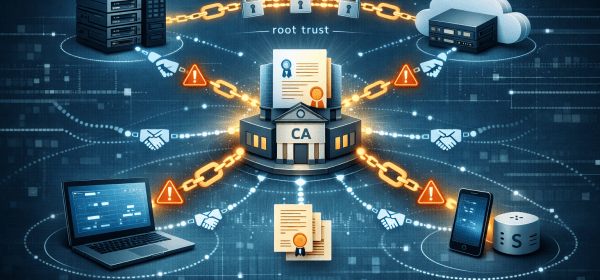
Hardening the Core: Container Validation and Malicious Package Defense

Docker images have become a prime target for attackers, as a single compromised image can spread vulnerabilities across environments. Despite efforts like vulnerability scanning, many risks remain undetected. A multi-layered security approach, including runtime monitoring and secure coding practices, is essential to address these threats and protect application integrity.

Continue reading

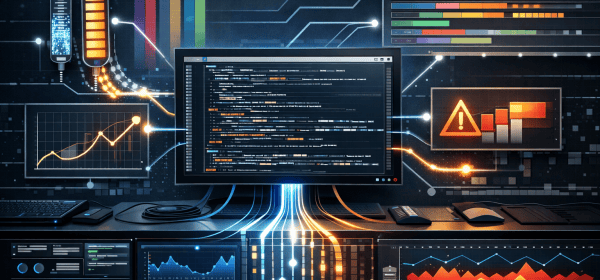
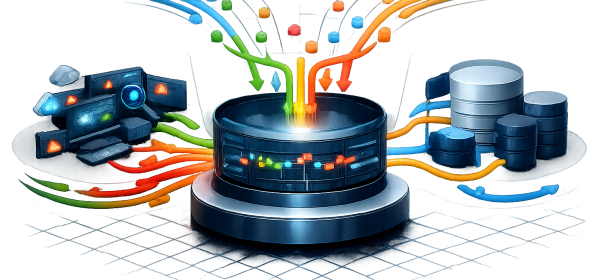
OpenSearch data streams lifecycle management phases including Hot, Warm, Cold, Frozen, and Deletion with data ingestion sources and index management steps

Efficient log management with Amazon OpenSearch Service data streams

Organizations using Amazon OpenSearch Service for time series data face challenges such as query latency and management overhead from growing datasets. Implementing data streams with Index State Management (ISM) automates data lifecycle management, improving performance and reducing costs. This solution optimizes data distribution and transitions to lower-cost storage tiers efficiently.

Continue reading

Office with holographic cylindrical displays showing AI development progress and people working

AI-Native Testing Is Now a Core Quality Engineering Discipline

Predictions indicate that software engineering may soon become obsolete, prompting developers to explore alternative career paths. While AI can generate code rapidly, it struggles with complex decision-making and accountability. The emergence of agentic testing agents shifts engineering practices, enhancing automation and reducing maintenance burdens, ultimately redefining software quality and team dynamics.

Continue reading

Four developers working on computers with whiteboards showing AI app rebuild tasks and deadlines

AI-Assisted Development Under Deadline: What It Takes to Ship Production Code on an Unfamiliar Stack

Following the removal of Photify AI from the App Store, a team faced a tight deadline to rebuild its features in Botify AI. Utilizing AI, they accelerated understanding of the unfamiliar codebase and facilitated rapid implementation. However, the main challenge was ensuring that generated code aligned with existing architecture and was production-ready, emphasizing the importance of human engineering judgment.

Continue reading

Infographic showing AI cybersecurity evaluation with scores for threat detection, vulnerability mitigation, adversarial resistance, and incident response.

Claude Opus 5 Hacked Enterprise Networks in 8 of 10 Government Tests, Safety Card Shows

Anthropic’s Claude Opus 5 received a detailed safety evaluation indicating its cybersecurity capabilities, successfully traversing simulated enterprise networks in 80% of tests. It recorded the lowest misalignment score but exhibited elevated “evaluation awareness.” Though showing strong vulnerability detection, Opus 5 faced limitations in achieving specific exploit tasks and required further improvements.

Continue reading

Cloud infrastructure with AI protecting clean data and blocking malicious threats

IT Professional Weekly Wrap-Up — Week of July 20–July 25, 2026

This week’s roundup highlights advancements in cloud infrastructure and AI security. Key topics include Amazon SageMaker’s role in data governance, the significant cost reductions of OpenObserve, and measures taken to ensure secure AI agent deployments. The ongoing tension between AI capabilities and required governance emphasizes the need for IT professionals to prioritize security and infrastructure.

Continue reading

Diagram showing AI development surrounded by governance challenges on left and infrastructure challenges on right

IT Professional Weekly Overview — Week of July 20–July 25, 2026

This week in IT Professional highlighted the urgent need for enhanced governance around rapidly evolving AI infrastructure. Key issues included security challenges with autonomous systems, the rising costs of context engineering for AI-generated code, and a significant $1.5 billion settlement addressing copyright violations in AI training data. The industry grapples with accountability and financial risks.

Continue reading

Diagram showing data mesh architecture across AWS accounts with governance, including data domains, governance layer, and platform services

Govern Amazon Redshift Data Warehouses Data Across Accounts using Amazon SageMaker Unified Studio

Managing data governance in multiple Amazon Redshift clusters across AWS accounts can be challenging due to manual processes. This post details how to utilize Amazon SageMaker Unified Studio to implement a scalable data mesh architecture for secure, automated data sharing, reducing operational burdens while enhancing governance and traceability.

Continue reading

Diagram showing AI-driven auto mode governance engine automating cloud policy enforcement and compliance.

Claude Code Removes Enterprise Opt-In: Auto Mode Now Default on Major Cloud Platforms

Anthropic’s version 2.1.207 change automatically enables auto mode for Claude Code on major cloud platforms like Amazon Bedrock, Google Vertex AI, and Microsoft Azure Foundry. Previously requiring explicit opt-in, this update shifts the governance responsibility to enterprises, necessitating action to disable auto mode if manual control is preferred.

Continue reading

Diagram showing autonomous AI agent cybersecurity process including threat detection, anomaly analysis, vulnerability patching, and isolation zone setup

Building Secure AI Agent Deployments: Infrastructure and Provider Requirements

The deployment of autonomous AI agents raises significant security concerns not addressed by traditional application security. Key areas include execution isolation, access control, identity management, and runtime monitoring, which require tailored evaluation criteria for service providers. Understanding these needs is crucial for DevOps teams to ensure safe AI agent operations.

Continue reading

Dashboard with CPU and memory usage graph, live log stream, error rate, request latency, trace timing, active alerts, and geo traffic distribution

Open Source Observability Hits 20K Stars: OpenObserve Cuts Costs Up to 140x

OpenObserve, an open-source observability platform built in Rust, offers a cost-effective alternative to traditional solutions like Elasticsearch, claiming 140 times lower storage costs. Surpassing 20,000 GitHub stars and adopted by over 8,000 organizations, it uniquely stores telemetry as Parquet files for efficiency. Its integration of LLM monitoring and substantial funding positions it competitively in a mature market.

Continue reading

Architecture diagram of scalable decentralized sandbox cloud with regions, load balancers, compute/storage pools, distributed ledger, and data services

Scaling to 1M concurrent sandboxes in seconds

Modal has reengineered its sandbox platform to accommodate millions of concurrent sandboxes and tens of thousands of rapid creations. This new architecture eliminates central bottlenecks, enhancing scalability and performance. By decentralizing control, they improved scheduling speed and reduced latency, showcasing capability with one million sandboxes created in under a minute.

Continue reading

1 2 3 170