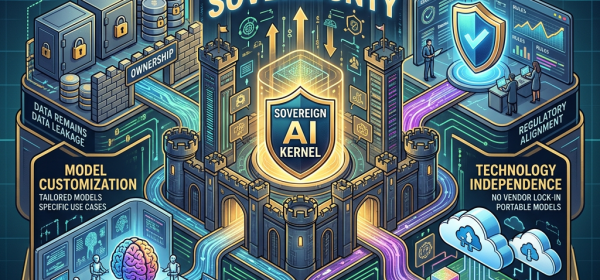
Diagram showing enterprise AI sovereignty with data privacy, governance, model customization, and technology independence.

Establishing AI and data sovereignty in the age of autonomous systems

Enterprises initially traded control over their data for generative AI capabilities, but now, as AI becomes integral, they seek data and AI sovereignty. Concerns over losing intellectual property are driving a shift towards self-managed AI systems. A recent survey shows 70% of executives prioritize sovereignty to maintain competitiveness.

Continue reading

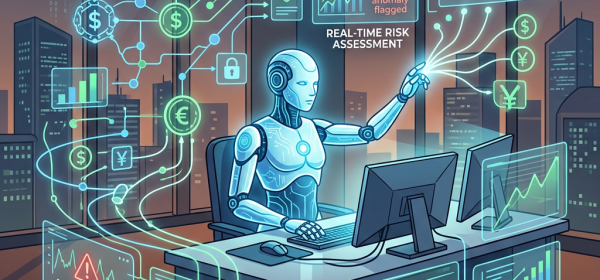
Robotic AI managing automated asset allocation, risk assessment, compliance, and ledger reconciliation on multiple screens

Data readiness for agentic AI in financial services

Financial services require robust data management to successfully implement agentic AI, which can autonomously perform tasks using real-time data. The quality, security, and accessibility of data are crucial due to regulatory demands. Companies must build dependable data frameworks to achieve accuracy and speed while navigating challenges like fragmented information systems.

Continue reading

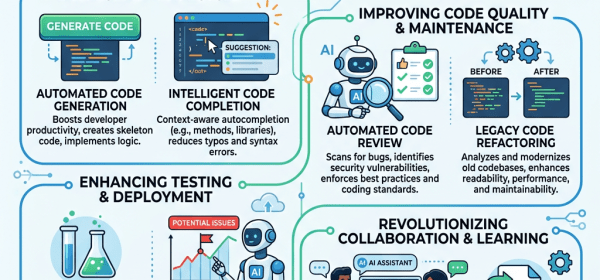
Diagram showing AI coding tools accelerating development lifecycle, improving code quality, enhancing testing, and revolutionizing collaboration

“Harness Engineering” Emerges as the Fourth Paradigm of AI Engineering

A recent survey of 700 engineering leaders reveals that AI coding tools are rapidly transforming software development, with 94% noting important costs go unmeasured. The report introduces “harness engineering,” emphasizing that effective AI development requires a focus on system design over model performance. Metrics must evolve to reflect AI’s true impact on productivity and costs.

Continue reading

Dashboard comparing Forge Defense AI and Quantum Shield AI cybersecurity metrics

This new Claude skill saves you from bad contracts – and costs less than a lawyer

Anthropic unveiled Claude for Small Business, featuring powerful tools like /review-contract for contract analysis, aimed at empowering small businesses with AI resources. Despite some connectivity limitations, the platform offers valuable insights. Users can leverage AI for contract evaluation, making it a crucial asset for effective negotiations and business operations.

Continue reading

Interactive AI finance chatbot dashboard showing bank data, portfolio performance, asset allocation, market trends, and transaction history

OpenAI previews personal finance features in ChatGPT Pro

OpenAI Group PBC has introduced personal finance features in ChatGPT Pro for select U.S. users. Users must link their bank accounts via Plaid to access a dashboard showcasing financial data. The chatbot, powered by GPT-5.5, can analyze spending trends and assist with financial decisions, with future capabilities planned to evolve further.

Continue reading

Woman operating futuristic AI interfaces with data charts in modern office

The 12-Day Empire: How 2026’s ‘One-Person Companies’ are Rewriting the Rules of Business

The 2024 startup landscape shifts from traditional models to the One Person Company (OPC), utilizing AI to enhance efficiency and accelerate market entry. OPCs can validate ideas swiftly, replace expensive payrolls with affordable AI tools, and achieve significant market insights. As the economy transitions to a focus on individual creativity, the ability to ask the right questions becomes paramount.

Continue reading

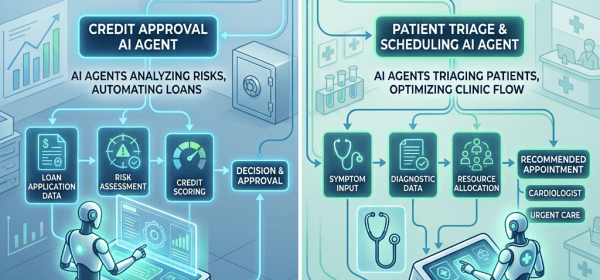
Diagram showing AI agents in banking and healthcare workflow optimization, including loan approval and patient triage

AI agents in automation: When to build, when to buy

AI agents are transitioning from experimental roles to essential components in enterprises, particularly in regulated sectors like banking and healthcare. Organizations face a nuanced decision of building custom agents versus buying prebuilt solutions. The key challenge lies in effectively operationalizing AI within controlled business processes, emphasizing orchestration for accountability and flexibility in agent deployment.

Continue reading

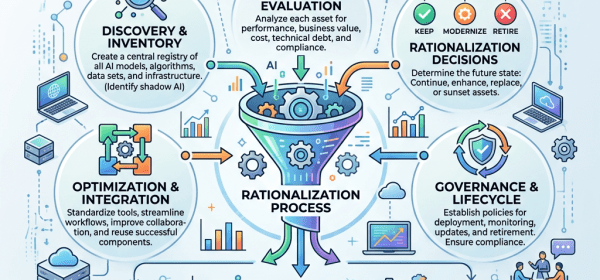
Diagram showing steps in enterprise AI asset rationalization including discovery, evaluation, decisions, governance, optimization, cost reduction, efficiency, and risk mitigation

Why and how to implement an AI asset rationalization strategy

As AI adoption increases in enterprises, the effectiveness and cost justification of AI investments become critical. AI asset rationalization evaluates the value of AI systems, identifies inefficiencies, and ensures they align with business needs. This strategic assessment helps organizations optimize their AI resources, enhance ROI, and minimize waste in AI spending.

Continue reading

Lawyer presenting argument in courtroom with judge, defense, and plaintiff in AI hiring discrimination case

AI on trial: The Workday case that CIOs can’t ignore

The case Mobley v. Workday Inc. involves 14,000 participants claiming age discrimination by AI hiring systems. It questions the liability of AI vendors versus customers under antidiscrimination laws. Methodological disputes on bias detection arise, highlighting the complexities of bias audits. The case emphasizes the need for independent oversight of AI hiring practices.

Continue reading

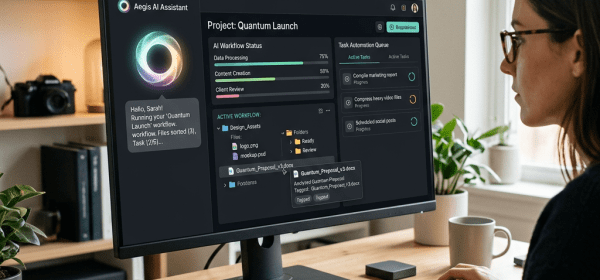
Computer screen displaying AI project management dashboard for Quantum Launch

What Can the Perplexity Personal Computer Do? AI Features and Capabilities Explained

The Perplexity Personal Computer is an AI system designed for continuous productivity, unlike traditional chatbots. It integrates local file access and workflow automation, maintaining context over time for ongoing tasks. This always-on desktop AI setup enhances efficiency in fields like research and project management, establishing a new standard for persistent digital assistants.

Continue reading

AI agents overseeing enterprise security tasks including access control, multi-factor authentication, threat detection, and incident response within a governance hub.

Non-human identity sprawl is agentic AI’s real risk

Non-human identities (NHIs) are increasingly prevalent in enterprise systems, yet their governance is often inadequate, creating security risks as agentic AI systems evolve. Organizations must adapt existing security measures, ensuring defined permissions, ongoing reviews, and effective monitoring. Proactive governance is essential to mitigate risks associated with deploying AI agents in business processes.

Continue reading

Glowing digital brain with swirling data streams and network connections

A silent erosion of enterprise AI by data poisoning

The rise of generative AI is causing data environments to fill with synthetic content, risking “data poisoning” and leading to a phenomenon called “model collapse.” As AI models increasingly learn from their own approximations, performance degrades. To combat this, organizations must prioritize disciplined data governance and maintain high-quality, traceable training data.

Continue reading

Business team and AI robot collaborating on market strategy with holographic charts

Where CIOs get stuck rebuilding the enterprise: What ‘Rewired’ reveals

Recent executive changes at major companies highlight a critical need for leadership to adapt to AI advancements. “Rewired” emphasizes that competitive advantage now lies in reimagining business processes with AI integration. CIOs and CEOs must collaborate, evolving their roles to ensure successful transformation and sustainable growth in this rapidly changing landscape.

Continue reading

Business team analyzing global supply chain maps and market risk data in a futuristic control center

The New Blueprint for Competing in A Fractured World

The evolving global business landscape, marked by geopolitical tensions and shifting regulations, necessitates a redesign of multinational strategies. Companies must prioritize resilience through decentralized structures, adapting operations to local markets, and investing in geopolitical risk management. Traditional exit and relocation strategies have transformed to emphasize compliance and political adaptability in a fractured world.

Continue reading

Cybersecurity analysts using AI systems to defend network against cyber attacks

Anthropic’s Mythos forces a rethink of vulnerability management

In the context of emerging AI threats like Anthropic’s Mythos, the cybersecurity landscape is rapidly evolving. Mythos can identify and exploit both zero-day and longstanding vulnerabilities faster than traditional defenses can respond. This necessitates a re-evaluation of vulnerability management protocols to protect organizations against automated attacks and enhance cybersecurity strategies.

Continue reading

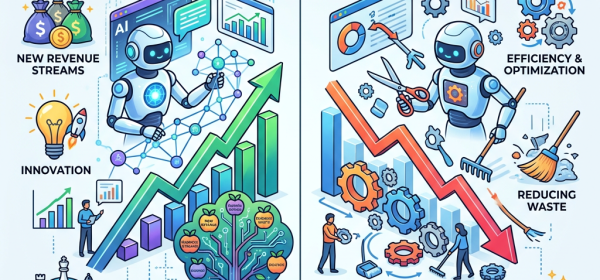
Comparison infographic showing agentic AI growth with increasing graph and innovation versus cost reduction with decreasing graph and efficiency tools.

Building an agentic AI strategy that pays off – without risking business failure

The article discusses the strategic choices organizations face with agentic AI: a safe option for cost reduction versus a daring approach for substantial growth. It highlights the risks of implementation, including rising costs, unpredictable results, and potential operational failures. A cautious, structured approach with clear goals and governance is recommended for successful deployment.

Continue reading

Panel of four professionals discussing AI agents in corporations in front of audience

AI reality check: Here’s what three companies learned building wallets, homes, and games

Executives from Citi, Home Depot, and Capcom discussed the integration of AI agents in their operations during a recent panel. Citi’s client-facing agent, Citi Sky, enhances customer interaction and offers governance; Home Depot’s Magic Apron provides consistent support across channels; and Capcom uses AI to boost efficiency in game development, freeing up creative resources.

Continue reading

Woman holding smartphone projecting holographic AI assistant figure and interface

OpenAI’s first smartphone aims to replace apps with AI agent

OpenAI is reportedly developing an “AI agent phone” that aims to revolutionize smartphone functionality by minimizing app reliance. Instead of switching between apps, users would ask the AI to manage tasks autonomously. Collaborations with MediaTek and Qualcomm are in progress, with a potential launch timeline set for 2028. Challenges remain in changing user habits.

Continue reading

Why AI scaling is so hard — and what CIOs say works

A MIT NANDA report revealed that 95% of companies see no return on their GenAI investments. CIOs from various industries are scaling AI by focusing on specific use cases, starting small, choosing the right vendors, tracking performance, and learning from failures. Effective governance and user engagement are crucial for successful AI integration.

Continue reading

AI fuels a new wave of technical debt

Technical debt exacerbates challenges for CIOs, especially with the integration of AI. Legacy systems and siloed data complicate deployment and efficiency. A study shows ignoring technical debt can result in decreased project returns and increased timelines. Organizations must manage AI-related debt through visibility, governance, and cross-functional collaboration to foster continuous improvement.

Continue reading

The sunsetting of Sora: A hard lesson in AI portfolio resilience

OpenAI’s Sora application was recently shut down, along with its $1 billion partnership with Disney, highlighting the fragility of AI products despite vendor stability. As AI markets evolve, CIOs face new challenges, including the risk of dependency on specific tools. Experts urge resilience through modular design and the careful selection of AI models.

Continue reading

Your AI vendor is now a single point of failure

AI vendor lock-in poses significant risks for organizations, yet many overlook this dependency amidst their reliance on AI models. Companies must prioritize AI continuity planning, including contract reviews, performance baselines, and switchover procedures. Without such strategies, businesses may face disruptions that could compromise their operations and strategic objectives.

Continue reading

Vibe coding: Speed without security is a liability

Software development is shifting to “vibe coding,” where natural language prompts generate code via AI. This boosts productivity but creates security risks, as organizations struggle to fix vulnerabilities quickly. The lack of oversight leads to technical debt and critical gaps. To succeed, firms must prioritize security alongside innovation.

Continue reading

Chief AI Officer on course-correcting when AI moves too fast

Rob T. Lee, chief AI officer at SANS Institute, highlights the challenges organizations face when rapidly adopting AI technologies. He emphasizes the importance of fostering a learning mindset and adapting workflows while being sensitive to existing team processes. Lee advocates for daily engagement with AI and promoting curiosity in technology to overcome resistance and drive progress.

Continue reading

Why An AI Event Strategy Is Becoming A Leadership Issue, Not A Technology One

B2B event teams are facing pressure from constrained budgets and evolving audience expectations. AI offers solutions to enhance productivity and attendee experiences but many teams struggle with its strategic implementation. With the growing importance of data, leaders must integrate AI thoughtfully while ensuring that human creativity remains pivotal in event design.

Continue reading

Shadow AI: When everyone becomes a data leak waiting to happen

Shadow IT poses significant risks for organizations, worsened by the rise of shadow AI, where unauthorized tools can lead to data leaks and compliance issues. Employees using AI without IT oversight may inadvertently expose sensitive information. Organizations should focus on training and collaboration rather than outright restriction to mitigate these risks effectively.

Continue reading

Building a strong data infrastructure for AI agent success

Enterprises are rapidly adopting AI agents as assistants and task-runners, with a significant rise in AI usage across business functions. However, scaling AI remains challenging due to inadequate data architectures. To succeed, companies must focus on effective data governance and context, rather than just data volume, ensuring reliable AI performance.

Continue reading

Who really sets AI guardrails? How CIOs can shape AI governance policy

Secretary of Defense Pete Hegseth pressured Anthropic to relax AI safeguards for military use, a demand the company declined. This situation highlights the broader issue of AI governance, with CIOs balancing vendor safeguards, government policies, and internal pressures. Effective AI governance requires proactive engagement and ethical standards beyond mere compliance to mitigate risks.

Continue reading

ChatGPT Health: What You’re Meant to Use the AI for, and Everything You Should Avoid

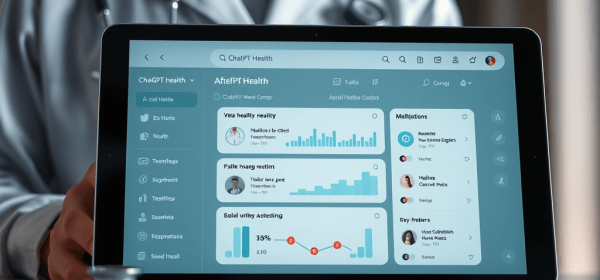
OpenAI’s ChatGPT Health, launched in January 2026, is a dedicated feature for health-related inquiries within ChatGPT, designed to assist users in understanding medical information without replacing professional advice. It utilizes advanced AI models while adhering to stricter information guidelines, aiming to empower users in health discussions, albeit with crucial limitations.

Continue reading

Will AI Eat Your RevTech Stack?

The recent $285 billion selloff in SaaS shares raises questions about the relevance of seat-based RevTech in an era of AI. While some believe AI will replace jobs, others argue it will augment productivity. RevOps leaders should focus on designing flexible tech stacks that adapt to varied AI impacts rather than adopting rigid strategies.

Continue reading

How Businesses Use AI Chatbots to Generate More Leads and Boost Revenue

AI chatbots have evolved into essential tools for businesses, transforming visitor interactions into active sales opportunities. By utilizing natural language processing and behavioral tracking, they engage users in real time, qualify leads, and drive revenue through upselling and personalized guidance, significantly enhancing conversion rates and optimizing sales efforts.

Continue reading

AI‑Assisted Coding Assistants in 2026: How They Speed Up Development Without Writing Full Apps

By 2026, AI-assisted coding assistants have evolved into essential tools for developers, automating repetitive tasks and generating code snippets while maintaining human oversight. They enhance productivity, allowing teams to onboard faster and improve code quality, though they come with risks like potential errors and over-reliance. The tools do not create complete applications but support design and architecture, marking a shift in software development dynamics.

Continue reading

The SOC of the future: How teams can see, know and protect more

The modern Security Operations Center (SOC) faces challenges due to disjointed tools and overwhelming alert volumes, hindering effective threat response. Future SOCs should embrace Detection-as-Code, continuous validation, and unified operations, integrating offensive tactics to enhance security. Investing in these strategies will transform SOCs into resilient, proactive entities by 2026.

Continue reading

The Complete Guide to How Online Marketplace Systems Process Digital Transactions Securely

Online marketplaces are crucial in modern commerce, enabling transactions between multiple buyers and sellers. They employ complex payment processing systems to handle logistics, security, and compliance, including PCI DSS and PSD2 regulations. Advanced technologies like tokenization and real-time tracking enhance efficiency and trust, positioning payment processing as a strategic advantage for growth.

Continue reading

When earnings calls demand AI ROI, how can CIOs meet the challenge?

Earnings calls for tech companies are increasingly focused on AI ROI, as stakeholders demand tangible results from investments. CIOs face pressure to validate AI initiatives, transitioning from experimental enthusiasm to operational scrutiny. Effective communication of metrics and aligning AI projects with financial goals are crucial to maintaining support amid evolving expectations.

Continue reading

The crucial first step for designing a successful enterprise AI system

Mistral AI emphasizes the importance of selecting an impactful, strategic, and urgent use case for successful generative AI deployments. Their methodology involves collaborative workshops to identify optimal projects that can quickly deliver measurable outcomes. By co-designing tailored solutions, Mistral AI aims to transform organizations’ AI capabilities, ensuring sustainability and value.

Continue reading

AI coding is now everywhere. But not everyone is convinced.

AI-powered coding tools have rapidly evolved, promising increased productivity for developers. However, many face limitations, leading to skepticism about their actual benefits. While some tasks show efficiency gains, overall quality and maintainability suffer. Adoption persists despite disillusionment, raising concerns about job displacement and the diminishing skillset among developers.

Continue reading

Cyber experts warn AI will accelerate attacks and overwhelm defenders in 2026

Cybersecurity experts predict a transformative landscape in 2026, driven by AI. Attacks will escalate in speed and sophistication, potentially outpacing defenses. Autonomous systems will empower cybercriminals, leading to increased vulnerabilities, extortion, and ransomware. Organizations must adapt, balancing automation with human oversight to counter evolving threats effectively. AI’s impact is undeniable.

Continue reading

It’s time to revamp IT security to deal with AI

In May, a security breach exposed personal data of over 483,000 patients due to an unsecured database. A report revealed that 90% of organizations are unprepared for AI-related threats. Key threats include AI-driven social engineering, prompt injection attacks, and data poisoning. Companies must enhance cybersecurity strategies immediately.

Continue reading

Silhouettes of people holding hands with glowing hearts and brains connected by lines

Health Wellbeing Weekly Overview — Week of July 13–July 18, 2026

This week’s Health Wellbeing highlights the importance of relationships in mental health, showcasing studies on the psychological impacts of serious illness and the balance of interpersonal connections. It challenges traditional wellness narratives, emphasizing that wellbeing is complex and contextual, influenced as much by relational dynamics as by biochemical factors.

Continue reading

Technicians monitoring AI-controlled robotic assembly and factory analytics screens

IT Professional Weekly Overview — Week of July 13–July 18, 2026

This week’s IT Professional highlights the rapid integration of artificial intelligence into production systems, emphasizing the balance between productivity benefits and emerging security threats. Key developments include significant product launches, the rise of autonomous AI agent threats, and advancements in cloud infrastructure resilience and developer tools, all underscoring the industry’s urgent need for security and cost management.

Continue reading

AI Security Command Center dashboard showing total AI threats blocked, active threat feed, system health score, network threat topology, and recommended actions

IT Professional Weekly Wrap-Up — Week of July 13–July 18, 2026

This week’s roundup highlights advancements in AI tools and their implications for business, including Anthropic’s Reflect dashboard and OpenAI’s ChatGPT Work. It also addresses security vulnerabilities, such as the Gitea Docker flaw, and the rise of AI-driven ransomware. Overall, it emphasizes the importance of robust security measures amid the rapid adoption of emerging AI technologies.

Continue reading

Graph showing exponential growth of global ETF assets from 2010 to 2024+, pie chart comparing ETFs and mutual funds market share, key drivers of ETF dominance, and investing implications

Investment Weekly Overview — Week of July 13–July 18, 2026

This week’s investment coverage highlights the increasing dominance of ETFs in modern portfolios, with net inflows of $32.3 billion versus mutual funds’ losses. Notable trends include a significant rise in model portfolios featuring ETFs, new product launches targeting dividend growth and inflation hedging, and continued caution in Chinese tech investments amidst regulatory risks.

Continue reading

Business team discussing AI and quantum computing concepts using holographic display in office

IT Management Weekly Wrap-Up — Week of July 13–July 18, 2026

This week’s IT Management roundup highlights the evolving responsibilities of CIOs in AI and digital transformation, addressing quantum risk management and accountability in AI decision-making. Key themes include a shift towards identity security and infrastructure needs in the AI era, alongside workforce impacts like layoffs at Oracle and the value of Gen Z talent.

Continue reading

Diagram contrasting classical cryptography vulnerable to quantum attacks with secure post-quantum cryptography transitioning through updates

Quantum Negligence On The Clock: The US Just Set The Egg Timer On Quantum Migration As An Enterprise Risk

The US federal government has mandated a timeline for agencies to transition to post-quantum cryptography (PQC) through an executive order. This shift transforms quantum risk into a structured governance issue, impacting enterprise risk management. Organizations must prioritize PQC migration, establish accountability, and ensure third-party compliance to mitigate potential negligence risks.

Continue reading

Businesswoman presenting AI digital transformation strategy to colleagues in conference room

The CIO’s Responsibilities For AI Transformation Burst The Boundaries Of IT

The evolving role of CIOs now extends beyond technology management to encompass business leadership, particularly in guiding AI and digital transformation. Key responsibilities include acting as business advisors, managing both structured and unstructured data, orchestrating technology solutions, and safeguarding brand reputation amid increased AI integration.

Continue reading

Speaker presenting scalable AI infrastructure at Global AI Networking Conference

HPE Discover 2026: The Juniper Effect Comes Into Focus

At HPE Discover 2026, the focus was on rethinking networking and infrastructure due to AI’s impact. HPE emphasized its historical strengths, linking its future to Juniper’s capabilities in AI-driven operations. The event highlighted a shift back to infrastructure fundamentals, with a strategic vision increasingly shaped by Juniper’s influence in networking and AI.

Continue reading

Digital scale weighing AI efficiency with robotic elements against human creativity with people brainstorming

The Cost Of AI Productivity Is Less Creativity

AI’s growing use in marketing agencies enhances efficiency but risks creativity and brand distinctiveness. While agencies prioritize productivity and cost over creative quality, this mindset threatens long-term growth. CMOs must shift focus from short-term gains to effective strategies, emphasizing brand differentiation to ensure sustainable success in a rapidly evolving landscape.

Continue reading

Illustration showing AI-driven personalized experiences with users Sarah, Alex, and Maya interacting with smart devices and systems.

Answer Engines Will Select Your Content. Your Digital Experience Has To Do More.

Recent vendor shifts signal a transformation in content strategy, moving from visibility in AI-generated answers to delivering personalized customer experiences. Companies like Adobe and Optimizely are pioneering this change, emphasizing the need for interconnected systems and data. Organizations must adapt quickly to this new landscape for improved engagement and success.

Continue reading

1 2 3 1,052