Building a Cloud-based OLAP Cube and ETL Architecture with AWS Managed Services

For decades, enterprises used online analytical processing (OLAP) workloads to answer complex questions about their business by filtering and aggregating their data. These complex queries were compute and memory-intensive. This required teams to build and maintain complex extract, transform, and load (ETL) pipelines to model and organize data, oftentimes with commercial-grade analytics tools.

Continue reading

Hydrate your data lake with SaaS application data using Amazon AppFlow

Organizations today want to make data-driven decisions. The data could lie in multiple source systems, such as line of business applications, log files, connected devices, social media, and many more. As organizations adopt software as a service (SaaS) applications, data becomes increasingly fragmented and trapped in different “data islands.” To make decision-making easier, organizations are building data lakes, which is a centralized repository that allows you to store all your structured and unstructured data at any scale.

Continue reading

Field Notes: Data-Driven Risk Analysis with Amazon Neptune and Amazon Elasticsearch Service

In this blog, you learn how Amazon Neptune as a graph database, combined with Amazon Elasticsearch Service (Amazon ES) for full text indexing helps you shorten risk analysis processes from weeks to minutes. We give a walk-through of the steps involved in creating this knowledge management solution, which includes natural language processing components.

Continue reading

Use Application Gateway Ingress Controller (AGIC) with a multi-tenant Azure Kubernetes Service (AKS)

A multitenant Kubernetes cluster is shared by multiple users and workloads that are commonly referred to as “tenants.” This definition includes Kubernetes clusters that are shared by different teams or divisions within an organization, as well as clusters that are shared by per-customer instances of a software-as-a-service (SaaS) application.

Continue reading

Integrate IBM mainframe and midrange message queues with Azure

A popular approach in digital transformation scenarios is to see whether existing applications and middleware tiers can run as-is in a hybrid setup where Microsoft Azure serves as the scalable, distributed data platform. This example describes a data-first approach to middleware integration that enables IBM message queues (MQs) running on mainframe or midrange systems to work with Azure services so you can find the best data platform for your workload.

Continue reading

How Mr. Cooper is using AI to increase speed and accuracy for mortgage processing

Mr. Cooper Group is an industry-leading mortgage services provider serving customers through servicing, originations, and digital real estate solutions. Using Google Cloud AI and ML solutions, they created a highly reliable, cloud native document analysis and processing platform to process lending documents and unlocked new levels of accuracy and operational efficiency that help them to scale and control the cost at the same time.

Continue reading

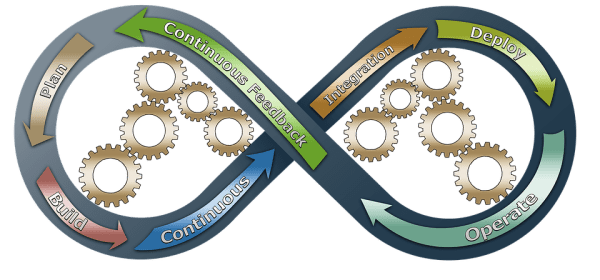
How To Transition To DevOps For Faster Workflows

Transitioning to DevOps for faster workflows can be done in several key steps. Of course, DevOps implementations such as continuous integration, delivery, and deployment save businesses time while reducing costs. Additionally, long-term DevOps adoptions empowers companies to maximize resource utilization, integrate new developers into existing workflows, and construct a reliable infrastructure.

Continue reading

DevOps on Google Cloud: tools to speed up software development velocity

Editor’s note : Today we hear from ForgeRock , a multinational identity and access management software company with more than 1,100 enterprise customers, including a major public broadcaster. In total, customers use the ForgeRock Identity Platform to authenticate and log in over 45 million users daily, helping them manage identity, governance, and access management across all platforms, including on-premises and multicloud environments.

Continue reading

black screen with code

Improve query performance using AWS Glue partition indexes

While creating data lakes on the cloud, the data catalog is crucial to centralize metadata and make the data visible, searchable, and queryable for users. With the recent exponential growth of data volume, it becomes much more important to optimize data layout and maintain the metadata on cloud storage to keep the value of data lakes

Continue reading

Build secure encrypted data lakes with AWS Lake Formation

Maintaining customer data privacy, protection against intellectual property loss, and compliance with data protection laws are essential objectives of today’s organizations. To protect data against security threats, vulnerabilities within the organization, malicious software, or cyber criminality, organizations are increasingly encrypting their data.

Continue reading

1 169 170 171 172 173 176