Context is King: Using API Sessions for Security Context

API security has become a critical concern due to rising breaches and vulnerabilities. Wallarm’s new API Sessions feature enhances threat detection by aggregating API activity within user sessions, offering insights into behavior patterns and improving incident response. This tool supports diverse architectures and aids in identifying and mitigating risks efficiently.

Continue reading

AWS Lambda SnapStart for Python and .NET functions is now generally available

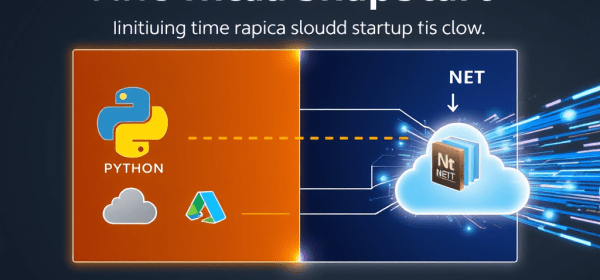
AWS Lambda SnapStart is now available for Python and .NET, enhancing function startup performance from several seconds to sub-second with minimal code changes. By caching the initialized execution environment’s memory and disk state, it reduces latency for various scenarios, enabling scalable applications. Users can activate SnapStart via the AWS Console or CLI.

Continue reading

Introducing resource control policies (RCPs), a new type of authorization policy in AWS Organizations

Resource Control Policies (RCPs) are new AWS authorization tools that manage permissions on resources across an organization, ensuring centralized control and restricted access. RCPs complement existing Service Control Policies (SCPs), allowing organizations to enforce consistent access and maintain security while preventing external access to resources, with no additional charges for implementation.

Continue reading

Improve your app authentication workflow with new Amazon Cognito features

Amazon Cognito has received significant updates to enhance customer identity and access management. Key features include a new developer console, Managed Login for customizable sign-in experiences, support for passwordless authentication, and updated pricing tiers: Lite, Essentials, and Plus. These improvements aim to provide better security and user experience for applications.

Continue reading

Fine-tuning for Anthropic’s Claude 3 Haiku model in Amazon Bedrock is now generally available

Amazon Bedrock now offers fine-tuning for Anthropic’s Claude 3 Haiku model in the US West (Oregon) AWS Region. This enhancement allows businesses to customize the model with specific datasets, improving accuracy and performance. Users can optimize for task-specific needs and benefit from data security within AWS. Customization is accessible via the Amazon Bedrock console.

Continue reading

Introducing a new experience for AWS Systems Manager

The new AWS Systems Manager enhances management capabilities by providing cross-account and cross-Region visibility of managed nodes, including EC2 instances, on-premise servers, and IoT devices. Integration with Amazon Q Developer allows natural language queries, while automated diagnostics and troubleshooting streamline the management process, ensuring nodes remain connected and operational.

Continue reading

Geospatial analysis for telecom

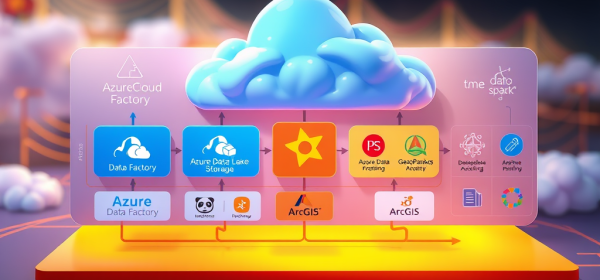
This article presents a scalable architecture for processing geospatial data using Azure Cloud Services, addressing limitations of on-premises solutions. It discusses various Azure tools for data ingestion, transformation, and analysis, emphasizing their significance for telecommunications companies in optimizing network quality and making data-driven decisions while adhering to the Azure Well-Architected Framework.

Continue reading

Graph-based AI model maps the future of innovation

A novel AI method developed by Markus J. Buehler at MIT connects biological materials and Beethoven’s “Symphony No. 9” through shared patterns of complexity. By utilizing generative AI and graph-based tools, researchers can uncover insights across diverse domains, facilitating innovative material design and interdisciplinary scientific inquiry, thus accelerating discovery.

Continue reading

Google DeepMind has a new way to look inside an AI’s “mind”

AI has revolutionized fields like drug discovery and robotics, yet understanding its intricate mechanisms remains elusive. Google DeepMind’s Gemma Scope aims to enhance mechanistic interpretability, enabling researchers to analyze AI’s internal processes. By utilizing sparse autoencoders, this tool provides insights into model behavior and patterns, potentially improving AI reliability and addressing complex issues like bias and error.

Continue reading

Agentic AI: Exploring its scope, applicable use cases and current state

Agentic AI represents a significant evolution in artificial intelligence, enhancing traditional models with greater autonomy and adaptability. Unlike static large language models, agentic AI integrates real-time data processing, autonomous decision-making, and continuous learning. Its applications span various domains, including healthcare and industrial automation, optimizing tasks and improving efficiency.

Continue reading

Become a Master Prompt Engineer: The Essential Guide to Crafting Effective AI Prompts

Prompt engineering involves creating precise inputs to generate high-quality AI outputs. Mastery requires understanding AI capabilities, starting with simple prompts, using context and constraints, experimenting with role-based instructions, and continuously refining responses. Staying updated on new tools is essential for maximizing AI’s potential across various tasks.

Continue reading

The best open-source AI models: All your free-to-use options explained

Generative AI has evolved rapidly, enabling the creation of various media. Open-source models provide accessibility and customization, while proprietary models excel in compliance and specialized tasks. The Open Source AI Definition clarifies compliance standards, highlighting the challenges models face in meeting these criteria. Choosing the right model depends on licensing, performance, and functionality needs.

Continue reading

How ChatGPT search paves the way for AI agents

OpenAI’s Olivier Godement and Romain Huet discussed advancements in AI during their London visit for DevDay, including updates to the Realtime API and a new ChatGPT search feature. They emphasized the future potential of AI agents capable of executing complex tasks but acknowledged challenges in reasoning and tool connectivity that must be addressed for broader adoption.

Continue reading

1 41 42 43 44 45 174