
Value of Account-Based Strategy As seen in the survey results above, the second priority of digital marketing leaders is to drive increased sales among identified leads.

Value of Account-Based Strategy As seen in the survey results above, the second priority of digital marketing leaders is to drive increased sales among identified leads.
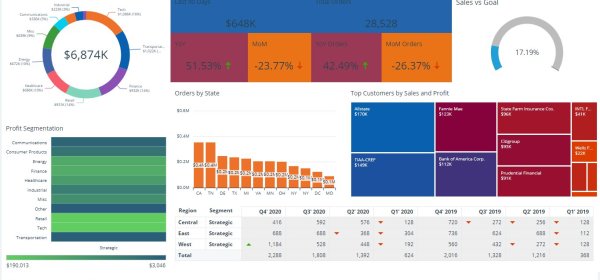
Powered by the continuous influx of data, our self-learning machine learning (ML) models optimize these predictions every day, which improves outcomes and enables close alignment between Sales and Marketing

Enabling applications, including the most business-critical ones, to run in public cloud when they were not built to do so requires a costly and time-consuming refactoring process.
Hybrid multi-cloud, or an IT environment providing unified infrastructure operations and management across private and public clouds, is perfectly poised to help bridge the gap businesses face due to supply chain issues.
Rapidly changing world events, such as geopolitical shifts, environmental and societal disruptions, and COVID-19, continue to drive significant changes in both consumer and customer needs and behaviors. These changes have caused buyers to use and accept more digital channels. Buyers also now expect a more B2C-style experience in their working lives. Access to information has never been easier, yet people struggle with the volume of data.
To leverage the rise of the metaverse, brands need to understand exactly what their customers are seeking while realizing that consumer behaviors will continue to change.
To meet these needs, brands must ensure they are preparing for new channels and preferences while monitoring consumers’ ever-shifting attitudes.

The software integrates across a brand’s consumer touchpoints — from the website and mobile app to the call center and email communications — and analyzes the customer’s interactions. This helps to form a real-time picture of what the customers are trying to achieve, otherwise known as their “intent.” The CJO system then uses its “brain” (the central decision-making software) to recommend the most appropriate conversation to have with the customer to help them achieve their goal, orchestrating the most relevant response across touchpoints and, in some cases, suppressing irrelevant communications.
Alfonso de la Nuez is Co-Founder and Co-CEO of UserZoom , an experience insights management (XIM) company. I ordered a pizza a few weeks ago. Unfortunately, what should have been a quick dinner, became a frustrating lesson in why the future of digital brand success lies in the real-time connection of UX (user experience) and CX (customer experience).

Marketing leaders often hold partners at an arm’s length. They think the complexity and hassle of creating close business relationships with partners will outweigh the value gained. But by treating partner marketing as a secondary program, marketing organizations are missing out on an invaluable opportunity.
The CMO/CIO relationship is a paradox : A strong partnership between marketing and technology teams is imperative to achieving customer success, but examples of great collaboration between the two have been scarce. However, that’s changing.

In 1973, Ronnie Lane and Ronnie Wood of the band Faces wrote the song “Ooh La La” that is famous for its prescient lyric, “I wish that I knew what I know now when I was younger.” The song is intended to be a lesson in love and relationships, but it’s a theme that applies to many aspects of life, including the planning, implementation and management of integrated campaigns in B2B.

Key takeaways The pandemic has only accelerated consumer demand for the ability to buy online. Merely selling online is very different from building a sustainable e-commerce business. Companies need to avoid five traps when launching direct-to-consumer operations.

Supply chain technology leaders face an uncertain future — one that comes at them faster and faster every day. But thinking about the future is often not a priority. Because of technologically driven disruptions, these leaders will play an increasingly important role in forecasting the future.

The pandemic was a reality check for organizations across every industry. The virus not only contained health risks, it also propelled the need for fast and furious digital transformation to sustain operations and engage with customers.
It is no secret that the continued expansion of digital and the proliferation of data has fundamentally changed what it takes to compete in retail. In response, retailers have been actively investigating ways to transform their business model, and the COVID-19 crisis has amplified that need.