
Amazon SageMaker Studio introduces Amazon Q Developer, a generative AI-powered assistant that streamlines the machine learning (ML) development process. This feature, available in all SageMaker regions, aids users by providing step-by-step guidance, generating code, and offering troubleshooting assistance, helping to improve productivity and accelerate time to insights.
Tag: IT cloud computing

Empowering Manufacturing Innovation: How AI & GenAI Centers of Excellence can drive Modernization
Technologies such as machine learning, artificial intelligence, and Generative AI are transforming manufacturing, offering benefits like improved uptime, safety, waste reduction, and faster time to market. Despite this, companies face challenges in AI adoption due to cultural, organizational, and technical constraints. An AI Center of Excellence (CoE) can bridge these gaps and accelerate modernization through AI and Gen AI adoption.
Centralize observability with Amazon Managed Grafana Enterprise plugins
Observability is crucial for maintaining system health. Amazon Managed Grafana offers a fully managed service for visualizing, querying, and alerting on data. It supports diverse data sources and third-party plugins, promoting unified observability experiences in hybrid environments. Enterprise plugin access comes with additional support and training, available with a pay-as-you-go pricing model.
Monitor data events in Amazon S3 Express One Zone with AWS CloudTrail
Amazon S3 Express One Zone, a high-performance storage class, now supports AWS CloudTrail data event logging. This allows monitoring of object-level and bucket-level operations, aiding in governance and compliance. By enabling CloudTrail data event logging, users can create rule-based workflows and track events to simplify governance and compliance.
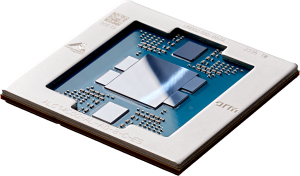
AWS Graviton4-based Amazon EC2 R8g instances: best price performance in Amazon EC2
AWS has launched the new AWS Graviton4-based Amazon EC2 R8g instances, offering superior performance, energy efficiency, and enhanced security. These instances are ideal for various workloads, achieving significant performance improvements over previous generations. With larger instance sizes, increased memory bandwidth, and network bandwidth, they provide a powerful and cost-effective computing option.

Implementing multi-Region failover for Amazon API Gateway
This post, by Marcos Ortiz and Khubyar Behramsha, explains how organizations can transition from a single-Region to a multi-Region API Gateway architecture with reliable failover mechanisms. It emphasizes the importance of independent failover controls for business-critical applications and provides a detailed walk-through for deploying and testing the proposed architecture.
Artificial intelligence (AI) architecture
Artificial intelligence (AI) enables computers to imitate human behavior, including image analysis, speech comprehension, natural interaction, and data-based predictions. AI concepts include algorithms, machine learning (ML), deep learning, bots, and autonomous systems. Microsoft offers AI resources like Azure Bot Service, autonomous systems for smart buildings, prebuilt AI models in AI Builder, and Azure technologies for ML development.
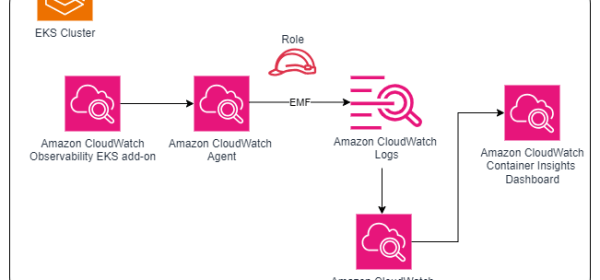
Gain operational insights for NVIDIA GPU workloads using Amazon CloudWatch Container Insights
Machine learning models are increasingly demanding powerful computing for efficient training. Organizations are turning to GPU-accelerated Kubernetes clusters for model training and inference. Properly monitoring GPU usage is critical to understand model performance and optimize infrastructure. Amazon CloudWatch now offers Container Insights for Amazon EKS with support for NVIDIA GPUs and EFAs, providing essential observability for machine learning workloads.
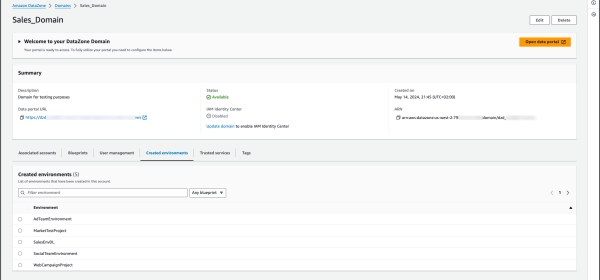
Introducing end-to-end data lineage (preview) visualization in Amazon DataZone
Amazon DataZone introduces a new API-driven and OpenLineage compatible data lineage capability. This feature provides an end-to-end view of data movement over time, helping users visualize and understand data provenance, trace change management, and be prepared for questions on data movement. The data lineage capability is available in preview in all Regions where Amazon DataZone is generally available.
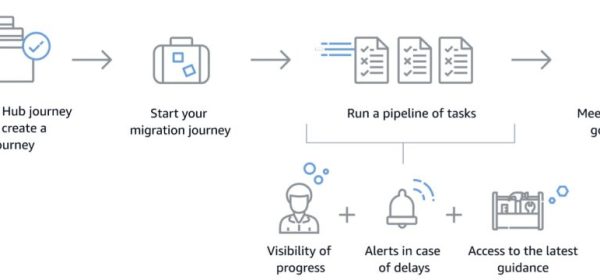
Accelerate VMware Migrations to AWS using AWS Migration Hub Journeys
AWS introduced Migration Hub Journeys to accelerate application migration and modernization. The tool provides task-based templates, expert guidance, and collaboration for seamless migration. New templates for AWS for VMware enable rapid migration and optimization of VMware workloads. The templates guide users through planning, execution, and tracking of migrations, ensuring successful transitions to AWS.

Let’s Architect! Migrating to the cloud with AWS
Businesses are increasingly migrating to the cloud for scalability and cost-effectiveness. This Let’s Architect! blog post guides you through the process of migrating to the cloud with AWS, leveraging the AWS Cloud Adoption Framework. It outlines a comprehensive approach and valuable resources for successful migration, large-scale migration, database migration, application migration, and infrastructure automation.

Resiliency Journey : exploring how AWS Resilience Hub and Migration Acceleration Program come together
In today’s digital landscape, the shift to cloud infrastructure offers organizations the opportunity to enhance disaster recovery and resilience. AWS Resilience Hub allows for defining, validating, and tracking application resiliency, supporting business continuity and regulatory requirements. Integrating the hub into the migration process helps applications meet resilience standards and reduces recovery time.
Managing a Distributed API Estate Efficiently with Azure API Management and Self-Hosted Gateways
Azure API Management (APIM) is a cloud-based service for creating, publishing, and managing APIs. It offers policy management, access control, and transformation of requests and responses. Self-hosted gateways extend this capability outside of Azure. APIM integrates with API Center for discovery and governance. This solution addresses challenges of managing distributed APIs efficiently.

Microsoft Entra IDaaS in security operations
This architecture demonstrates integrating Microsoft Entra identity and access capabilities into a zero-trust security strategy focused on cloud services. Gartner predicts rapid cloud market growth, highlighting the need for a shift towards prioritizing user identity security. Microsoft Cybersecurity Reference Architecture (MCRA) outlines how these capabilities integrate with existing architectures and provides potential use cases and components.