
The first phase of Retrieval-Augmented Generation (RAG) development involves preparing the business domain and gathering relevant documents and sample questions. It’s crucial to ensure document pertinence, representation, and quality. Test queries and their outputs are also gathered, and synthetic questions can be generated from representative documents. Unaddressed queries must also be considered. The article provides guidance on document analysis and offers next steps. Source: https://learn.microsoft.com/en-us/azure/architecture/ai-ml/guide/rag/rag-preparation-phase
Tag: IT cloud computing
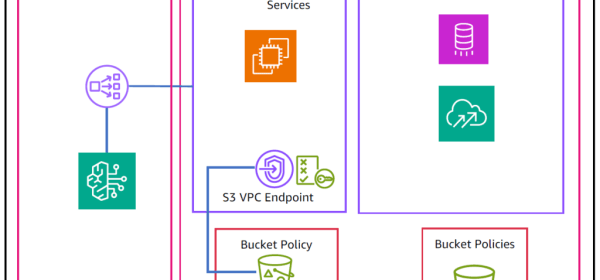
Planning Migrations to successfully incorporate Generative AI
The rise of generative AI poses challenges to cloud migrations due to data isolation, sharing, and costs. Amazon Web Services offers technical controls and business solutions to mitigate these issues, including leveraging AWS services like Amazon Bedrock and engaging the Cloud Center of Excellence. Proactive planning is essential to fully leverage generative AI and cloud synergies.
How to monetize an API on AWS?
This post discusses the monetization of a REST API for malware scanning using Amazon’s API Gateway and FastSpring. The author considers AWS Marketplace for AWS customers, but opts for a solution using API Gateway, usage plans, API keys, Lambda, and FastSpring for broader customer reach.
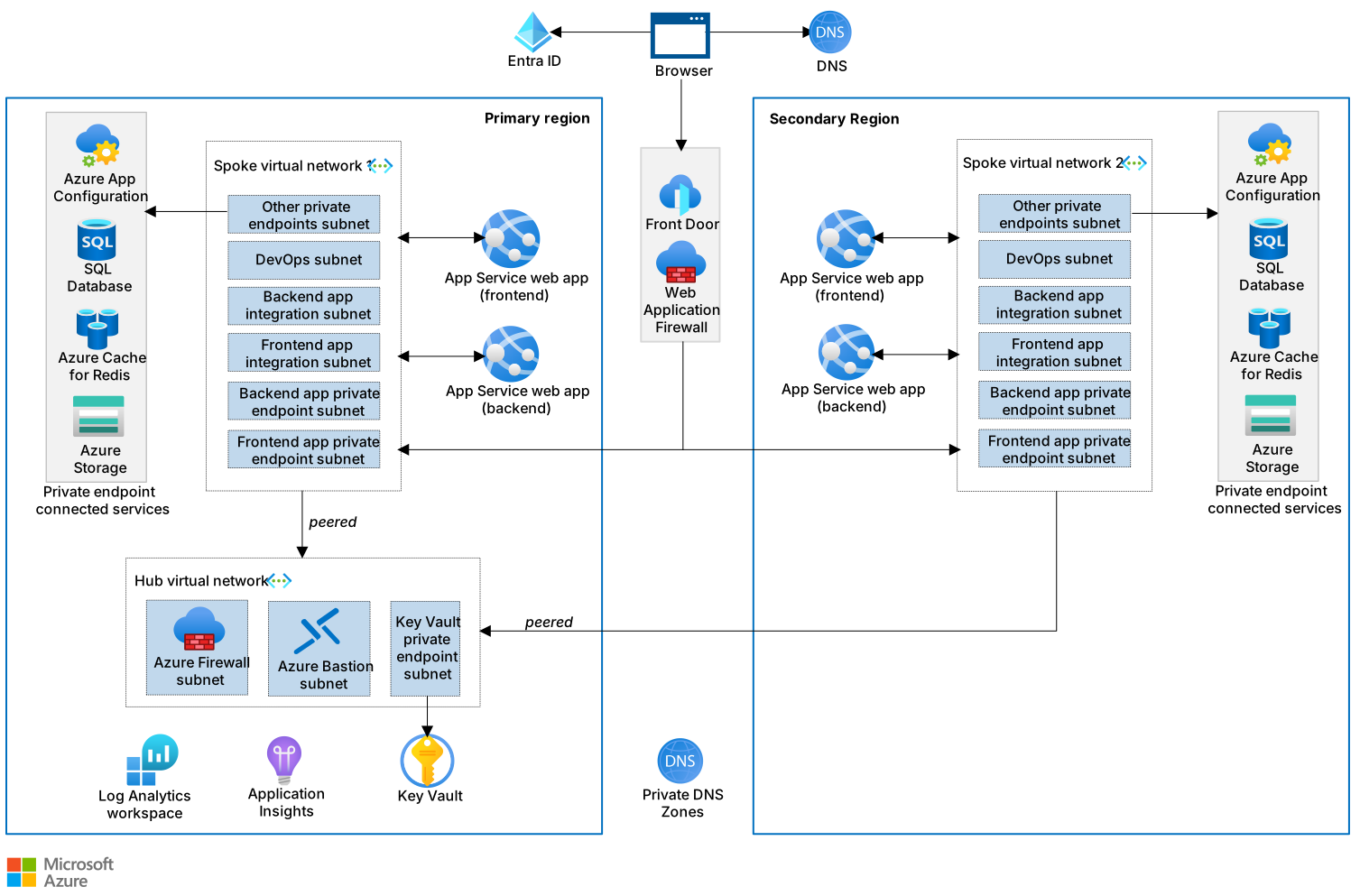
Reliable web app pattern for .NET – Plan the implementation
This article introduces the Reliable Web App pattern, providing guidance on transitioning web apps to the cloud. It emphasizes defining business goals, choosing managed services, and selecting the right architecture. Through a fictional company example, it illustrates the decision-making process for each step, guiding readers to plan and implement a successful cloud migration.
Import custom models in Amazon Bedrock (preview)
Amazon Bedrock now allows importing custom weights for supported model architectures like Meta Llama 2, Llama 3, and Mistral in Hugging Face safetensors format from Amazon SageMaker and Amazon S3. Security and scalability are ensured through AWS IAM roles, and on-demand mode ensures cost-effectiveness. This launch facilitates building and scaling generative AI applications with enhanced privacy and security.

How to monitor AWS WAF logging centrally using Amazon Managed Grafana
This post emphasizes the importance of maintaining high cloud security and real-time detection of malicious web activity using AWS WAF. It explains how to set up centralized logging for AWS WAF web ACLs with AWS Firewall Manager and monitor logs in near real-time through Amazon Managed Grafana for threat intelligence, rule hardening, and incident response.

Let’s Architect! Discovering Generative AI on AWS
Generative AI, used for creating conversations, images, videos, and music, plays a crucial role in AI and ML. Employing open source tools like Kubernetes, AWS, and SageMaker, organizations can accelerate their generative AI journeys. Additionally, multi-tenant patterns and DevOps maturity are essential considerations for production environments. Practical workshops on AWS provide hands-on experience.
Reducing the Environmental Impact of Generative AI: a Guide for Practitioners
The article introduces the need to consider environmental implications in the lifecycle of generative AI, highlighting Azure’s sustainable practices. It advises on model selection, performance improvement, deployment, and evaluation with a focus on environmental impact. Responsible AI principles from Microsoft are emphasized. For comprehensive details, visit the provided links.

Anthropic’s Claude 3 Opus model is now available on Amazon Bedrock
Anthropic’s Claude 3 Opus, the latest generative AI model, is now available on Amazon Bedrock. It offers exceptional performance, accuracy, and comprehension on complex tasks, making it ideal for industries like healthcare, finance, and research. Users can automate tasks, conduct research, and analyze strategies with this highly advanced model. To access, visit the Amazon Bedrock console.
Azure OpenAI and Call Center Modernization
Azure OpenAI is transforming modern call centers, tackling challenges like high call volume and long wait times. The architecture integrates AI layers with existing systems to assist human agents, improve customer interactions, and secure sensitive data. Implementation of robust security measures and best practices ensures a proactive, inclusive security framework.
KPIs – Enterprise Journey from Technology to Business
This blog post emphasizes the importance of well-defined business KPIs for successful cloud transformation. It details a fictional company’s journey, recommending a phased approach to adopting KPIs – starting with technology KPIs, then introducing business KPIs, and finally evolving to track business KPIs over time. The authors are AWS experts with extensive industry experience.
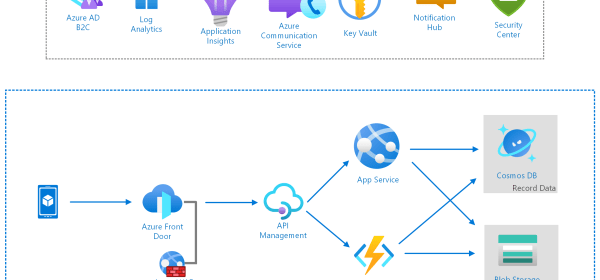
Consumer health portal on Azure
This article outlines a typical architecture for a consumer health portal aligned with the Azure Well Architected Framework. It utilizes Azure services like Front Door, Web Application Firewall, API Management, App Service, Function Apps, Cosmos DB, and more. Security best practices and cost optimization considerations are also addressed. For detailed security practices and availability, consult the original source.
Leverage Large Language Models such as ChatGPT for your Ecommerce System
This solution guide introduces a novel approach using Large Language Models (LLMs), like ChatGPT, to overcome limitations in traditional recommendation methods. It focuses on an ecommerce recommender system, product feature summarization, and product review generation. Addressing biases, GPT’s three recommendation types, and prompt design for summarization and evaluation are also highlighted.
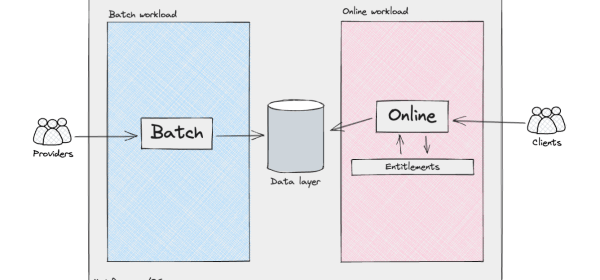
Using data replication in legacy displacement
The project aimed to replace a UK-based client’s 40-year-old Mainframe with a cloud-native application. The approach involved incremental migration, identifying seams in the Mainframe design, and employing principles such as early risk reduction and cross-functional requirements to ensure a smooth transition. Dual run and transitional architecture were utilized for incremental legacy displacement.