AWS cloud monitoring dashboard showing EC2, S3, ADS performance metrics with SRE agents and AI

Build bespoke operational workflows with AWS DevOps Agent custom SRE agents

The post discusses the importance of custom SRE agents within AWS DevOps Agent for managing specific operational standards that general-purpose tools can’t effectively monitor. By enabling teams to define tailored objectives, these bespoke agents facilitate production drift detection and automate workflows, ensuring compliance with organizational policies while integrating seamlessly with existing systems and improving operational efficiency.

Continue reading

Server rack with connected network cables and monitor showing GPU encryption and status details

Protopia and Rafay deliver multi-tenancy for shared GPU AI factories

Enterprise AI infrastructure providers are adopting multi-tenancy and upstream data protection to optimize GPU utilization and create secure, metered services. A partnership between Protopia AI and Rafay Systems emphasizes privacy and cost-efficiency, enabling shared GPU access while maintaining security. This innovation targets the projected $7.36 billion GPU-as-a-service market by 2026.

Continue reading

Enterprise data graph with AI agents processing structured and unstructured data for insightful analytics

Graphs move from niche database to enterprise knowledge layer for AI systems

As generative AI evolves, enterprises are focusing on the enterprise knowledge layer, which centralizes organizational data and ontology. This new architecture enhances accuracy, explainability, and governance in AI systems. Studies show that approaches like GraphRAG significantly outperform traditional methods, providing measurable economic value by improving data insights and decision-making.

Continue reading

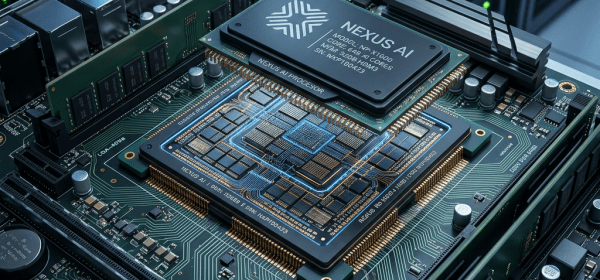
NEXUS AI processor mounted on a computer motherboard with RAM and connected cables

Google’s Frozen v2 Chip Hardwires Gemini Architecture: Up to Tenfold Inference Efficiency

Google is developing a specialized server chip named “Frozen v2” that integrates its Gemini model’s architecture directly into the hardware, potentially increasing inference efficiency by six to ten times compared to current Tensor Processing Units (TPUs). While aimed at enhancing internal operations, it may not be commercially available. Production is expected around 2028.

Continue reading

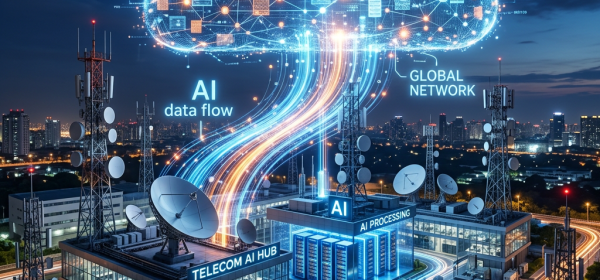
Telecom AI hub connected to cloud data flow and global network with 5G/6G infrastructure

AT&T and Microsoft scale trillion-token workloads with Microsoft Foundry and AMD

AT&T is advancing telecom AI with its OTel2.0, designed for domain-specific applications. By utilizing Microsoft Foundry Managed Compute, they’ve achieved infrastructure flexibility and cost efficiency, processing over one trillion tokens. This innovative approach allows rapid deployment and experimentation with open models like Phi-4, optimizing AI performance and operational scalability.

Continue reading

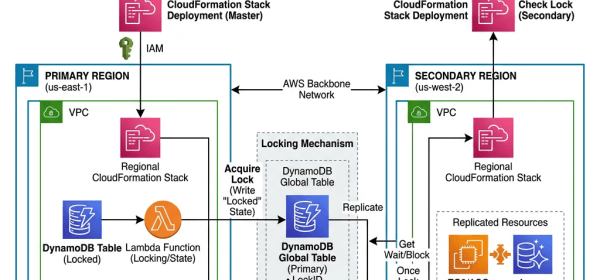
Architecture diagram of CloudFormation deployment across primary and secondary AWS regions using DynamoDB global tables for locking

Building multi-Region resiliency for AWS CloudFormation custom resource deployment

AWS CloudFormation is pivotal for infrastructure-as-code among organizations using AWS, yet lacks native multi-Region support for custom resources, posing challenges like event coordination and duplicate execution risks. This post introduces an architecture using Active-Active processing and DynamoDB for distributed locking, offering a resilient solution for multi-Region deployments.

Continue reading

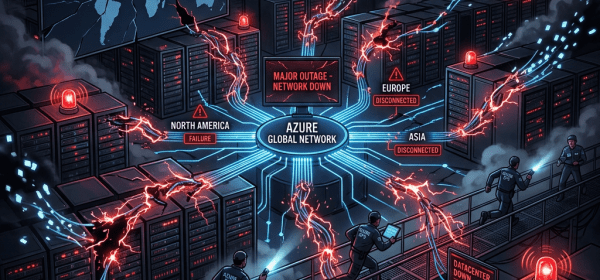
Diagram showing Azure global network outage with failures in North America, Europe, and Asia

Microsoft 365 Outage: Azure Maintenance Bug Wiped IP Routes, Taking Down Teams for Hours

On July 23, 2026, a bug in Microsoft’s automated network maintenance system resulted in the unintended removal of IP routes, causing a major outage at a West US Azure datacenter for nearly five hours. This affected numerous services, including Teams and SharePoint, revealing significant flaws in safety mechanisms. Microsoft plans a comprehensive review.

Continue reading

Three futuristic robots interacting with floating holographic code displays in a technology lab

AI Agents Are Writing Your Infrastructure Code. Is Anyone Governing It?

AI agents now contribute significantly to infrastructure code, yet security hasn’t kept pace, with only 55% of AI-generated code deemed secure. This gap poses major risks for 2026, prompting a shift in platform engineering’s role to govern AI-generated infrastructure. Ensuring security and compliance at code generation is now crucial for teams.

Continue reading

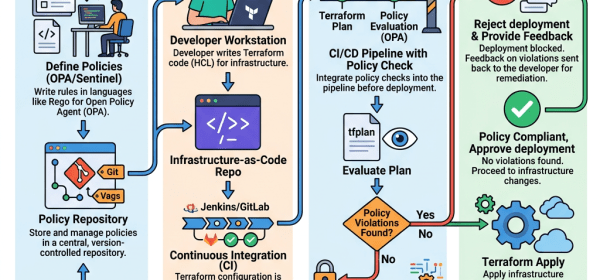
Workflow diagram showing Terraform policy-as-code governance lifecycle including policy authoring, code workflow, enforcement, deployment, and continuous monitoring

HashiCorp Introduces tfpolicy, a Native Policy Framework for Terraform

HashiCorp has launched Terraform policy (tfpolicy) in public beta, integrating a policy-as-code framework directly into Terraform. This allows platform teams to create governance rules using HCL, eliminating the need for separate tools. tfpolicy enhances governance by assessing resource relationships and enabling post-deployment checks, streamlining workflows and reducing complexity for users.

Continue reading

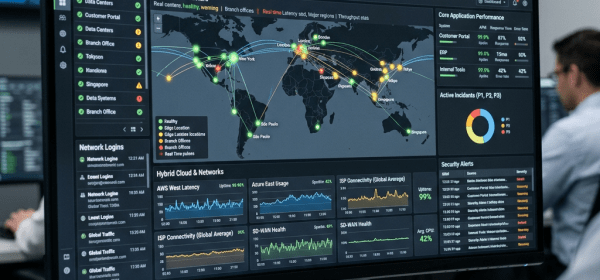
Global IT operations command center dashboard showing network status, infrastructure map, application performance, and security alerts

How Amazon Achieved Full Stack Observability Across 400 Offices with Amazon OpenSearch Serverless

Amazon’s Corporate Infrastructure Services (CIS) supports over 330,000 employees globally, facing significant challenges with monitoring tools due to data silos and fragmented visibility. Implementing the Full Stack Observability (FSO) platform improved operational efficiency, reduced detection and resolution times, and enabled proactive issue management, enhancing overall productivity and user experience.

Continue reading

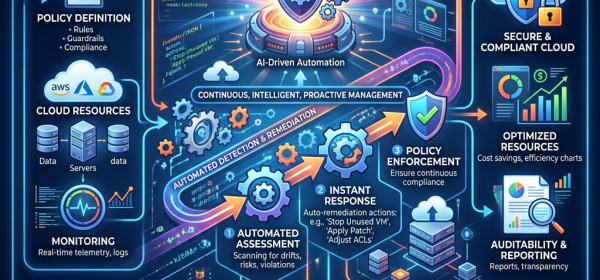
Diagram showing AI-driven auto mode governance engine automating cloud policy enforcement and compliance.

Claude Code Removes Enterprise Opt-In: Auto Mode Now Default on Major Cloud Platforms

Anthropic’s version 2.1.207 change automatically enables auto mode for Claude Code on major cloud platforms like Amazon Bedrock, Google Vertex AI, and Microsoft Azure Foundry. Previously requiring explicit opt-in, this update shifts the governance responsibility to enterprises, necessitating action to disable auto mode if manual control is preferred.

Continue reading

Comparison of incorrect and corrected DNS routing for gRPC client requests showing traffic drop and successful load balancing

How bitdrift scaled to 121 million concurrent gRPC connections on Amazon CloudFront for live telemetry sporting events

bitdrift encountered significant challenges when accommodating 121 million concurrent gRPC connections during live T20 World Cup broadcasts due to DNS misconfiguration. The switch from Weighted to Multi-Value Answer routing in Amazon Route 53 eliminated traffic concentration issues, enabling effective load distribution and handling of peak requests without errors.

Continue reading

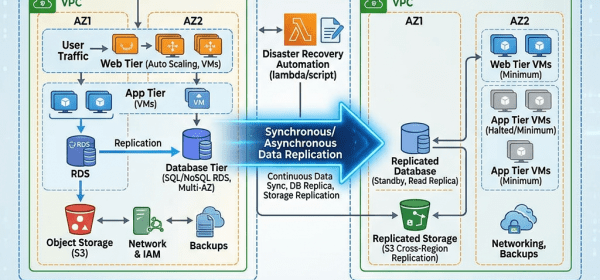
Cloud DR architecture diagram showing primary US-East and secondary US-West regions with data replication workflow

S&P Global’s innovative disaster recovery strategy using Amazon FSx for NetApp ONTAP snapshots

S&P Global Market Intelligence developed a disaster recovery (DR) solution for its Capital IQ platform using Amazon FSx for NetApp ONTAP. This strategy ensures critical data access within 15 minutes during outages, maintaining data integrity and compliance. The approach, leveraging SnapMirror and FlexClone technologies, enhances resilience and reduces costs for cloud operations.

Continue reading

Diagram showing electric field control of heat flow in ceramic material with positive and negative electrodes and phonon transport mechanisms

ORNL Electric Field Triples Ceramic Heat Flow: Phonon Breakthrough Targets AI Chips

Researchers at Oak Ridge National Laboratory discovered that applying an electric field to specialized ceramics can triple their thermal conductivity. This breakthrough allows dynamic control of heat flow without changing material composition, paving the way for advanced thermal management in electronics and AI accelerators, although practical applications face engineering challenges.

Continue reading

1 2 3 4 52