Accelerate foundation model training and fine-tuning with new Amazon SageMaker HyperPod recipes

Amazon SageMaker HyperPod recipes are now available, enabling data scientists and developers to efficiently train and fine-tune foundation models such as Llama 3.1 and Llama 3.2. These optimized recipes streamline the setup process, reduce training time by up to 40%, and support various compute resources, enhancing performance and cost-effectiveness.

Continue reading

Data and AI

Microsoft Purview and AWS services offer data governance solutions for managing data assets. Microsoft Fabric provides an all-in-one platform for data and AI services, simplifying integration compared to AWS’s more fragmented approach. Both ecosystems support data integration, analytics, and machine learning, with unique features enhancing governance, compliance, and analytics capabilities.

Continue reading

Let’s Architect! Modern data architectures

Modern data is crucial for AI and data analytics, providing diverse forms for tailored solutions. AWS has evolved since its inception in 2006, creating a comprehensive ecosystem that supports the entire AI data lifecycle. This blog examines AWS use cases, database selection for generative AI, and strategies for optimizing data architectures.

Continue reading

Top Enterprise Data Catalog Tools for Effective Data Management

Enterprise Data Catalog (EDC) tools are vital for efficiently managing, governing, and accessing vast data in organizations. They serve as centralized repositories, facilitating data discovery, governance, and collaboration. With AI-driven features, these tools enhance data usage, compliance, and decision-making, ultimately optimizing data management across various environments.

Continue reading

Automated enterprise BI

The example discusses incremental loading in an ELT pipeline using Azure Data Factory to transfer data from an on-premises SQL Server to Azure Synapse. It outlines automating processes, integrating multiple data sources, and various components involved like Azure Blob Storage and Analysis Services. It emphasizes efficient data management and cost optimization strategies.

Continue reading

IBM Planning Analytics: The scalable solution for enterprise growth

IBM Planning Analytics is an advanced financial planning tool offering unmatched scalability and performance for complex business applications. Its robust in-memory OLAP engine enables rapid analytics and real-time insights, handling massive data volumes effortlessly. With flexible modeling and seamless integration capabilities, it customizes solutions to fit evolving business needs.

Continue reading

AI and analytics converge in new generation Amazon SageMaker

Amazon introduced a new SageMaker generation at re:Invent, merging analytics and AI with features like Unified Studio for model development and building generative AI applications. SageMaker Lakehouse allows seamless data querying across platforms. Enhanced capabilities address growing demands in analytics and machine learning. Current offerings cater to developers, ensuring clarity in service usage.

Continue reading

Building a highly-available web service without a database

This blog post discusses a new architecture for web development for startups, focusing on three stages: Explore, Expand, and Extract. It emphasizes using a single process for all requests, leveraging in-memory data storage, and implementing the Raft Consensus Protocol for high availability. The solution is illustrated using the Screenshotbot’s architecture, built on Common Lisp and Braft.

Continue reading

Oracle database migration to Azure

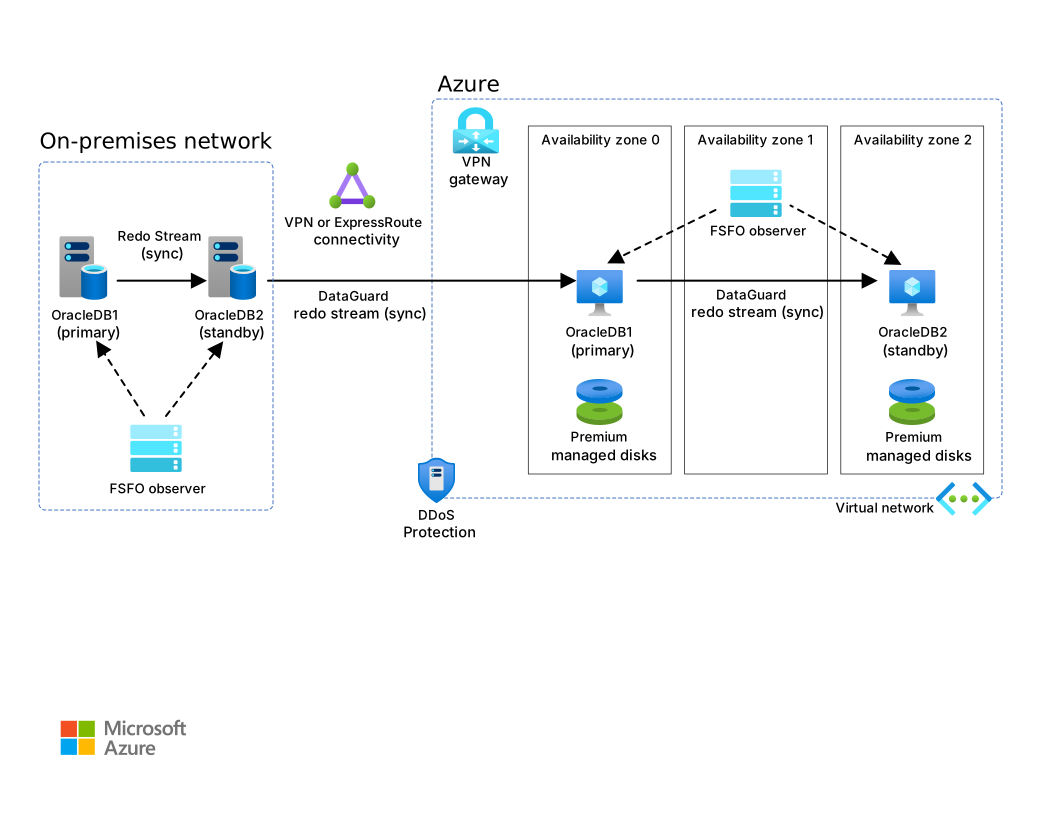
This solution migrates an Oracle database and applications to Azure using Oracle Active Data Guard and Azure Load Balancer. It involves gradual migration and use of Azure services like VPN, ExpressRoute, and Azure Blob Storage. Considerations for architecture, performance testing, backup strategies, and business continuity are also included. Various Oracle migration options and Azure Well-Architected Framework are considered.

Continue reading

Announcing AWS Parallel Computing Service to run HPC workloads at virtually any scale

AWS introduces AWS Parallel Computing Service (AWS PCS), a managed service enabling seamless high performance computing (HPC) cluster setup and management on AWS. AWS PCS uses the Slurm scheduler, providing a familiar HPC environment and simplifying operational tasks. It is accessible through various AWS interfaces and supports a wide range of compute and data-intensive workloads.

Continue reading

Defending sensitive personal data with granular access controls

2Bsecure, an IBM Business Partner, aids Bituach Haklai in enhancing cybersecurity measures to safeguard databases and personal data. The insurer updates security policies due to expanded services and increased cyber threats, using IBM Security Guardium Data Protection. 2Bsecure provides ongoing support and advocates for managed security services to aid smaller organizations.

Continue reading

Intelligent apps using Azure Database for MySQL

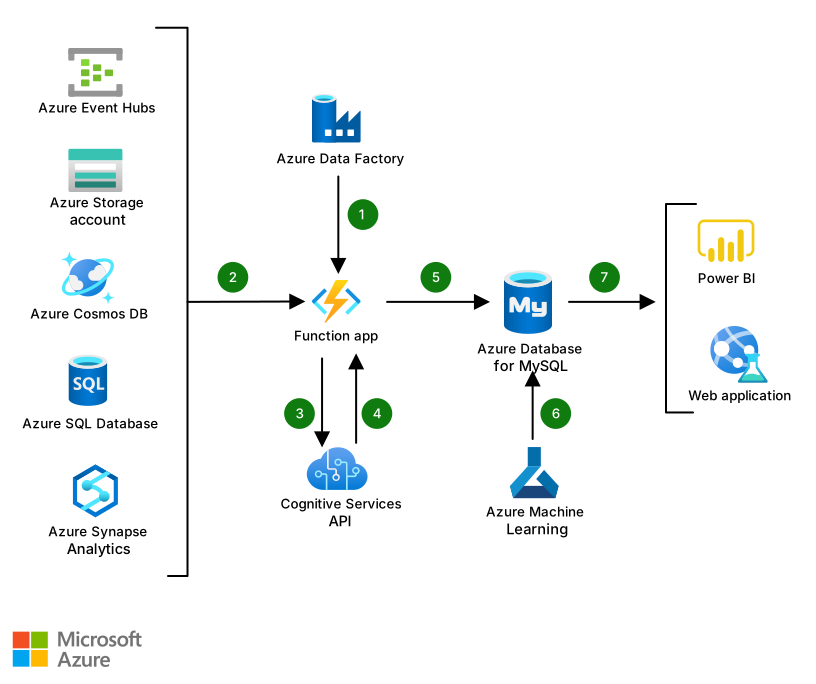
This article presents a solution for automating data analysis and visualization using AI, Azure Functions, and Azure Database for MySQL. The architecture uses Azure Functions to process incoming data, with Azure AI services and Azure Machine Learning for analysis. Ideal for organizations in finance, education, and telecommunications, it offers scalability and infrastructure maintenance benefits.

Continue reading

Simplify custom contact center insights with Amazon Connect analytics data lake

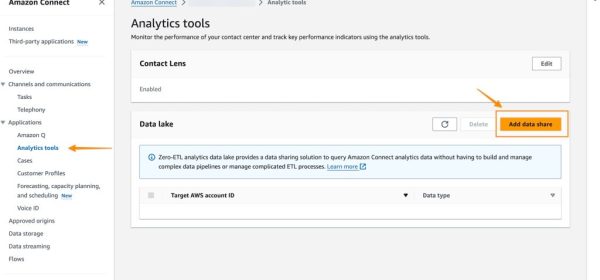
Amazon Connect analytics data lake is now generally available, offering a centralized location to unify customer contact records and agent activity. With zero-ETL capability, it eliminates the need for complex data pipelines. By accessing and analyzing contact center data, businesses can improve performance while reducing costs. For more details, visit the Analytics data lake documentation page.

Continue reading

What Companies Should Know About The Shift To Graph Databases

Tim Ward, CEO of CluedIn, advocates for connected data’s value amid digital transformation. With the shift from relational to graph databases, the latter’s interconnectivity and flexibility offer efficient data handling. Graph databases excel in complex relationship-driven environments, particularly AI and machine learning applications, fostering the vision of a connected enterprise. (__Word count: 49__)

Continue reading

1 2 3 4 5 40