The Afterlife of Data: Who Controls Our Digital Legacy?

As technology evolves, the fate of our digital footprints after death becomes a pressing issue. The book “The Afterlife of Data” and the rise of big tech’s control over posthumous data fuel the debate. The ethical implications of leveraging such data and the potential for misuse raise concerns about privacy and responsibility.


Continue reading

Is Synthetic Media a Poison Pill for Truth?

Synthetic media, created or modified by AI, raises concerns about deepfakes’ potential misuse in personal, business, and political arenas. Despite its potential for abuse, synthetic media also offers positive applications, like enhancing training and extending limited resources. Organizations can combat the risks through awareness, access control, technical measures, collaboration, and advocating for policy regulations.

Continue reading

Hidden risk of shadow data and shadow AI leads to higher breach costs

Security leaders are urged to shift to a data-first security paradigm due to the growing importance of managing and protecting data. The 2024 Cost of a Data Breach Report highlights key trends, including the impact of multi-cloud environments and shadow data on breach costs. Recommendations include encryption, data security posture management (DSPM), and adapting to regulatory demands.

Continue reading

Why Knowledge Is Power in the Clash of Big Tech’s AI Titans

The global AI arms race is intensifying, with tech giants racing to develop advanced AI systems. Large-scale data centers and extensive datasets are crucial, but the demand for high-quality data may outstrip supply. Acquiring domain expertise and forming partnerships with academia are potential strategies, but caution is needed to prevent negative societal impacts.

Continue reading

From complexity to clarity: Future pathways for VMware clients

VMware clients face complex decisions post-Broadcom’s acquisition of VMware. IBM Consulting offers tailored support, leveraging vast experience, strong technology capabilities, and expertise in cloud migration. Clients can explore options like containerization, continuing with VMware, or rehosting to other virtual platforms. IBM’s innovative engagement model ensures seamless transformations, driving efficiency and performance.

Continue reading

Are bigger language models always better?

In the race to dominate AI, bigger AI systems are considered more powerful, efficient, and generally create fewer errors. However, the cost and environmental impact of these large models are raising concerns. Companies are now exploring the use of smaller, more affordable and customizable language models to address complex business challenges.

Continue reading

What Is The Future Of Intellectual Property In A Generative AI World?

As technology evolves, concerns about intellectual property (IP) in generative AI arise. GenAI systems often create outputs similar to their training data, potentially infringing on copyrighted material. Protecting AI-generated works poses a challenge as they blur the line between human and machine creativity. Balancing innovation and IP protection necessitates a nuanced approach.

Continue reading

Is GenAI an Existential Risk to Low Code/No Code?

Low-code/no-code tools gained traction among developers and citizen developers due to the need for accelerated software delivery. GenAI’s emergence offers a new way to generate code, transforming the landscape. While it enhances productivity, it’s not likely to replace reasoning. GenAI is seen as an evolution that complements low/no-code platforms, leading to a collaborative development landscape.

Continue reading

RAG Is All The Rage — Retrieval-Augmented Generation, Demystified

Enterprises implementing generative AI prioritize use cases to enhance information retrieval for internal and external users. Retrieval-augmented generation (RAG) is the prevalent approach, addressing limitations of simpler models. System prompts guide model behavior, while RAG uses retrieval and response generation models for crafting detailed responses. RAG’s influence on enterprise knowledge applications is profound and expanding.

Continue reading

The State of DevOps in the Enterprise

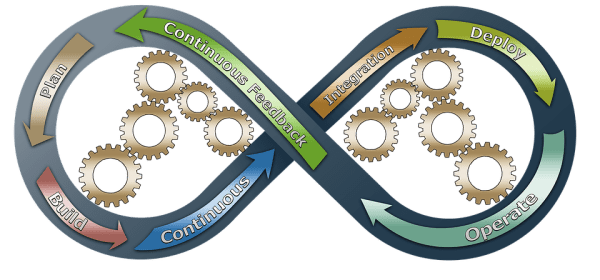
DevOps facilitates collaboration between application and operations teams in planning, creating, and deploying applications and systems. It aims to automate infrastructure changes for Agile development, but challenges remain with low- and no-code apps. Implementing infrastructure as code and tight version control are recommended, with a strong emphasis on integrating security throughout the development process.

Continue reading

How Cloud-Native Development Benefits SaaS

Businesses are increasingly turning to SaaS and COTS applications for modernization, but face limitations in customization and integration with existing systems. Cloud-native development offers a solution, enabling extensibility, scalability, and resilience. By leveraging cloud-native patterns, organizations can enhance commercial applications without the need for costly customizations, ultimately transforming SaaS into a competitive advantage.

Continue reading

Are Hyper-Personalization and an Individual’s Control of Data at Odds?

Hyper-personalization and user data control seem at odds due to data privacy regulations like GDPR and CCPA. Organizations must balance personalization and privacy, leaning into transparent data practices and user consent mechanisms. Privacy-by-design principles, AI, and progressive consent offer ways to navigate this dilemma, ensuring compliance while respecting user autonomy and delivering personalized experiences.

Continue reading

Enterprise Architecture: From Design-Driven To Data-Driven

In a recent blog post, the importance of enterprise architecture (EA) tools for successful architecture practice was debated. The author emphasized the necessity of automated tools in modern EA practice, which is evolving from design-focused to data-driven. The integration of diverse data is crucial for insights-led approaches, and the role of visualization alongside data analysis was also highlighted.

Continue reading

1 16 17 18 19 20 57