Central AI hub connecting enterprise software concepts like CRM, ERP, data, automation, cloud, and analytics

How Anthropic is reordering SaaS — and where CIOs go next

Salesforce’s Headless 360 platform launch highlights a transformative shift in the software industry, driven by increasing AI capabilities threatening the traditional SaaS model. Anthropic’s Claude aims to redefine enterprise applications, pushing SaaS companies to evolve into data-driven entities. CIOs must adapt strategies amid growing competition and the evolving value of enterprise software.

Continue reading

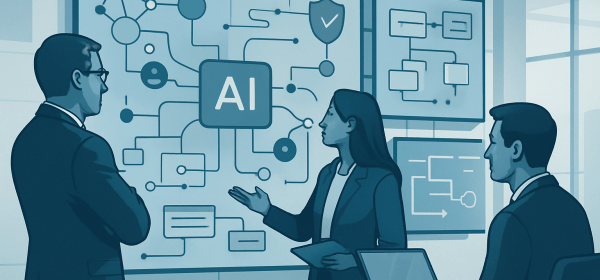
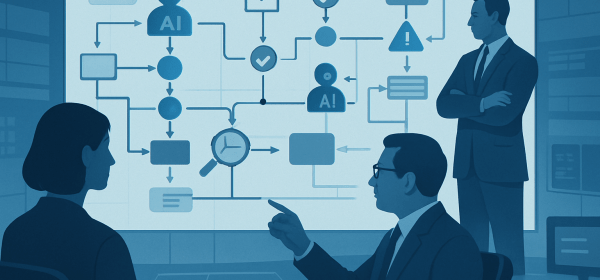
Diagram of human-centered AI workflow showing problem definition, data curation, model training, writing, evaluation, deployment, and feedback loop with human roles.

Making AI Agents Work Inside Your Organisation

Organizations should focus on redesigning workflows around business problems rather than replacing jobs with AI agents. A recent webinar highlighted that successful integration relies on placing human operators at the center of processes. Achieving value through AI requires strong data foundations, governance, and the capability to scale effective use cases across the business.

Continue reading

Four professionals collaborating around a digital touchscreen table showing transaction verification and partnership status

Experian’s chief innovation officer gleans AI gains with startup collab

Experian partners with Skyfire to create the Experian Agent Trust framework, ensuring AI agents perform as expected in transactions. Kathleen Peters, Experian’s chief innovation officer, emphasizes the importance of verifying AI agents amidst growing consumer use and fraud concerns. The collaboration aims to enhance trust and security in digital transactions.

Continue reading

Two software engineers discussing code and diagrams about token security challenges at a computer workstation

OpenAI’s Daybreak Promises To Improve AppSec But Introduces A New Pricing Model: Five Buyer-Side Implications For CISOs

OpenAI’s Daybreak aims to enhance application security but will likely increase costs. Customers must prepare for token-based pricing that complicates budgeting. Current security solutions will coexist with Daybreak, resulting in added expenses and integration challenges. Additionally, buyers should adjust strategies, embrace token management, and evaluate Daybreak’s implications carefully.

Continue reading

Financial advisor showing personalized investment insights on a touchscreen to a client in an office setting

AI Isn’t Fixing Retail Banking’s Customer Growth Problem — It’s Exacerbating It

In 2026, retail banks are rapidly adopting AI, focusing on efficiency rather than customer relationships. This trend risks commoditizing banking services, driving customers towards third-party AI assistants. To succeed, banks must prioritize building trust and fostering meaningful connections with clients rather than merely enhancing transaction speed and cost reduction.

Continue reading

Emphasize AI safety risks and adaptive governance

Why Perfect AI Control is a Mathematical Illusion: 5 Hard Truths from the Frontlines of AI Safety

Current discussions around AI are dominated by unrealistic fears of superintelligence and human displacement, while immediate safety concerns are overlooked. The Global Index for AI Safety indicates a drastic increase in AI incidents, highlighting a gap in effective governance. Absolute AI containment is impossible; a shift to adaptive risk management is essential for realistic safety.

Continue reading

Four professionals examining a circular supply chain model focused on sustainability and shared value

Anthropic Raises The Stakes For Digital Wealth Management Platform Vendors

Anthropic’s introduction of agent templates for finance illustrates a shift towards autonomous, context-aware systems in the financial services sector. This development threatens digital wealth management platforms (DWMPs) by diminishing their traditional advantages. Vendors must adapt by integrating AI, redefining their roles, and innovating pricing strategies to remain competitive.

Continue reading

Diagram showing sustainable supply chain partnership with stages raw material sourcing, manufacturing, distribution, and collaboration

Why companies are shifting toward private AI models

A recent Forrester analysis predicts that private AI models will generate 70% of AI revenue in five years, as enterprises seek to leverage proprietary data while maintaining security. Companies are shifting toward hybrid models, balancing public access with private capabilities to enhance customer value and address unique business needs effectively.

Continue reading

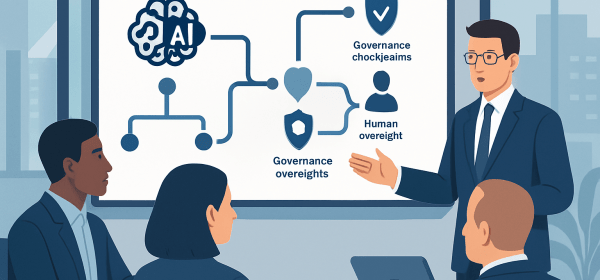
AI agents managing governance, security, operational tasks, and audit logging in a networked system

Beyond the Prompt: 7 Surprising Realities of the 2026 Agentic AI Revolution

The transition from reactive chatbots to autonomous agents marks the rise of Agentic AI, prompting organizations to adopt specialized multi-agent systems. With increased efficiency and risks, such as security vulnerabilities, businesses must navigate this new landscape through robust data governance and innovative protocols, ensuring reliable digital labor integration by 2026.

Continue reading

Sustainable supply chain partnership with eco-friendly sourcing, manufacturing, transportation, retail, and circular economy

Building Value From the Base Up

Partnerships at all levels of sustainable supply chains can generate significant value. Companies like ETS, Paccari, and AAK have demonstrated that addressing supplier challenges and treating them like customers enhances productivity and fosters ethical practices. This approach not only improves financial outcomes but also builds trust and community engagement, creating competitive advantages.

Continue reading

City skyline at night with AI network connections between buildings and satellites

The Dawn Of AI-Powered Telcos: How CSPs Will Reinvent Themselves With AI

The report “The Dawn Of AI-Powered Telcos” explores how communication service providers (CSPs) are embracing AI to revitalize growth and optimize operations across various sectors. By investing in AI infrastructure, internal systems, and partnerships, CSPs aim to shift from traditional roles and leverage unique local advantages for future success in an AI-driven economy.

Continue reading

AI cyber defense network protecting power grid, data centers, IoT devices, and manufacturing from cyberattacks

Understanding the modern cybercrime landscape

In 2025, HPE’s report reveals a dramatic shift in cybercriminal operations towards industrialized tactics utilizing automation and AI. The evolving cybersecurity landscape poses significant challenges for enterprises, compounded by financial constraints, complex infrastructures, and shifting geopolitical contexts. To navigate risks, organizations must adapt networks to enhance security through AI-driven management and insights.

Continue reading

Non-desk workers accessing AI tools equally

Workplace equity in the age of AI

In 2012, a call from a Fortune 100 company highlighted the communication inequities faced by non-desk employees, pushing the author to address this gap through technology. As AI reshapes workplaces, similar access issues may resurface. Ensuring equitable access to AI tools for all employees is crucial for workplace equity and effectiveness.

Continue reading

1 2 3 4 5 145