
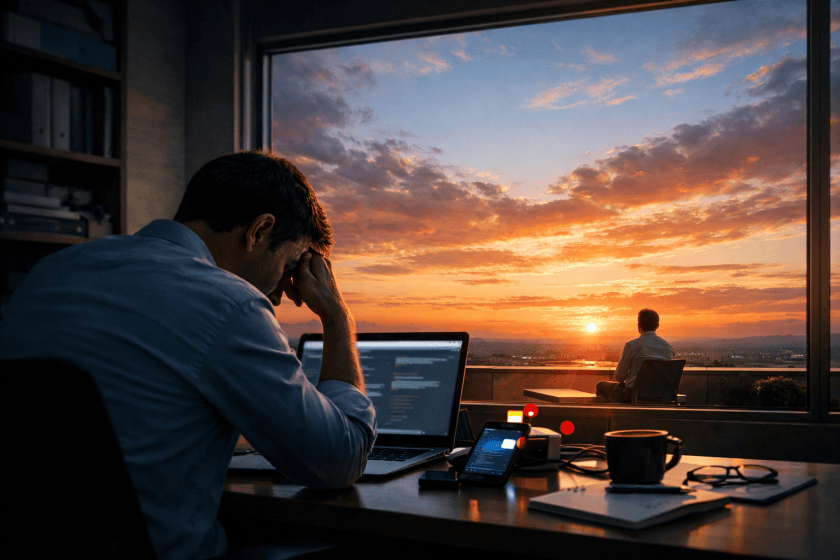
The useful idea here is not that awe “solves” burnout, but that it may briefly interrupt the tunnel vision that stress creates. That distinction matters. Feeling moved by something vast—a landscape, music, skilled performance, even a night sky—may help some people step back from the false urgency of work stress. But that is a reframing tool, not a fix for excessive workload, poor management, low control, or chronic exhaustion.
The source points to research linking everyday awe with lower stress and better wellbeing, which makes this a plausible, low-cost practice. Still, readers should be careful not to treat that kind of finding as proof of a strong causal effect in every setting. People who experience more awe may also differ in other ways that support wellbeing, such as time outdoors, social connection, personality, or broader life circumstances.
Its real value may be behavioural and immediate: micro-awe can create a short pause between pressure and reaction. In practice, that might mean deliberately noticing something expansive or absorbing during the workday—a few minutes outside, a view from a window, a piece of music, or watching genuine mastery at work. The point is not forced gratitude or pretending stress is trivial; it is widening attention enough to reduce the sense that one email, deadline, or setback is the whole world.
That also sets a limit. If stress is persistent, impairing sleep, mood, concentration, or physical health, a momentary perspective shift may help but is unlikely to be sufficient on its own. Awe can be a useful coping layer; it should not become a way of normalising unsustainable work conditions.
Have you ever had a moment where the world fell quiet—not because everything stopped, but because you did? You catch your breath, your shoulders drop, and whatever’s been gnawing at you seems insignificant.
That feeling has a name: awe. In a work culture that treats exhaustion as a status symbol, awe might be a small but radical way of coping with chronic stress. And the best thing is, awe doesn’t require a big overseas trip, or a 180-degree lifestyle overhaul.
The emotion that resizes your life
Researchers at the Greater Good Science Center of the University of California, Berkeley, describe awe as “the feeling we get in the presence of something vast that challenges our understanding of the world.” That sense of vastness is key. It might be physical, like a wide, orange sunset, or human, like watching someone perform their craft so well it takes your breath away.
Awe does two things. First, it stretches your mental map: Your usual means of fathoming scale, control, and importance disappear. Second, it shifts you into what psychologists call the “small self”: your ego softens, self‑focus drops, and you feel like you’re experiencing something that’s bigger than yourself.
Micro-awe and burnout: why feeling small is protective
Workplace burnout thrives in narrowness: narrow time horizons (“everything is urgent”), narrow identity (“I am my productivity”), and narrow focus (“this problem is the entire universe”).
When you’re in that state, “take more vacation” is rarely practical advice, especially in places like the U.S., where workers average less than two weeks of paid time off a year and often feel they can’t use all of it.
Brief moments of awe—call it “micro-awe”—provide a different route. Studies show that people who regularly experience awe in their day-to-day lives report lower stress and higher life satisfaction, in part because awe helps put daily hassles into perspective. Even moments of awe, like looking up at a night sky, can change your nervous system by reminding you that reality is bigger than this Slack message.
Enjoyed this article? Sign up for our newsletter to receive regular insights and stay connected.