Making AI an asset, not an expense

Making AI an asset, not an expense

As AI workloads move into steady production, CIOs must decide when pay-per-use becomes a budgeting risk and capacity investment becomes viable. The real test is governance: can the organization forecast demand, keep utilization high, and tie AI capacity decisions to measurable business outcomes?


Continue reading

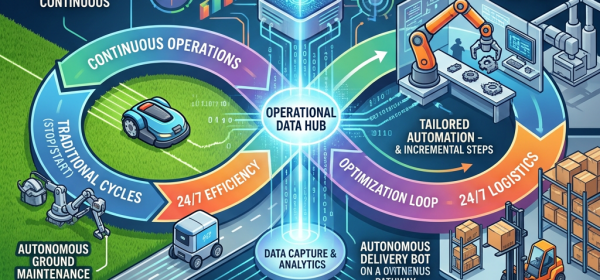
Infographic titled COMPANIES REDESIGNING PROCESSES AROUND PHYSICAL AI GAIN SIGNIFICANT ADVANTAGES, showing continuous operations, an operational data hub, tailored automation, optimization, autonomous systems, and four adoption steps: pilot project, gather data and feedback, build trust and validate, enhancing efficiency one step at a time.

Physical AI Is Already On The Road. Your Operations Are Next.

Companies that redesign processes around physical AI will gain significant advantages. Automation examples, like the robot lawn mower, highlight the need for shifting from traditional work cycles to continuous operations. Success requires capturing operational data and building trust through incremental adoption. The future lies in tailored automation, enhancing process efficiency one step at a time.

Continue reading

Who’s liable when AI agents go rogue?

Who’s liable when AI agents go rogue?

AI-agent incidents expose a management gap between legal liability and enterprise accountability. IT leaders should define internal disclosure thresholds, strengthen vendor audit rights, and clarify decision ownership before agentic systems create cyber, compliance, or reputational risk that regulation does not yet fully address.

Continue reading

IT Management Weekly Update: shift from AI adoption to governance challenges; effective IT governance supports accountability, trust, risk management, and successful technology integration.

IT Management Weekly Overview — Week of September 20–September 25, 2026

This week’s IT Management discussions highlight a crucial shift from AI adoption to governance challenges. Central themes include decision rights, accountability, and trust as organizations grapple with AI’s implications in security, enterprise architecture, and financial management. Effective governance is now vital for successful technology integration and organizational resilience.

Continue reading

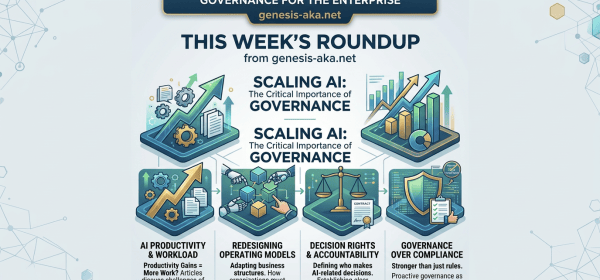
Weekly Insights: Artificial Intelligence Governance for the Enterprise; AI productivity, operating models, decision rights, and compliance.

IT Management Weekly Wrap-Up — Week of September 20–September 25, 2026

This week’s roundup from genesis-aka.net highlights the critical importance of governance as enterprises scale AI usage. Articles discuss the challenges of productivity gains leading to more work, the redesign of operating models, and the need for robust decision rights and accountability. Effective governance is emphasized over mere compliance as AI infrastructure expands.

Continue reading

Sept 30th: The Date SAP Wants You To Forget

Sept 30th: The Date SAP Wants You To Forget

The article highlights an overlooked ERP governance deadline, but the bigger issue for IT leaders is decision rights: whether support renewals, migration timing, and third-party alternatives are being managed as strategic portfolio choices with clear accountability, risk ownership, and funding trade-offs.

Continue reading

How Business Applications Become Agentic

How Business Applications Become Agentic

Agentic applications force IT leaders to redesign operating models, not just deploy AI features. The key decision is where supervised autonomy creates business value while preserving auditability, security, and accountability across cross-application workflows, vendor pricing changes, and higher-risk back-office processes.

Continue reading

1 2 3 … 161