
INTRO EPISODE Podcast Transcript Stuart: Hello, I’m Stuart Crainer. I’m the co-founder of Thinkers50 and I would like to welcome you to a new podcast

INTRO EPISODE Podcast Transcript Stuart: Hello, I’m Stuart Crainer. I’m the co-founder of Thinkers50 and I would like to welcome you to a new podcast

Therein lies the AI paradox: The more we automate data analytics, the more work is required of humans to cover edge cases, provide high-level scrutiny, and put meaning behind the insights.

Similarly, 92% agreed that “Due to drastic changes in customer behavior or other factors during the pandemic, reliable real-time data became even more important for business decisions.”
95% of respondents, for example, agreed that “Making decisions based on accurate, timely analytics and insights has become as important as having accurate transactional data in my organization.”

Chipmaker Nvidia, for example, is developing data processing units (DPUs) to tackle infrastructure chores for cloud-based supercomputers, which handle some of the most complicated workloads and simulations for medical breakthroughs and understanding the planet.
Jon van Doore, CTO for Climavision, says modeling the data his company works with was traditionally done on Cray supercomputers in the past, usually at datacenters

When appropriately crafted, data lakes can be a centralized source of truth, offering team members valuable flexibility to examine information that impacts business decisions.
A well-maintained data lake has the real potential to transform your business by offering a singular source for your company’s data—in whatever form it may be—that enables your business analysts and data science team to mine information in a scalable, sustainable way.

Since the start of the pandemic, the transformation and digitization of healthcare organizations (HCOs) accelerated at unprecedented rates to usher in consumer centrism, increased accessibility, and enhancements in continuous care.

Reliable real-time data and analytics for decision-making became more critical. But many IT organizations couldn’t deliver; survey respondents said that the information and insights needed by the business often weren’t available.
There were high levels (95%) of agreement with the very rational statement that, “My organization makes decisions on where/how to process data for analytics and AI based upon the best platform attributes (latency, security, resiliency, and performance/ cost).
In a nutshell, data fabric technology is the glue that binds all an organization’s data systems together into a cohesive and uniform layer, says Sean Knapp, founder and CEO of Ascend.io, which offers an autonomous dataflow service.
A data fabric gives organizations the ability to maintain complex and disparate data systems while giving business users fast, self-service access to the data they need — no matter where it sits or how it’s previously been siloed,” he explains.

Enabling applications, including the most business-critical ones, to run in public cloud when they were not built to do so requires a costly and time-consuming refactoring process.
Hybrid multi-cloud, or an IT environment providing unified infrastructure operations and management across private and public clouds, is perfectly poised to help bridge the gap businesses face due to supply chain issues.
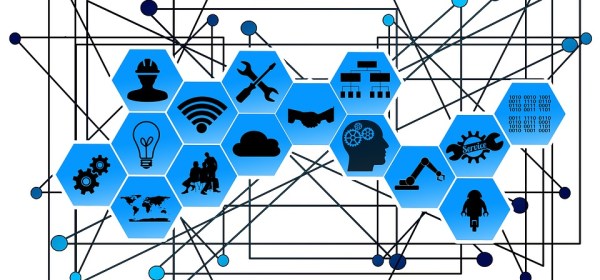
Robin Duke Woolley, Analyst and CEO of Beecham Research, gives his latest insights drawn from the Industrial sector on the key issues facing the market for the coming short to midterm periods and how they are and could potentially be addressed.

It’s important to understand that IoT apps are backed up by hardware and software that allows large volumes of data to transfer via several connected devices. T

For iPaaS to become this digital core, and help become the glue between systems, it needs to take on the almost-impossible task of integrating data from all apps, automating the building of app connectors within cloud services, connecting on-premises and cloud-based processes, offering connectivity through APIs, and leaning heavily on AI-fueled process automation.

Top 10 Mobile Testing Tools in India in 2022 Are you seeking new ways to improve your mobile test strategy? This can be accomplished in

The recent progress in imagery analysis powered by artificial intelligence makes us wonder if the camera could in fact replace several types of sensors.