
So organisations need to protect their cloud applications while considering the special characteristics of public cloud environments and the security challenges that they pose.

So organisations need to protect their cloud applications while considering the special characteristics of public cloud environments and the security challenges that they pose.

With the sheer volume of historical and live data feeds being ingested, and the need for a scalable compute platform for backtesting and spread calculations, our team needed a performant single source of truth to build the application dashboards.
As the data sets would be leveraged by machine learning and analyst teams, the Delta Lake format provided unique capabilities for managing high volume market/tick data — these features were key in developing the Gemini Lakehouse platform:
We’ve broken these down into four pillars: scalability, portability, resiliency, and agility.
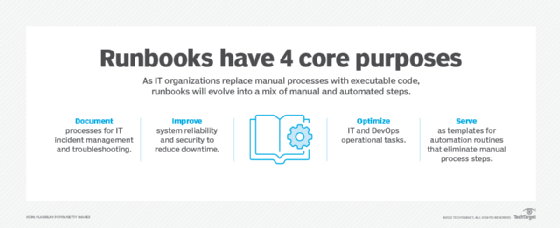
Creating a DevOps runbook that meets these qualities requires a disciplined process of planning, research, writing code — for automated routines — testing, feedback, optimization and updates.

Example 1 – Unload customer data in JSON format into Amazon S3, partitioning output files into partition folders, following the Apache Hive convention, with customer birth month as the partition key.
Example 3 – Unload line item data (With SUPER column) in JSON format into Amazon S3, partitioning output files into partition folders, following the Apache Hive convention, with customer key as the partition key
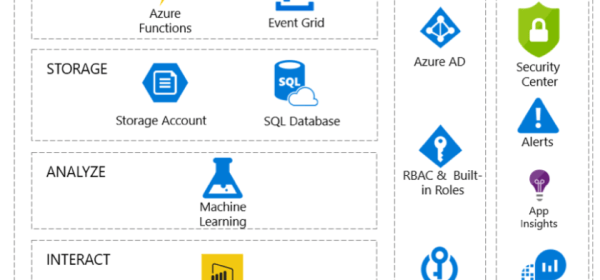
The Azure healthcare AI blueprint provides everything needed to instantiate a secure and compliant AI/ML solution pre-configured for healthcare organizations.
When the blueprint is installed to Azure, all resources, services and several user accounts are created to support the AI/ML scenario with appropriate actors, permissions, and services.

Each user who accesses the Q search bar assumes a role that gives them QuickSight permissions to retrieve a Q-embedded URL.

An approach to modernization can be defined as, “An open, cross-functional collaboration dedicated to building new design systems and patterns that support evolving computing capabilities, information formats, and user needs.”
Within the same spirit of modernization we can say that MongoDB works along with Google Cloud technologies to provide joint solutions and some reference architectures to help our customers leverage this partnership.

At re:Invent 2021, AWS announced several new Amazon Redshift features that bring easy analytics for everyone while continuing to increase performance and help you break through data silos to analyze all the data in your data warehouse.
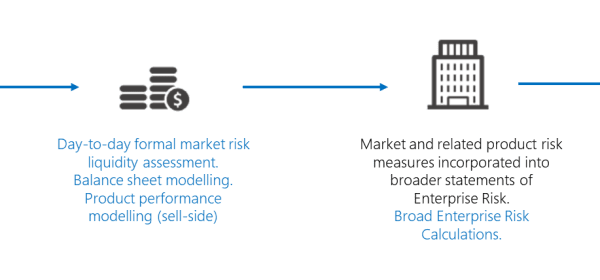
To keep the example simple but illustrative, we calculate the potential future exposure (PFE) of an equity stock forward contract.
Model equity price by simple Monte Carlo (MC) calculation, which uses Geometric Brownian Motion (GBM):
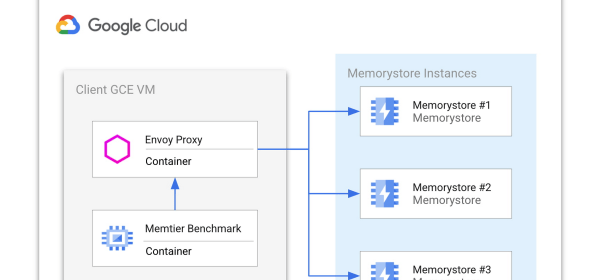
Today, we’ll show you how to deploy multiple Standard Tier Cloud Memorystore instances which can be used together to scale beyond the limits of a single instance for an application with increased scale demands.

Our new architecture needed to address the deficiencies while preserving the core goal of our service: update stateful artifacts based on incoming financial events.
We used an Apache Spark application on a long-running Amazon EMR cluster to simultaneously ingest input batch data and perform reduce operations to produce the stateless artifacts and a corresponding index file for the stateful processing to use.

In many ways, monitoring tools are like a patient’s pulse oximeter, and observability platforms are like the patient’s team of doctors that use the blood oxygen information to diagnose broader health issues.

This article will define and contrast AuthN and AuthZ, then delve into how they can be used in the context of Kubernetes to secure your cluster and its operations.
System components, such as kubelets (the Kubernetes node agent), pods, and other components of the control plane (scheduler and controllers) also need to authenticate with the API server.