
This story is part of a series marking ChatGPT’s third anniversary. Read Ian Bogost on how ChatGPT broke reality, or browse more AI coverage from

This story is part of a series marking ChatGPT’s third anniversary. Read Ian Bogost on how ChatGPT broke reality, or browse more AI coverage from

“Secure by Design” emphasizes the importance of integrating security from the outset of system development to prevent data breaches, which could cost companies trillions. Core principles include least privilege, fail-safe defaults, and complete mediation. Implementing layered security enhances resilience and compliance, ultimately building stakeholder trust while safeguarding sensitive information.

At Microsoft’s Ignite Conference, the announcement of Entra Agent ID stood out amidst a flurry of AI updates. This tool aims to manage AI agents’ identities similarly to human users, utilizing Microsoft’s Entra for access control and governance. With AI agent proliferation expected, it addresses identity management challenges in organizations.

Many security vulnerabilities stem from initial code quality issues, often overlooked due to time pressures in development. The integration of AI can exacerbate these risks through non-standard coding practices. Organizations must merge code quality and security to prevent vulnerabilities from the start, ensuring secure and maintainable software. Continuous monitoring and real-time feedback are essential for reducing security risks.

Claude Opus 4.5 is a groundbreaking AI model launched today, excelling in coding, deep research, and everyday tasks. It delivers state-of-the-art performance, superior reasoning, and efficiency at a lower cost. Praised for its ability to creatively solve complex problems, Opus 4.5 represents a significant advancement in AI capabilities and safety.

Research by UC Santa Cruz’s Tal Sharf reveals that human brain organoids exhibit structured electrical activity patterns before sensory experiences, suggesting an inherent preconfiguration in brain development. This study could enhance understanding of neurodevelopmental disorders and facilitate the creation of innovative therapies by exploring the brain’s intrinsic circuits and their responses to external stimuli.

Artificial Intelligence (AI) is revolutionizing various sectors, including healthcare, finance, manufacturing, and retail. It enhances efficiency, accuracy, and customer experience while addressing challenges like fraud detection and predictive maintenance. However, ethical concerns such as bias and job displacement necessitate responsible development. The global AI market is rapidly growing, indicating its pervasive impact.

Amazon API Gateway introduces the fully managed API Gateway Portal, simplifying API lifecycle management. It allows developers to showcase APIs with customizable portals, interactive testing, and comprehensive documentation. With features like cross-account organization and flexible access control, the portal enhances API discoverability while ensuring security and governance for enterprise users.

Last month, I published “Think Weirder,” a science fiction anthology that became a top Amazon release. As a non-professional publisher, I automated my publishing process using Python, YAML, and LaTeX, allowing for efficient story tracking and typesetting, ultimately proving that one can successfully publish independently with smart tools.

The “DoorDash problem” illustrates the tension between AI agents and service companies as AI interfaces disrupt consumer interactions. This shift could reduce service providers to mere commodities, threatening their revenue models. Amazon’s lawsuit against Perplexity highlights the struggle over control and customer relationships in the evolving digital economy shaped by AI.
Google has launched Gemini 3, its most advanced AI model, enhancing reasoning, multimodal understanding, and coding capabilities. It aims to provide direct, insightful answers while handling diverse content types. Gemini 3 excels in benchmarks and introduces an agent-centric development platform called Antigravity. Enhanced safety measures ensure responsible deployment across Google products.

MIT engineers are developing an AI model that simplifies Computer-Aided Design (CAD), enabling users to create 3D models from 2D sketches with greater ease. Their new dataset, VideoCAD, comprises over 41,000 examples, allowing the AI to mimic human-like interaction with CAD software, potentially enhancing productivity and accessibility for designers.
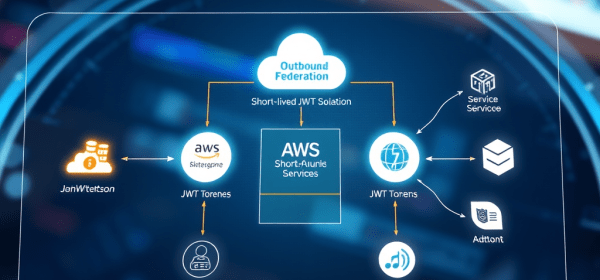
When building applications that span multiple cloud providers or integrate with external services, developers face a persistent challenge: managing credentials securely. Traditional approaches require storing

In 2025, startups and enterprises increasingly adopt Computer Vision Services to enhance decision-making, product reliability, and operational efficiency. This technology allows for rapid validation of business models, improved user experiences, and automated monitoring. As investor expectations rise, companies leverage computer vision for sustainable growth and competitive advantages in diverse applications.