
When building applications that span multiple cloud providers or integrate with external services, developers face a persistent challenge: managing credentials securely. Traditional approaches require storing
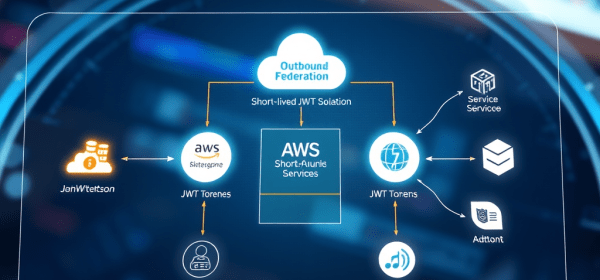
When building applications that span multiple cloud providers or integrate with external services, developers face a persistent challenge: managing credentials securely. Traditional approaches require storing

Enterprises developing generative AI applications must manage foundation model access efficiently. Dynatrace created an AI gateway architecture utilizing Amazon API Gateway, featuring functions like authorization, throttling, and integration with Amazon Bedrock. The gateway ensures transparent client interaction while reducing maintenance needs and enhancing scalability for enterprise-grade applications.

JSON has been fundamental in the digital landscape, but its limitations are evident as AI systems evolve. TOON, a new data-notation format, addresses these shortcomings by emphasizing readability and ease of use for both humans and AI. Designed for AI-driven tasks, TOON may complement rather than replace JSON, enhancing collaboration between humans and machines.

Perplexity AI is a versatile platform for real-time research and productivity, offering advanced models such as GPT-5 and Claude. Its features include Pro Search, Research Mode, and collaborative tools, enabling users to generate cited insights quickly. Ideal for professionals, it combines powerful AI capabilities with seamless document analysis and integration.

Large language models (LLMs) have improved significantly in solving complex problems, akin to human thinking. Researchers found that reasoning models take time to process similar tasks as humans, suggesting a human-like approach to thinking. Despite their progress, questions remain about their representation of information compared to human cognition and their reasoning capabilities.

The author reflects on the importance of craftsmanship and foundational knowledge in coding amidst the rise of AI in software development. Concerned about superficial coding practices, he interviews Chris Lattner, who emphasizes building lasting systems by understanding fundamentals. They argue that mastery and genuine engagement with code are essential for meaningful progress, not merely productivity metrics.

Amazon OpenSearch Service introduces Cluster Insights, a dashboard that consolidates operational metrics for effective performance monitoring and issue resolution in OpenSearch clusters. It provides administrators with actionable insights, track trends, and suggests mitigation strategies for resource-intensive queries and performance degradation, enhancing cluster management and optimization efforts.
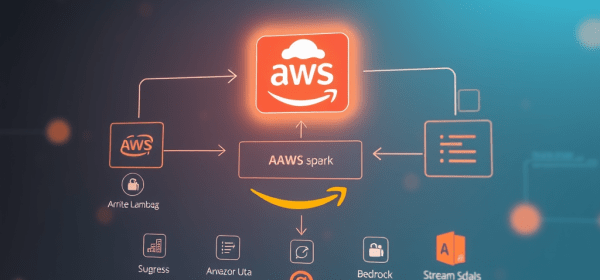
Modern AI applications require real-time streaming of large language model outputs to enhance user experience. This post analyzes three serverless approaches for streaming using AWS: Lambda function URLs, API Gateway WebSocket APIs, and AWS AppSync GraphQL subscriptions. Each method is evaluated for implementation, scalability, and authentication challenges.

Google unveiled its Gemini 3 model, which outperforms competitors in various generative AI benchmarks, including superior reasoning and multimodal capabilities. The model is now available to the public and integrates into Google’s search services. With substantial experience and data advantages, Google aims to maintain Gemini’s leadership in the evolving AI landscape.

Microsoft Fabric is enhancing data access and capabilities for AI-driven organizations by unifying fragmented data estates and legacy systems. With the launch of SQL Server 2025, Azure DocumentDB, and HorizonDB, along with new SaaS databases, these innovations streamline application development and promote enhanced data interoperability across various platforms, empowering enterprises to leverage AI effectively.
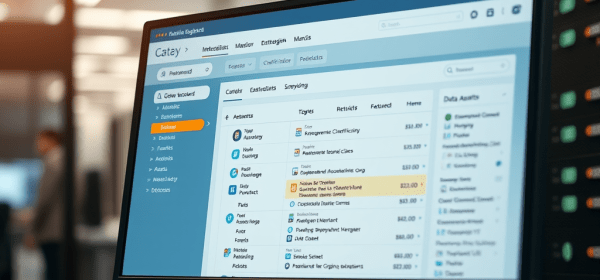
Organizations are facing challenges in maintaining consistent metadata standards across teams despite rapid data catalog growth. Amazon SageMaker Catalog now enforces metadata rules for glossary term classification to ensure assets are tagged correctly before publication, enhancing discoverability, compliance, and governance while reducing manual errors.

Amazon Bedrock has launched three service tiers—Priority, Standard, and Flex—to optimize AI workload performance and costs. Priority offers low-latency for mission-critical applications, Standard matches everyday tasks with consistent performance, and Flex caters to less urgent workloads at reduced pricing. Users can select tiers based on specific workload requirements and budget.

Amazon has introduced VPC encryption controls, allowing organizations to audit and enforce encryption for traffic within and across VPCs. These controls feature monitor and enforce modes, helping users ensure compliance with regulations like HIPAA and PCI DSS. The service is available in multiple AWS regions and free until March 2026.
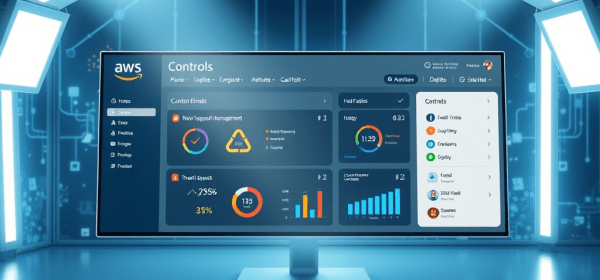
AWS Control Tower now offers a Controls Dedicated experience, enabling faster access to managed controls without the need for a full multi-account setup. This feature targets customers with existing architectures seeking to enhance governance efficiently. Available in all AWS regions, it streamlines the process of adopting AWS managed controls.