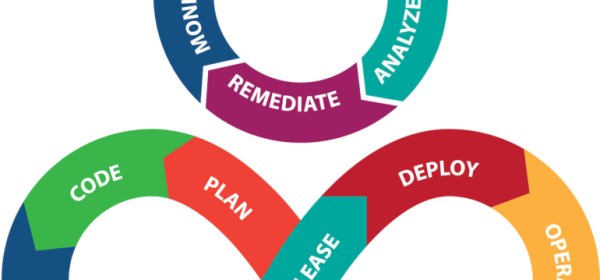
Is a DevOps Career Right for You in 2024: Skills, Responsibilities & More

The demand for DevOps experts is growing due to the increasing implementation of this approach in software development and deployment. Companies are witnessing benefits such as faster software delivery and enhanced operational stability. DevOps careers promise steady growth, with roles from Release Manager to DevOps Architect, and significantly high salaries. However, starting a DevOps career requires a strong technical background, key skills in automation tools, plus dedicated training and certification, such as those provided by Simplilearn.


Continue reading

The Complete Guide to Docker: Containerization Made Easy

Docker is a game-changer in the programming world as it provides an efficient platform for building, deploying, and running applications in containers. These containers, unlike virtual machines (VMs), use fewer resources and offer more speed due to sharing the host OS kernel. Docker promotes uniformity across different environments, enhances collaboration, simplifies deployment and scaling, boosts utilization of microservices, and ensures efficient resource use. Docker’s functionalities usher in a seamless, efficient, and scalable coding experience.

Continue reading

2024: The Year of Testing

The author suggests that 2024 will be a significant year for both traditional and security testing environments. With test-driven development (TDD) being a fundamental tool for developers, the integration of static and dynamic application security testing is expected. Additionally, artificial intelligence is anticipated to play a pivotal role in enhancing the security posture and code quality due to its efficiency in test generation and results evaluation.

Continue reading

How Can You Hire the Finest React Native Developers?

Hiring skilled React Native developers is a challenge due to their high demand and the complexity of the framework. Successful hiring involves evaluating technical proficiency, problem-solving abilities, and adaptability among other skills. React Native developers can greatly enhance a company’s app development process, offering cross-platform efficiency, cost-effective development, rapid development cycles, seamless integration with native modules, diverse skillsets, community support, enhanced user experiences, and scalability.

Continue reading

Becoming Componentized: Excitement Brewing Around the Future of WebAssembly

At Kubecon + Cloudnativecon 2023, a growing anticipation was evident for the potential of WebAssembly (Wasm), a binary instruction format and portable compilation target. Advocates claim that Wasm will revolutionize software development, offering enhanced portability, wide-ranging language support, security, and efficiency. Despite some technical hurdles and a current lack of awareness hindering widespread adoption, experts predict a significant future for Wasm, especially with promising developments like the Component Model.

Continue reading

Software Mapping in the Cloud

Software mapping, crucial to software engineering and cloud computing, offers a visual layout of software components, their dependencies, and interactions for better management and resource optimization. Associated with cloud computing, it provides comprehensive views of the entire cloud architecture. Although challenging due to cloud environment complexities, software mapping benefits include resource optimization, enhanced visibility and control, scalability, and flexibility. Effective practices include leveraging automation, prioritizing security, and regular updates and monitoring.

Continue reading

The Ambassador Pattern

The Ambassador pattern involves creating helper services that act as out-of-process proxies, co-located with the client, to bolster networking functions like monitoring, logging, routing, and security for legacy applications. By offloading these functionalities, client connectivity tasks become more efficient. However, this approach may not be optimal for situations with critical network latency or when connectivity features need deeper integration.

Continue reading

SOA VS MICROSERVICES – What’s the difference?

This detailed guide discusses the similarities and differences between Service-Oriented Architecture (SOA) and Microservices. Each comes with unique strengths and areas for improvement. SOA supports broad services and encourages recyclability while Microservices has a focused scope and encourages self-reliance. The article also presents real-life case studies demonstrating their applications. The decision between SOA or Microservices should be guided by a project’s particular requirements.

Continue reading

Tech predictions for 2024 and beyond – All Things Distributed

The world is becoming more technologically advanced with generative AI, improvements in women’s health technology, AI-assistant developments, and changes in education. Generative AI is demonstrating cultural competency and addressing cultural biases. FemTech is gaining momentum, improving women’s health and driving the healthcare system forward. AI assistants are increasingly playing major roles in software development. Finally, the speed of tech innovation necessitates a shift from traditional models of education to continuous, industry-specific skills-based training.

Continue reading

Best IT Management Software to Use In 2023

The use of IT management software (ITSM) is increasingly important for businesses, as it allows monitoring and control of various digital aspects and streamlines workflows. This article discusses six top ITSM software: Electric.AI, Wrike, Smartsheet, Zohocorp ITMS, Scoro, and SolarWinds. Each provides unique features and benefits, but requires consideration of pros, cons, and cost for each individual business need.

Continue reading

Full-Stack Developer Career Path: What You Need to Know

A full-stack developer needs skills in front-end, back-end, and database aspects of development and must manage a wide range of responsibilities within a development team. They require proficiency in various programming languages and tools, and knowledge of databases. The career progression generally begins from a junior developer, moving onto mid and senior levels, and possibly onto consultancy. Salary averages at $116,856 but can vary based on location and experience. Degree is not always necessary as one can learn from online courses and communities.

Continue reading

Automation and Manual Accessibility Testing

Automation and manual accessibility testing each have their own strengths. Automation, increasingly fueled by artificial intelligence (AI), excels at tasks like repetitive testing and quick feedback on code changes. However, it can’t replace manual testing, which is key for complex scenarios, creative user experiences, and the early stages of development. Automated tools like axe and Google Lighthouse can aid accessibility, but their abilities are currently limited. Manual testing is often accomplished through crowdtesting, due to the need for knowledge and experience that internal teams may not possess.

Continue reading

Azure DevOps and Hiring DevOps Engineers for Azure Cloud

Microsoft’s Azure DevOps, a cloud-computing service providing development project management tools, is revolutionizing the tech industry. Given IT’s integration into core business processes, the demand for skilled DevOps engineers familiar with Azure Cloud Platform is increasing. Critical skills for this role include communication, collaboration, knowledge of cloud infrastructure, automation tools, programming languages, troubleshooting, and staying updated with new technologies. The blog post outlines factors to consider while hiring DevOps engineers for Azure cloud projects, including their expertise in Azure, communication, understanding of automation tools, and problem-solving skills.

Continue reading

13 engaging apprenticeships offered by Gloucestershire College

Gloucestershire College is offering a variety of apprenticeship programmes across diverse sectors like Business and Professional Services, IT, Cyber, Software and Digital solutions, Construction, Engineering, Hospitality, and Hairdressing. These apprenticeships promote continual workforce development, enabling the alignment of talent with business needs, while reducing recruitment expenses. They range from Level 2 to degree level, providing structured, cost-effective training to nurture industry-relevant skills in employees or new recruits. The college offers recruitment support and in-workplace training.

Continue reading

1 15 16 17 18 19 41