
In the past decade, everything from home temperature control systems to vehicles has been fitted with sensors. The Internet of Things (IoT) refers to the millions of connected sensors that connect and share data.

In the past decade, everything from home temperature control systems to vehicles has been fitted with sensors. The Internet of Things (IoT) refers to the millions of connected sensors that connect and share data.

Metals manufacturing companies have been successful in achieving impact at scale from digital and analytics. This was recently highlighted when the World Economic Forum selected four steel players as Industry 4.0 Lighthouses among a total of over 50 organizations across all industries.

The retail environment has experienced far-reaching changes over the past year. With the pandemic fundamentally shifting how customers interact with retailers, digital sales had to evolve at warp speed, and many retailers found themselves in uncharted territory.

Embracing digital-only doesn’t rule anymore. At the doorstep of Industry 4.0 , enterprises want to look beyond just digitization of processes since that’s mostly covered in Industry 3.0 . Today, instant alerts about system failure should be generated in advance and that’s exactly what predictive maintenance is all about.

Viruses lead a rather repetitive existence. They enter a cell, hijack its machinery to turn it into a viral copy machine, and those copies head on to other cells armed with instructions to do the same. So it goes, over and over again.

For All Supply Chain Analysis Amazon’s supply chain may be the most innovative of its kind. It is experiential, meaning it puts the customer first and works backward. It is a vast and complex system that works in such an efficient way that it can provide speedy deliveries while also cutting down on high costs
Healthcare solutions offered in the cloud are drawing unprecedented attention today with the ongoing global pandemic and the accompanying need for social distancing. Microsoft has been on the forefront of empowering health organizations to leverage the power of the cloud

Each new year introduces new opportunities and challenges, but 2020 was exceptional. The pandemic massively disrupted retail organizations due to ongoing shelter-in-place orders and social distancing requirements. Consumers adapted, driving nine years’ worth of e-commerce growth in 90 days.
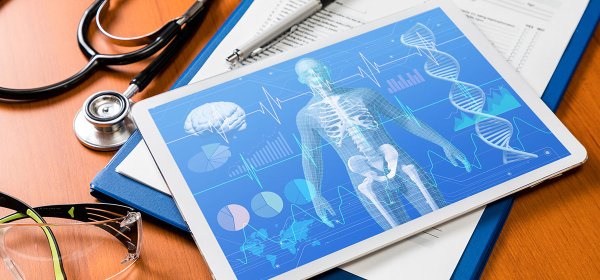
2020 was a nightmare of a year for healthcare providers. But it was also a year for information technology to prove its worth to healthcare organizations. As the pandemic struck, healthcare delivery and patient encounters made a rapid right turn to virtual encounters.
This post was co-authored by Gregory Moore, M.D., Ph.D., CVP for Microsoft Health Next. Since the start of the pandemic, Microsoft Healthcare Bot has been at the leading edge of helping organizations be more agile with patient engagement.
The Internet of Things (IoT) has been booming all around the globe for a decade. The most obvious focus of IoT is the consumer domain. However, Industrial IoT (IIoT) is probably the greatest champion of this new technology.

While AI is already helping to improve process efficiency in the life sciences industry, it is likely to prove its value in R&D and other areas of the value chain in the next three to five years. The COVID-19 pandemic has increased the focus on the use of AI across the life sciences organization, from R&D to manufacturing, supply chain, and commercial functions.
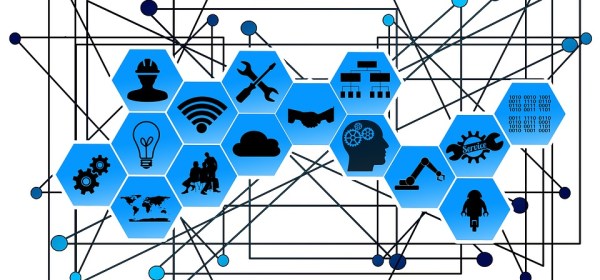
IT service providers are finding a role in health-related IoT system integration projects amid the ongoing COVID-19 pandemic. This week, Insight Enterprises, an integrator based in Tempe, Ariz., unveiled a wearable offering for contact tracing , collaborating with Microshare Inc., a Philadelphia company that provides IoT-based smart facilities offerings.
Healthcare organizations collect vast amounts of patient information every day, from family history and clinical observations to diagnoses and medications. They use all this data to try to compile a complete picture of a patient’s health information in order to provide better healthcare services.