Building an MCP server is easy, but getting it to work is a lot harder

Model Context Protocol (MCP) simplifies connecting AI agents to data sources but poses challenges in production environments. Issues include security risks, tool overload, scaling obstacles, production gaps, and governance concerns. Despite its promise, MCP is not yet enterprise-ready. Enterprises must enhance MCP with guardrails for safe and effective implementation.

Continue reading

New capabilities to optimize costs and improve scalability on Amazon RDS for SQL Server and Oracle

Amazon RDS introduces new features to enhance efficiency and scalability for Oracle and SQL Server databases. Key improvements include support for SQL Server Developer Edition, M7i/R7i instance optimizations for cost savings, and increased storage capacity up to 256 TiB. These developments aim to optimize costs while maintaining performance across various workloads.

Continue reading

OpenAI has trained its LLM to confess to bad behavior

OpenAI is testing a method to make large language models (LLMs) produce “confessions,” where they explain their actions and admit mistakes. This aims to improve transparency and reliability in AI. While initial results are promising, researchers caution about trusting LLMs’ self-assessments, as they may not always recognize wrongdoing.

Continue reading

Amazon S3 Storage Lens adds performance metrics, support for billions of prefixes, and export to S3 Tables

Amazon S3 Storage Lens has introduced three new capabilities: performance metrics, support for analyzing billions of prefixes, and the ability to export metrics to S3 Tables. These features provide insights to optimize storage, improve application performance, and enable cost reduction. Users can access detailed performance metrics across various levels in their storage.

Continue reading

The Download: a peek at AI’s future

Today’s edition of The Download discusses diverse predictions about generative AI’s future, contrasting views on its societal impact by experts from MIT Technology Review and Financial Times. The newsletter also covers major tech stories, including regulatory challenges, AI’s influence on the economy, and trends in technology and mental health support.

Continue reading

Lumen’s CTO on the emergence of ‘Cloud 2.0’

Lumen Technology’s CTO Dave Ward emphasizes the need for transforming internet infrastructure to accommodate rising AI demands and cloud workloads, a shift termed “Cloud 2.0.” Key trends include reliance on multiple clouds, edge computing, and low-latency services. Ward predicts significant data center growth and stresses rethinking enterprise networks for AI integration.

Continue reading

When Machines Argue: AI Hive Minds and Strategic Decisions

AI models, when engaged in debate, can outperform traditional strategy teams by generating more innovative solutions. Digital twins allow businesses to monitor operations and optimize decision-making. However, while the AI “hive mind” excels with structured problems, it struggles with nuanced cultural issues, emphasizing the need for human insight in complex scenarios.

Continue reading

Introducing AWS Transform custom: Crush tech debt with AI-powered code modernization

Technical debt poses significant challenges for enterprise development, consuming 20% of IT budgets. AWS Transform custom aims to address this by automating modernization processes, achieving up to 80% time reductions for code transformation. By utilizing intelligent agents, organizations can efficiently upgrade frameworks and enhance development workflows, allowing developers to focus on innovation.

Continue reading

AI Increased Productivity? Consider Hiring More Developers!

AI is transforming software development by enhancing productivity through automation and efficiency. Organizations can leverage this increased capacity to pursue more technology goals rather than simply reducing developer headcount. Investing in IT capacity can better address backlog tasks and innovative ideas, ultimately driving greater business value and agility.

Continue reading

Why BI Competency Centers Matter More Than Ever to Data Governance

The Business Intelligence Competency Center (BICC) is evolving from a support function into a strategic hub for data governance and analytics. Increasingly reporting to data leadership roles, BICCs are incorporating essential skills in data integration, engineering, and AI. Their growth is vital for enterprises aiming for successful data-driven transformations.

Continue reading

3 ERP experts on AI’s impact on finance: Why finance will never be the same

Finance departments are evolving from risk-averse to embracing AI, transforming traditional roles. Automation of routine tasks allows CFOs and teams to focus on strategic insights, enhancing decision-making. AI agents facilitate complex workflows, improving accuracy and efficiency. This shift necessitates human oversight while redefining finance’s operational model and roles for future success.

Continue reading

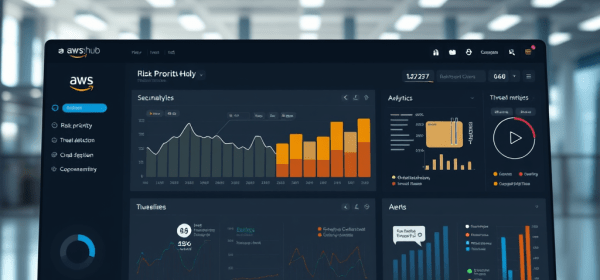
AWS Security Hub now generally available with near real-time analytics and risk prioritization

AWS Security Hub is now generally available, offering enhanced capabilities for security teams to assess and respond to risks across AWS environments. It centralizes the analysis of signals from various AWS security services, provides near real-time insights, tracks security trends, and streamlines operations, significantly reducing manual workload for threat detection and remediation.

Continue reading

How a CIO can disagree without being disagreeable

CIOs must effectively navigate disagreements while maintaining trust and collaboration within teams. Emotional intelligence is crucial for leaders to inspire open dialogue and manage team dynamics. By practicing active listening, being approachable, and presenting clear information, CIOs can foster innovation and drive successful change without creating discord.

Continue reading

The Download: four (still) big breakthroughs, and how our bodies fare in extreme heat

The Download newsletter highlights emerging technology trends, including four technologies excluded from the 2026 breakthroughs list, to be revealed on January 12. Additionally, it covers crucial topics such as climate risks, vaccine policy changes, a major merger, and the impact of AI on social media and research integrity, alongside a focus on sustainable cargo shipping.

Continue reading

1 60 61 62 63 64 331