
It shows how to integrate and use the DevSecOps capabilities with your branching strategy—by configuring the continuous integration and continuous deployment (CI/CD) pipelines with the right validations, triggers, and schedulers.
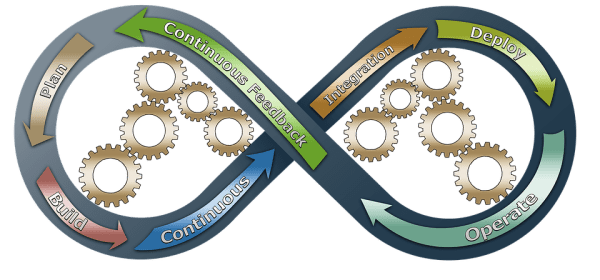
It shows how to integrate and use the DevSecOps capabilities with your branching strategy—by configuring the continuous integration and continuous deployment (CI/CD) pipelines with the right validations, triggers, and schedulers.
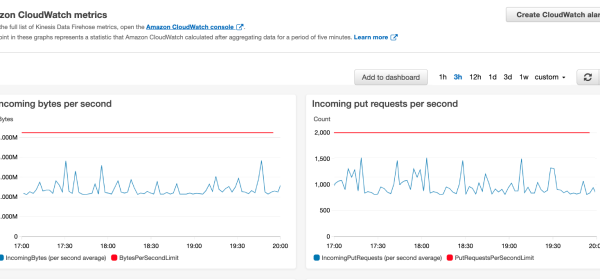
The volume of data being generated globally is growing at an ever-increasing pace. Data is generated to support an increasing number of use cases, such as IoT, advertisement, gaming, security monitoring, machine learning (ML), and more. The growth of these use cases drives both volume and velocity of streaming data and requires companies to capture, processes, transform, analyze, and load the data into various data stores in near-real time.
Infrastructure as Code (IaC) is a descriptive model-based approach for configuring and managing infrastructure. The configuration modules are usually saved in version control systems in well-documented code formats, improving correctness, decreasing errors, and speeding up consistency. Many firms are migrating to this crucial DevOps practice to reap the benefits of its changeless infrastructure, increased delivery speed, scalability, cost savings, and risk avoidance.

To access Amazon Web Services (AWS) on the US mainland, customers’ data must traverse through submarine fiber-optic cable networks approximately 2,800 miles across the Pacific Ocean.
We recommend choosing the us-west-2 AWS Region in Oregon to build high performant connectivity closest to Hawaii.
DevOps is a combination of specific engineering practices and patterns, followed by cultural changes that increase an organization’s or team’s ability to deliver high-quality products quickly.
The huge interest in DevOps and related technologies in recent years has pushed leading cloud providers, such as AWS, to provide all the necessary tools and technologies for organizations to implement and adopt DevOps practices successfully.

In this scenario, a Node.js web app is built and deployed by Jenkins into an Azure Container Registry and Azure Kubernetes Service.

The key to the solution is having a web app that uses BIM data from Autodesk Forge to automate the creation of an Azure Digital Twins foundational dataset. The app provides both visual and relational context to support the instantiation of a DT in the Azure Digital Twins build process.
These things are embedded with sensors, software, and other technologies to connect and exchange data with devices and systems over a wireless network such as the internet.
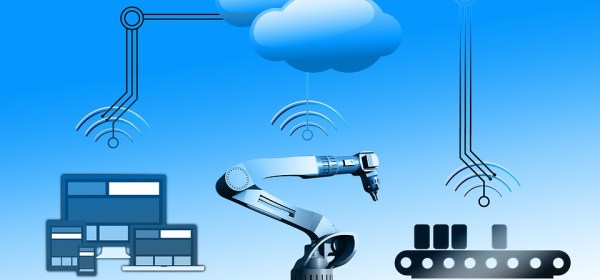
For those in the know, industrial IoT is already delivering significant competitive advantages as our world becomes more connected, and just as COVID-19 created a quantum leap for many businesses, accelerating their acceptance and adoption of new technologies, it also paved the way for an IoT future.
Application architectures, internal processes and personal preferences mean organizations and teams set up the CI/CD pipeline differently, resulting in a diversity of infrastructure and tooling throughout software delivery pipelines.
Speedscale, the API test-automation software company, today launches Speedscale CLI, a free observability tool that inspects detects, and maps API calls on local applications or containers.
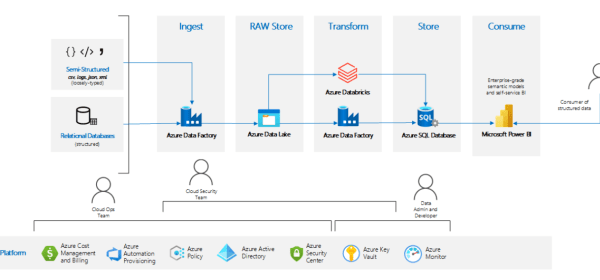
In recent years, the demand for business users to be able to consume, transform, model, and visualize large amounts of complex data from multiple heterogeneous sources has increased dramatically. To meet this demand in a cost-effective, scalable way, many large companies have benefitted from moving to cloud-based data platforms.

To show you how easy and quick it is to get started on AWS, we provide a one-click deployment for an extensible trading backtesting solution that uses Kinesis long-term retention for streaming data.
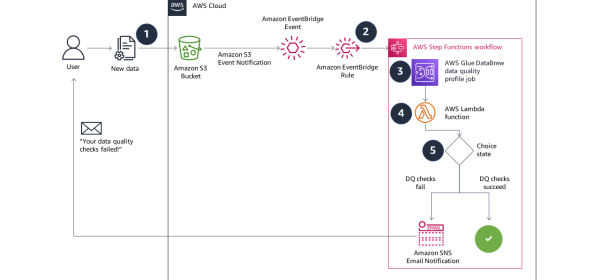
Businesses collect more and more data every day to drive processes like decision-making, reporting, and machine learning (ML). Before cleaning and transforming your data, you need to determine whether it’s fit for use. Incorrect, missing, or malformed data can have large impacts on downstream analytics and ML processes. Performing data quality checks helps identify issues earlier in your workflow so you can resolve them faster. Additionally, doing these checks using an event-based architecture helps you reduce manual touchpoints and scale with growing amounts of data.