
An editorial overview of the week’s key themes in IT Professional
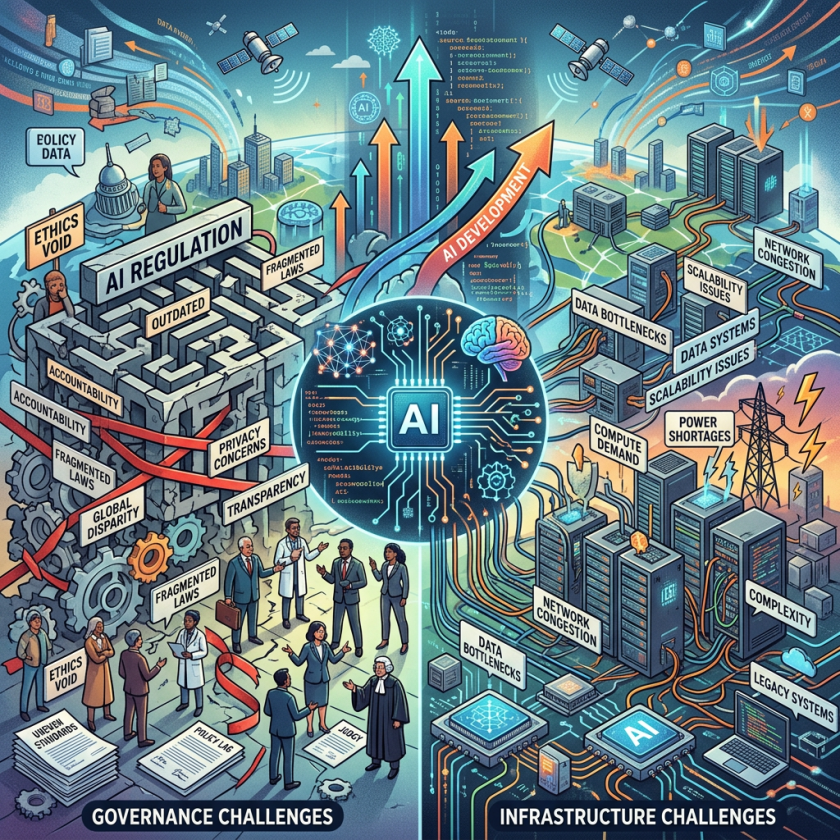
This week’s IT Professional coverage circled back to a single uncomfortable truth: the infrastructure underneath AI agents is maturing faster than the governance built to control it. As autonomous systems move from demos into production, the industry is scrambling to retrofit the guardrails it skipped the first time around.
That tension was clearest in security and governance. Anthropic quietly removed the enterprise opt-in for Claude Code’s auto mode, making autonomous operation the default on Bedrock, Vertex AI, and Azure Foundry — a change that shifts the burden onto enterprises to actively opt out rather than opt in, and one that security teams are still digesting. The broader question of what it even means to secure an autonomous system got a fuller treatment in a piece on building secure AI agent deployments, which argued that execution isolation, identity management, and runtime monitoring can’t simply be inherited from traditional app-sec playbooks. A companion piece made the case that AI agent security validation belongs inside the QA pipeline itself, noting that autonomous testing agents are finding more vulnerabilities even as they add new review overhead for human teams. And GitHub gave the theme a concrete win: Actions workflows now block untrusted code from fork pull requests by default, closing the long-standing “pwn request” hole in CI/CD supply chains without requiring teams to touch their existing configs.
Infrastructure teams, meanwhile, spent the week proving that scale is no longer the constraint it used to be. AWS detailed how Amazon SageMaker Unified Studio can govern Redshift data warehouses across multiple accounts, replacing manual cross-account processes with a data-mesh model that keeps governance and traceability intact. On the observability side, OpenObserve crossed 20,000 GitHub stars on the strength of a Rust-built, Parquet-backed architecture that claims up to 140x lower storage costs than incumbents like Elasticsearch — now running in over 8,000 organizations. Modal published a look at how it re-architected its sandbox platform to hit one million concurrent sandboxes by eliminating central scheduling bottlenecks in favor of a decentralized control plane. And bitdrift offered a war story from this year’s T20 World Cup broadcasts, describing how it scaled to 121 million concurrent gRPC connections on Amazon CloudFront after a DNS misconfiguration forced a mid-event switch from weighted to multi-value routing.
On the developer-tools front, the week’s most pointed argument was that the falling cost of AI-generated code is masking a rising cost elsewhere: the context engineering required to keep that generated code correct and maintainable. Teams treating context as a one-time setup rather than an ongoing discipline are the ones seeing production quality slip. Elsewhere, open ecosystems kept expanding in more grounded ways. AlmaLinux used its inaugural AlmaLinux Day in Los Angeles to launch a Media & Entertainment Edition aimed squarely at the VFX and animation studios left stranded by CentOS’s demise, bundling a one-click installer for more than 30 creative applications. And the team behind Kitematic and Docker resurfaced with Ollama’s pitch for accessible open models, now claiming 8.9 million users on a platform built around ownership, affordability, and privacy rather than API dependency.
The industry-economics thread was less triumphant. A federal judge approved Anthropic’s $1.5 billion settlement with authors and publishers over unauthorized use of copyrighted works in training data, with roughly 500,000 works each yielding $3,000 — a landmark number, though the underlying legal questions about training on copyrighted material remain unsettled for the rest of the industry. Reporting also surfaced that frontier labs are increasingly renting compute from their own competitors, including talk of a possible $10 billion Anthropic-Meta capacity deal, underscoring how thoroughly model development has decoupled from infrastructure ownership — and how messy the resulting risk-sharing arrangements are becoming. Capping the theme, an Emarketer analysis suggested OpenAI’s ad-revenue projections could miss by as much as 90%, landing under $1 billion by 2026 rather than the figures being pitched to investors — a reminder that monetization assumptions across the sector are still running well ahead of demonstrated demand.
Taken together, the week reads less like isolated news and more like an industry doing accounting on its own AI buildout: tallying the security debt of autonomous agents, the real infrastructure costs behind cheap generated code, and the financial exposure of betting big on both compute and advertising before the revenue has caught up. The scaling stories prove the plumbing works. The governance and economics stories suggest everyone is still figuring out who’s responsible for it, and who pays when it doesn’t.
Full post index for this week:
- Govern Amazon Redshift Data Warehouses Data Across Accounts using Amazon SageMaker Unified Studio · July 23, 2026
- Claude Code Removes Enterprise Opt-In: Auto Mode Now Default on Major Cloud Platforms · July 23, 2026
- Building Secure AI Agent Deployments: Infrastructure and Provider Requirements · July 23, 2026
- Open Source Observability Hits 20K Stars: OpenObserve Cuts Costs Up to 140x · July 23, 2026
- Scaling to 1M concurrent sandboxes in seconds · July 23, 2026
- Why You Need AI Agent Security Validation in Software Testing · July 23, 2026
- AI-Generated Code Is Cheap But the Context Infrastructure Behind It Is Not · July 23, 2026
- AlmaLinux Launches VFX Edition Today, Filling CentOS Gap With No-Terminal Creative Installer · July 22, 2026
- Ollama: All Aboard Open Models · July 22, 2026
- GitHub Actions Gets Secure-by-Default CI/CD: Backport Shuts the Pwn Request Window · July 22, 2026
- Anthropic settles with authors and publishers for $1.5B in landmark copyright case · July 22, 2026
- How bitdrift scaled to 121 million concurrent gRPC connections on Amazon CloudFront for live telemetry sporting events · July 22, 2026
- Frontier AI Labs Are Renting Compute From Their Competitors · July 22, 2026
- OpenAI Appears to Be Missing Its Sales Goals by a Vast Margin · July 22, 2026
Browse the full IT Professional archive at genesis-aka.net/information-technology/professional/
Enjoyed this article? Sign up for our newsletter to receive regular insights and stay connected.