
An editorial overview of the week’s key themes in IT Management
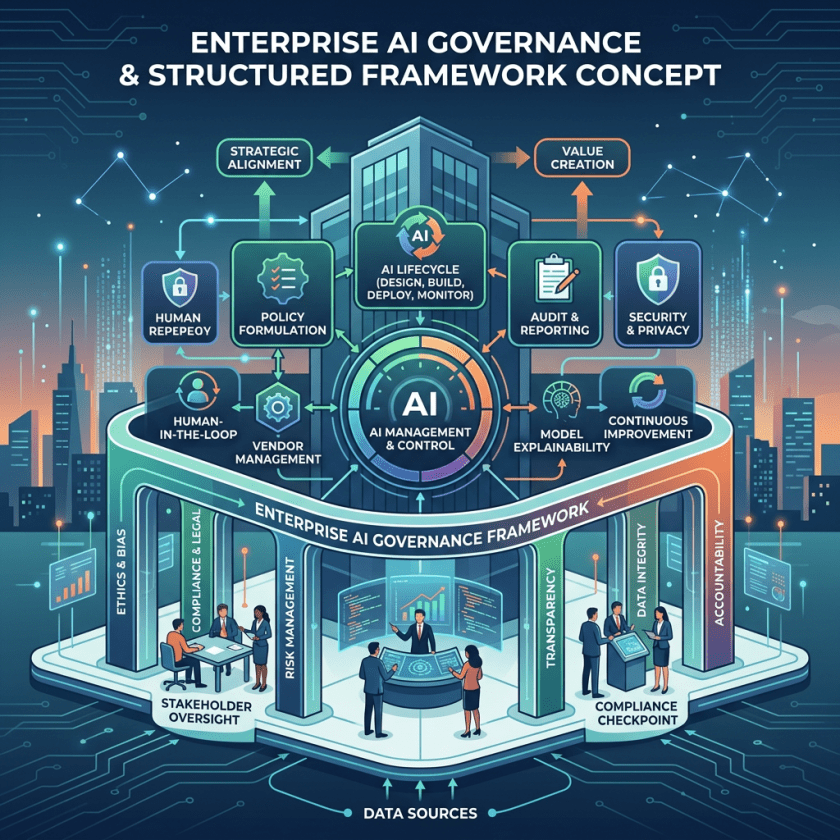
The defining story of this week on genesis-aka.net is a shift in mood: AI in the enterprise has stopped being a story about adoption and started being a story about discipline. Organizations report that ecosystem partnerships accelerate enterprise AI scale precisely because shared platforms and reusable architectures solve the governance and integration problems that stall AI once it leaves the pilot stage. That same appetite for structure runs through a piece explaining why traditional project management doesn’t work for AI projects: AI work is continuous and data-centric, not linear, and CIOs still lack a settled playbook for phasing it in.
Nowhere is that tension sharper than in software development. The AI coding rollout worked, and now CIOs have a bigger problem: 84% of developers use AI tools daily, yet productivity gains have plateaued near 10%, pushing the real bottleneck upstream into design, architecture, and oversight. Vendors, meanwhile, are testing how far they can stretch the “AI agent” label, which is why a piece on telling real AI agents from ‘agent washing’ urges buyers to judge autonomy and decision-making directly rather than take marketing claims at face value. The model race adds its own noise: Anthropic has overtaken OpenAI in U.S. enterprise adoption, 34.4% to 32.3%, but the CIOs quoted say they’re building flexible, multi-vendor architectures instead of chasing leaderboard shifts. For those ready to move past incremental automation, one piece argues that zero-based process redesign can unlock agentic AI’s nearly $450 billion in projected value by 2028 — but only with real cultural change and executive commitment behind it.
That same maturing instinct is reshaping how enterprises deal with suppliers. The technology sector itself is stumbling toward becoming a proper supply chain, with hyperscalers shifting to consumption-based pricing and CIOs advised to treat vendors as embedded partners rather than arm’s-length sellers. Choosing the right partner is itself getting harder to navigate: Forrester’s evaluation of which AI consulting service provider is best for enterprise needs found that firms like Accenture and Deloitte share foundational strengths but diverge in specialization. In financial services specifically, takeaways from Money20/20 on trust and agentic commerce show banks weighing AI reliability and regulatory compliance even as vendors scramble to align their messaging.
Leadership frameworks got their own airing this week. With roughly 70% of transformations failing to stick, one piece proposes connecting people, technology, and mindset through the DOTS model — Direction, Operation, Team and adoption, Systems — as a diagnostic for what’s misaligned. A companion piece on decision-making insists that leaders shouldn’t run the numbers until they know why, warning that analysis without a clear purpose produces confident but misguided conclusions. And inside RevOps specifically, the rise of the “Claude Cowboy” — operators who grab AI tools and move fast on their own — is forcing leaders to build governance around grassroots initiative instead of stamping it out.
Talent is emerging as its own battleground. Apple’s lawsuit against OpenAI and former employees over alleged trade-secret theft signals that institutional knowledge, not just technology access, is now the thing worth fighting over. That plays out at the individual level too, in a piece asking how technical AI’s future jobs really need to be, which finds forward-deployed engineers — translators between AI capability and business need — becoming as valuable as the engineers building the models themselves.
Infrastructure and data integrity round out the week. A report on the rising risk of weather data sabotage warns that AI-driven forecasting models raise the stakes of manipulated data feeding strategic decisions. On the hardware side, GlobalFoundries is industrializing quantum hardware with $375 million in federal backing, aiming to move quantum computing past pure experimentation by 2030, while ASML’s dominance in advanced lithography is profiled in a look at the $400 million machine powering the future of chipmaking, a monopoly now facing both competitive and geopolitical pressure.
Finally, a reminder that AI isn’t the only growth lever worth examining: automotive OEMs are told that inclusive design is an overlooked growth opportunity, with too many products still built for an imagined “average” driver instead of a genuinely diverse customer base.
Taken together, this week’s coverage reads less like an AI hype cycle and more like an industry settling into the harder second act: building the governance, partnerships, talent pipelines, and infrastructure that let enterprise AI actually deliver on its promises.
Full post index for this week:
- How ecosystem partnerships accelerate enterprise AI scale · July 24, 2026
- The risk of weather data sabotage is rising · July 24, 2026
- The Technology Industry Is Stumbling Down The Path To Becoming A Proper Supply Chain · July 24, 2026
- Connecting the Dots to a Successful Transformation: People, Technology, and Mindset · July 24, 2026
- My Takeaways From Money 20/20 For Your GTM Team · July 24, 2026
- Why traditional project management doesn’t work for AI projects · July 24, 2026
- The AI coding rollout worked. Now CIOs have a bigger problem · July 24, 2026
- How CIOs can tell real AI agents from ‘agent washing’ · July 23, 2026
- Which AI Consulting Service Provider Is Best For You? · July 23, 2026
- The Rise Of The “Claude Cowboy” In RevOps · July 23, 2026
- Apple’s OpenAI lawsuit signals a new AI battleground: Talent · July 23, 2026
- Anthropic overtakes OpenAI, but these CIOs aren’t chasing the leaderboard · July 23, 2026
- Inside GlobalFoundries’ plan to industrialize quantum hardware · July 23, 2026
- Inclusive Design Is Automotive’s Overlooked Growth Opportunity · July 23, 2026
- Don’t Run the Numbers Until You Know Why · July 23, 2026
- The $400 million machine powering the future of chipmaking · July 23, 2026
- Drive agentic AI outcomes with zero-based process redesign · July 23, 2026
- How Technical? The Debate About AI’s Future Jobs · July 22, 2026
Browse the full IT Management archive at genesis-aka.net/information-technology/management/
Enjoyed this article? Sign up for our newsletter to receive regular insights and stay connected.