
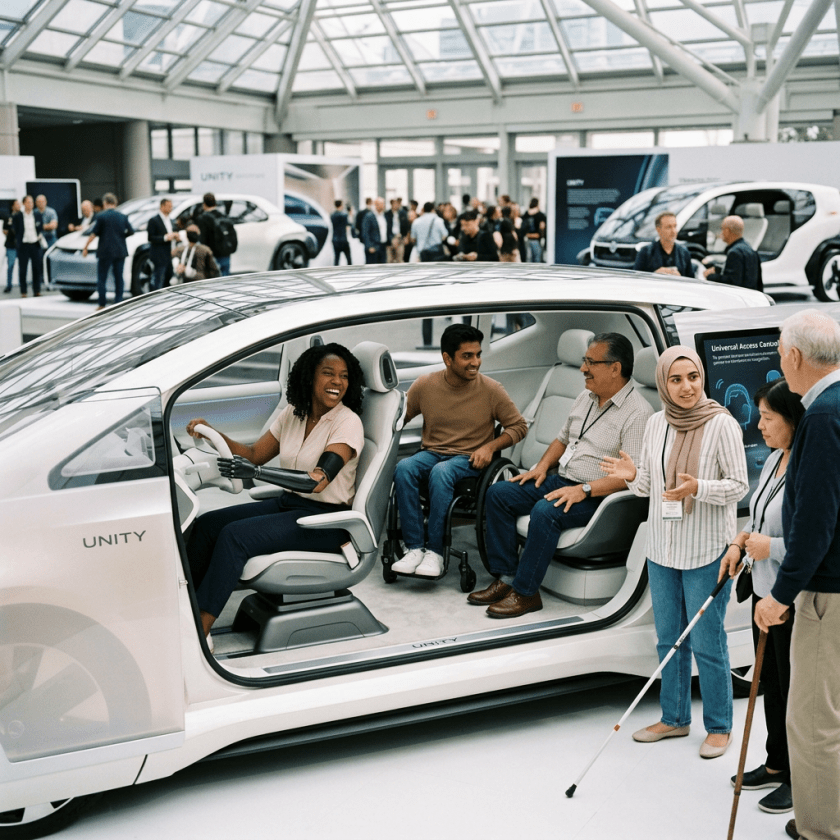
Inclusive design should be treated as a portfolio choice, not a feature request. For automotive leaders, the management question is whether accessibility and adaptability are funded as part of product strategy, or left to late-stage fixes that add cost, delay launches, and fragment the customer experience. If inclusive design is not visible in business cases, it will usually lose to short-term styling, platform reuse, or local market demands.
The bigger issue is governance. Inclusive design cuts across product management, engineering, UX, compliance, procurement, and aftersales. That means someone must own decision rights for user research, requirement setting, and exception handling across the full vehicle ecosystem, including digital interfaces and third-party adaptations. Without clear accountability, teams will optimize their own deliverables while the overall experience remains inconsistent.
Management needs a measurable definition of value. The right metrics are not limited to accessibility compliance. Leaders should ask which customer segments are being excluded, where adaptation costs are appearing, and whether inclusive features improve adoption, retention, serviceability, or brand preference. A practical next question is: which two or three inclusive capabilities would deliver the strongest cross-market return if designed into the next platform refresh?
There is also a trade-off to acknowledge. Designing for flexibility can increase upfront complexity and require tighter coordination with suppliers. But that complexity should be compared with the cost of retrofitting, customer workarounds, and missed growth opportunities. The strategic decision is not whether to design for everyone, but whether the organization is willing to align investment, governance, and product roadmaps around that ambition.
What’s Holding The Industry Back — And How To Move Forward
Long-standing assumptions about target users, brand identity, and design influence how OEMs prioritize features, define users, and make design decisions. These challenges translate into a set of common barriers with corresponding actions that OEMs can take to address them, such as:- Barrier: OEMs still design for a narrow “average” user. Automotive brands’ target personas are male, young, and able-bodied, deprioritizing the needs of those who don’t match the dominant persona. Prevailing assumptions, a lack of awareness, and unintended bias about who drives, who buys, and what disability looks like limit how teams prioritize features and test experiences. As a result, population segments such as older adults and people with disabilities remain underserved.Solution: Expand research and testing to reflect real-world diversity. Engaging a broader range of users throughout the entire product design and development process helps teams to uncover unmet needs and build solutions that enable a wider range of customers to use their product while improving the experience of all customers.
- Barrier: Siloed teams and fragmented ecosystems slow execution. Automotive organizations often operate in traditionally distinct teams, hampering collaboration between design, engineering, and production. At the same time, with the rise of the Original Postredictions-2025-smart-manufacturing/" shape="rect">software-defined vehicle, OEMs don’t always control the digital systems that shape the experience, and physical adaptations to cars are typically provided by third parties. This fragmentation makes consistent inclusion difficult to deliver.Solution: Align teams around shared inclusive design requirements early on and apply those requirements to the full ecosystem. Make easy customizability of physical and digital experiences the default (e.g., installing standard fixing points in the car for common adaptations, letting users switch off functions, move HMI modules, or choose preferred input methods). This allows users to adapt the car to their needs.
- Barrier: Legacy designs and brand identity limit innovation. Established OEMs are constrained by their own design conventions, deeply ingrained brand identities, and customer expectations. These legacy choices make it harder to rethink experiences from scratch or challenge outdated assumptions about users.Solution: Use moments of transformation such as the shift to EVs, software-defined vehicles, and autonomous vehicles to rethink design fundamentals. Treat these inflection points as an opportunity to break from legacy constraints, reimagine user needs, and build more inclusive experiences from a clean slate.
Inclusive Design Is Automotive’s Overlooked Growth Opportunity
Enjoyed this article? Sign up for our newsletter to receive regular insights and stay connected.