Google warns attackers are wiring AI directly into live cyberattacks

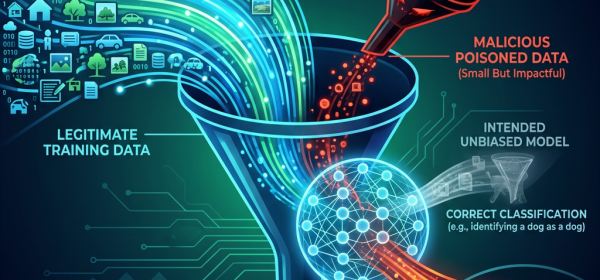
A new Google Threat Intelligence report highlights that threat actors are increasingly integrating artificial intelligence into operational attack workflows. It details the use of AI models in malware development and cyber operations, complicating detection efforts. Criticism arises regarding the implications for Google’s liability as attackers exploit its AI technologies.

Continue reading

Slamming the door on AI-based cybersecurity threats

The emergence of AI poses significant cybersecurity challenges for CIOs and CISOs, including internal vulnerabilities from poorly governed AI use. As AI automation enhances attack capabilities, organizations must address data security, application risks, and user access management. Proactive measures like automated responses and employee training are essential to combat evolving threats, including deepfakes.

Continue reading

The SOC of the future: How teams can see, know and protect more

The modern Security Operations Center (SOC) faces challenges due to disjointed tools and overwhelming alert volumes, hindering effective threat response. Future SOCs should embrace Detection-as-Code, continuous validation, and unified operations, integrating offensive tactics to enhance security. Investing in these strategies will transform SOCs into resilient, proactive entities by 2026.

Continue reading

AI Can Make You Multilingual Overnight — Or Create Chaos Just As Fast

GenAI and machine translation provide rapid multilingual capabilities, but treating localization AI merely as a tool undermines quality and brand trust, especially in low-resource languages. Organizations must invest in oversight and context to ensure accuracy and safety. Localization teams and providers play essential roles in managing this complex transition effectively.

Continue reading

When A Hosting Provider Becomes A Hostile Provider: The Notepad++ Compromise

The Rapid7 analysis of the Notepad++ compromise highlights a significant software supply chain vulnerability that resulted from a breach in the distribution process. Attackers exploited distribution points used by many developers, enabling access to multiple environments. Organizations are urged to enhance security measures, validate software sources, and manage open-source tools effectively to mitigate risks.

Continue reading

Generative AI hype distracts us from AI’s more important breakthroughs

On April 28, 2022, Paul McCartney’s concert showcased AI technology by recreating a lifelike John Lennon performance. This moment highlighted the contrast between generative AI, often misunderstood and overhyped, and predictive AI, which quietly enhances practical applications like medical diagnostics and disaster forecasting. Emphasizing predictive AI could yield more significant benefits.

Continue reading

Cyber experts warn AI will accelerate attacks and overwhelm defenders in 2026

Cybersecurity experts predict a transformative landscape in 2026, driven by AI. Attacks will escalate in speed and sophistication, potentially outpacing defenses. Autonomous systems will empower cybercriminals, leading to increased vulnerabilities, extortion, and ransomware. Organizations must adapt, balancing automation with human oversight to counter evolving threats effectively. AI’s impact is undeniable.

Continue reading

Top Cloud Security Challenges Businesses Face in 2025

In 2025, cloud security incidents rose by 61%, with 85% of organizations citing security as their top challenge. Key issues include misconfigurations, weak IAM, insider threats, and insecure APIs. Mitigation strategies focus on automation, strict access controls, ongoing compliance, and monitoring to address risks from both internal and external sources effectively.

Continue reading

Ask the Expert: How CIOs Prove Business Value

CIOs are increasingly responsible for demonstrating business value, facing challenges like shadow IT and underutilized systems. Experts emphasize the importance of strong business relationships, adaptive change management, and data-driven decision-making. Collaboration with finance leaders and agile methodologies are key to successful technology integration and achieving strategic goals amidst external chaos.

Continue reading

NetApp INSIGHT 2025: Evolving Storage Into The Enterprise Data Foundation

At NetApp INSIGHT 2025, the company emphasized transforming storage into an active data foundation to support AI-driven workloads. Key topics included disaggregated architectures, active metadata, and unified control planes to enhance data management. The event highlighted the need for enterprises to prioritize governance and scalability in their storage strategies to adapt to evolving infrastructure demands.

Continue reading

How Firms Can Better Build on the Knowledge of Start-Ups

Established companies can enhance innovation by leveraging start-up knowledge, yet face challenges in collaboration. Knowledge scouts, who facilitate integration of external technologies across divisions, struggle with cognitive and relational hurdles. Effective integration is more likely when divisions have previous experience with similar technologies, highlighting the importance of tailored strategies and cross-divisional engagement.

Continue reading

City of Raleigh CIO’s ‘Crawl, Walk, Run’ Approach to AI

Mark Wittenburg, CIO of Raleigh, leads an AI initiative to enhance city services, including urban management and infrastructure maintenance. By collaborating with local universities, Raleigh’s IT team seeks to streamline processes and utilize generative AI internally before public deployment. Key projects include improving water infrastructure and enhancing city safety through machine learning.

Continue reading

How Distributed Governance Can Help Ensure Security Across Edge Environments

Edge computing requires tailored governance to manage diverse workloads and decentralized environments effectively. Traditional centralized governance fails due to the heterogeneity of edge devices and varying compliance needs. Instead, distributed governance offers a flexible approach, applying context-specific policies and ensuring security while addressing unique challenges faced by edge infrastructures.

Continue reading

Balancing Cost, Power, and AI Performance

The content discusses the economic analysis of AI inference, focusing on the sustainability of AI systems’ outcomes through metrics like tokens per dollar for cost efficiency and tokens per watt for energy efficiency. It emphasizes the importance of optimizing production systems for profitability while considering multiple interconnected factors affecting performance and costs.

Continue reading

1 2 3 4 5 7