Senior engineer and colleague reviewing a promotion offer in an office cubicle

The leadership desert: The unspoken enterprise IT talent problem

A concerning trend reveals senior engineers declining promotions due to burnout and dissatisfaction with traditional leadership roles. Many feel these roles impose additional pressure without enhancing their influence. Experts suggest creating dual career paths that value both technical and human leadership to retain talent and foster a healthier leadership pipeline in IT.


Continue reading

Two coworkers discussing data charts on a computer monitor in an open office space

A reality check on the AI jobs hysteria

Recent analyses indicate that artificial intelligence has not yet significantly disrupted white-collar jobs in the U.S. labor market, despite fears of impending job losses. Research shows low unemployment rates in AI-affected sectors and highlights challenges for younger workers. Comprehensive data is needed to understand AI’s future impacts on employment and necessary adaptations.

Continue reading

Four graduates sitting on steps in academic gowns reading a news article about job market shock

Gen Z is booing AI: Why it’s a workforce problem for CIOs

Recent commencement speeches faced backlash as graduates expressed concern over AI’s impact on job opportunities. Many Gen Z workers fear that increasing automation may eliminate traditional entry-level roles, leading to a disconnect between corporate AI adoption and support for developing future talent. Enterprises must rethink career pathways to address these challenges.

Continue reading

Non-desk workers accessing AI tools equally

Workplace equity in the age of AI

In 2012, a call from a Fortune 100 company highlighted the communication inequities faced by non-desk employees, pushing the author to address this gap through technology. As AI reshapes workplaces, similar access issues may resurface. Ensuring equitable access to AI tools for all employees is crucial for workplace equity and effectiveness.

Continue reading

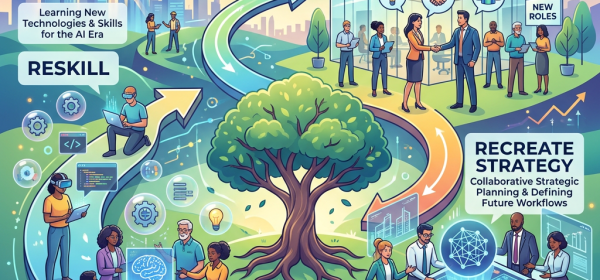
Cycle diagram showing AI workforce strategy with reskill, rehire, and recreate phases

AI & Jobs: Are Companies Prepared for the Workforce Revolution?

As organizations adapt to AI disruption, three key strategies emerge: reskill, rehire, and recreate. This involves prioritizing employee development over hiring, addressing skill distribution, and fostering trust. Inequality may arise between firms leveraging AI and those unable to; thus, policy interventions in training and apprenticeships are essential for future workforce growth.

Continue reading

Silver hard-shell suitcase standing near gray armchair and small round table with book and plant

The Playbook for RIMOWA’s Transformation

RIMOWA, a German luggage manufacturer acquired by LVMH in 2016, transformed from a modest brand into a symbol of functional luxury through strategic rebranding, direct customer engagement, and innovation. Its focus on craftsmanship, sustainability, and creative collaborations has reinforced its market position while expanding into new product categories, ensuring continued growth in the luxury sector.

Continue reading

Team meeting with laptops, whiteboard notes, and digital customer journey presentation

You Wanted to Become AI-Native, and All You Got Was a Lousy Foundation

The article critiques a strategy favoring foundational fixes in AI adoption over immediate, impactful initiatives. Organizations should prioritize solving specific customer problems, building necessary infrastructure as they progress. This iterative approach fosters innovation and meets board expectations, contrasting with lengthy, premature groundwork that often wastes resources without delivering value.

Continue reading

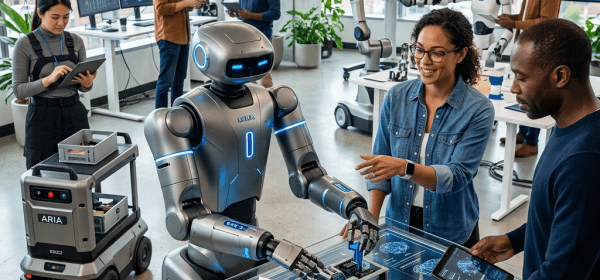
Scientists working with humanoid and robotic arm robots on digital touchscreen tables in a modern lab

AI & Jobs: What Workers Can Do to Protect Themselves

AI is transforming the labor market by redesigning jobs rather than making them obsolete, particularly affecting entry-level positions. As tech companies increasingly rely on automation, workers must cultivate “meta-skills” and deep domain knowledge to thrive. Those who adapt quickly and leverage AI effectively will enhance their career resilience and visibility.

Continue reading

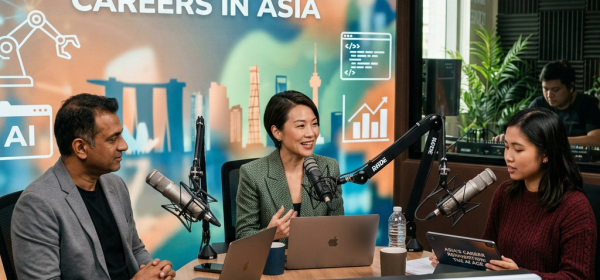
Three people hosting a podcast about future-proofing careers in Asia with microphones and laptops

AI and Career Reinvention

Sameer Hasija and Winnie Jiang discuss the transformation of careers in Asia in the podcast “Asia AI and Career Reinvention.” They highlight a shift towards “uninstitutionalised” career paths amid technological disruption and anxiety. Jiang advocates embracing AI and experimentation to create fulfilling work, empowering individuals and enhancing productivity.

Continue reading

IT professionals collaborating in a meeting room with laptops, whiteboard, and a large monitor showing data and diagrams

Rethink tech talent: Local is the smartest play for IT

The tech industry’s focus on cost savings has led to offshoring, resulting in lost service quality and innovation. Investing in local IT talent enhances productivity, creates jobs, and strengthens communities. Emphasizing workforce development through public-private partnerships addresses these challenges, positioning companies for economic and social impact while fostering local engagement and resilience.

Continue reading

Humanoid robot presenting holographic charts and graphs to business professionals in a modern office.

Meta’s new ‘AI Zuckerberg’ is a mirror for every C-suite

Meta is developing an AI version of Mark Zuckerberg to see if leadership roles can be simulated and partially automated. While AI can handle tasks like communication and feedback synthesis, essential responsibilities like accountability and strategic decision-making remain uniquely human. Organizations must adapt to these changes and rethink leadership structures in an AI-driven future.

Continue reading

Humans are the North Star for AI-native workplaces — Gartner

At Gartner’s Digital Workplace Summit, analysts emphasized that as AI becomes integral in enterprises, human involvement is crucial. Trust, governance, and employee empowerment are key areas for organizations to focus on. Building trust in AI strategies and fostering a culture of safe experimentation are essential for successful AI integration in the workplace.

Continue reading

Why We Don’t Have More AI Power Users In The Age Of AI

A new study reveals that only 5% of employees effectively utilize AI tools, predominantly at executive levels, for strategic tasks rather than personal productivity. Leaders should focus on assessing the quality of AI usage rather than just frequency. Encouraging wider participation in AI initiatives requires inviting engagement rather than mandating it.

Continue reading

1 2 3 12