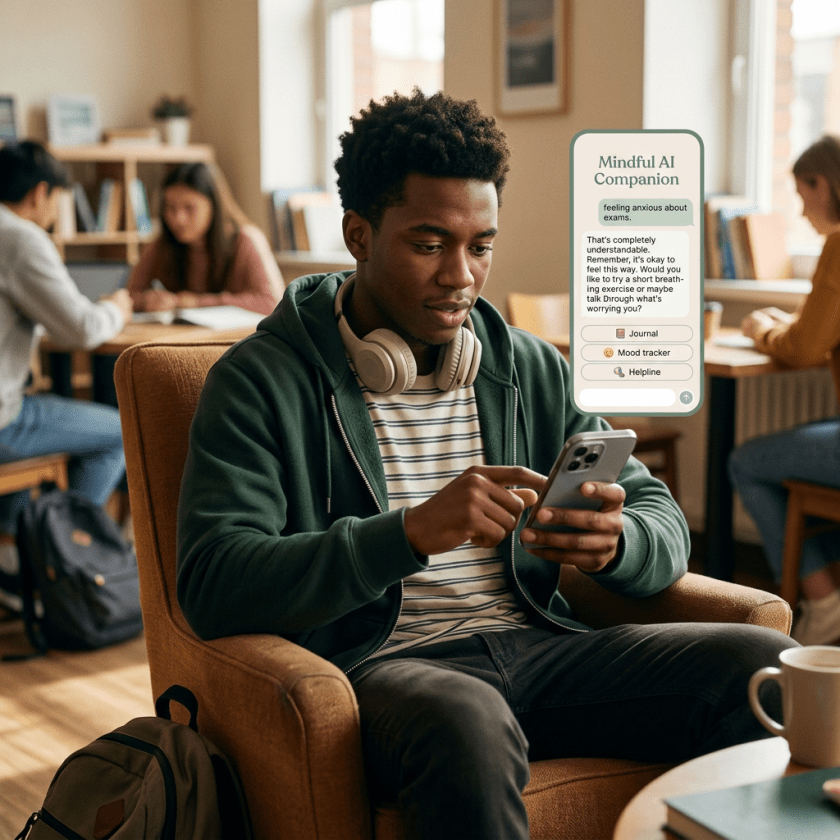
At the same time, there seems to be growing mental health concerns, particularly among the youth. In this context, AI-powered mental health apps are emerging as a practical alternative. They are available 24/7, whether it’s a random stressful afternoon or a 2 am anxiety spiral. They are private, largely judgment-free, and often significantly more affordable than traditional therapy. Some platforms are also beginning to incorporate the Indian cultural context, making them more relevant to local users.
That said, these apps are not a substitute for professional care. But right now, they can be a practical starting point, something that’s accessible when nothing else is.
Here’s a look at 10 AI-powered mental health apps:
Wysa: the one that genuinely feels like it’s listening
Wysa is an AI chatbot built around Cognitive Behavioural Therapy (CBT) techniques and keeps it conversational. It is developed by an Indian company that also supports Hindi and, more importantly, understands nuances such as family pressures, academic expectations, and workplace hierarchies. The app includes over 100 self-help tools such as guided meditations, visualisations and exercises that are claimed to be designed by a clinical team. While the core app is AI-powered, premium users can access one-on-one sessions with human wellbeing coaches. It is available on iOS and Android. The free version is quite capable, but for more advanced features the premium model is required.
Youper: Designed for overloaded mind
This app is focused on emotional pattern recognition. It tries to map why a user is feeling a particular way instead of reacting to what they are feeling. It is backed by research linked to Stanford, and the approach leans on established psychological frameworks, which makes the experience feel more structured and less experimental. The app claims measurable user improvement, adding a layer of credibility and tries to identify emotional triggers and connect them with the user’s habits, routines or specific situations, offering insights that feel personalised rather than generic. It operates on a freemium model, offering a seven-day free trial for premium features and is found on both Android and iOS.
Replika: An AI companion to combat loneliness
Replika is one of the more widely known AI companions globally, designed to beat loneliness and provide emotional support. It serves as a digital friend, romantic partner or mentor. The app has introduced realistic 3D avatars, where users can choose its name, gender, clothing and appearance, which can be modified over time. While the basic version is free, several features are locked behind a subscription. It is available across Android and iOS platforms.
Mindful AI: Understands human emotions
Mindful AI prioritises ethics, emotional intelligence and human well-being instead of simply chasing speed. It is designed to interpret not just what users say, but how they feel, their tone, intent, etc., and this allows for more empathetic interactions. The app is free. Rather than immediately offering solutions, the app often nudges users to pause, think, and recognise their own emotional patterns. While it is not specifically tailored to the Indian context, its focus on self-reflection and emotional awareness can still make it useful for users looking for a quiet, private way to process their thoughts. The app is available in both Android and iOS.
Ash: A more personal AI companion
Developed by New York-based Slingshot AI, Ash is designed as a judgment-free space for emotional processing. It positions itself less as a tool and more as a long-term conversational partner. Ash builds context over multiple interactions, allowing for more personalised guidance. As a result, the conversation leans towards therapy-informed support rather than surface-level. It is available 24/7 on both iOS and Android devices. The app claims that it is designed to recognise high-risk situations. It is free and is supported by funding.
Abby: Personalised plans but at a premium
Story continues below this ad
Abby claims to focus on habit-building and personalised action plans, moving beyond simple conversations to offer more structured guidance. It is free, however, most of the advanced features are available through a subscription. At present, the app is available on iPhone and iPad devices and is positioned as a tool for users to build consistent, long-term mental wellness habits. This app supports communication in over 26 languages including Hindi.
Earkick: Real-time anxiety tracking made accessible
Earkick is a user-friendly tool designed for real-time anxiety tracking and emotional support. The app is free, and is among the most sought-after tools among the young users. Additionally, its simple interface and instant feedback system makes it easier for users to check in with their emotions regularly. It offers a “panic button” function for instant, guided breathing exercises. Features include voice/text journaling, mood tracking, breathing exercises, and integration with Apple Watch to measure physiological responses. The app is available in both Android and iOS.
Yuna: Voice-first mental wellness support
Yuna takes on a different approach. The app is mainly focused on voice-lead interactions and is specially designed for users who prefer speaking rather than typing, and combines guided conversations with CBT-based techniques. The sessions are available 24×7, and each of them lasts about 30 minutes. Yuna adapts to the user’s emotional state, tracking daily moods and providing customised exercises and insights. It is available on iOS and Android, and offers in-app purchases and subscriptions for advanced features.
Headspace: Mental health app with Ebb
Headspace is an AI-powered conversational companion along with existing expert-led meditations and therapy. The company claims that the app has an empathetic AI companion named ‘Ebb’ which is designed for journaling, reflection and gaining new perspectives on personal thoughts. It was formerly known as Ginger, and this service is available 24/7, with options for video-based therapy as well. The app is available on Android and iOS. It operates on a subscription model, though it offers a limited free trial for around two weeks.
Woebot: Routine-driven support
Story continues below this ad
Woebot is a subscription-based app, available on both Android and iOS. It is only accessible to users who are part of a research study or who receive an access code from an employer, healthcare provider, or partner organisation. The app has a strong research foundation. Unlike many apps that simply claim effectiveness, Woebot leans on multiple clinical studies showing measurable impact on depression and anxiety symptoms. Woebot encourages daily check-ins. It is claimed to be developed by clinical psychologists and offers conversations rooted in CBT principles.
AI mental health apps are useful, but they are not a replacement for real therapists. A trained professional can help, understand and diagnose issues, and handle crises in ways AI simply can’t. Think of these apps as a starting point or support system, not a complete alternative to in-person care.
On the other hand, it needs to be noted that each app listed above comes with its own data and privacy guidelines; hence, users are advised to practise caution and refrain from sharing personal or sensitive information.
(This article has been curated by Shivani P Menon, who is an intern with The Indian Express)