
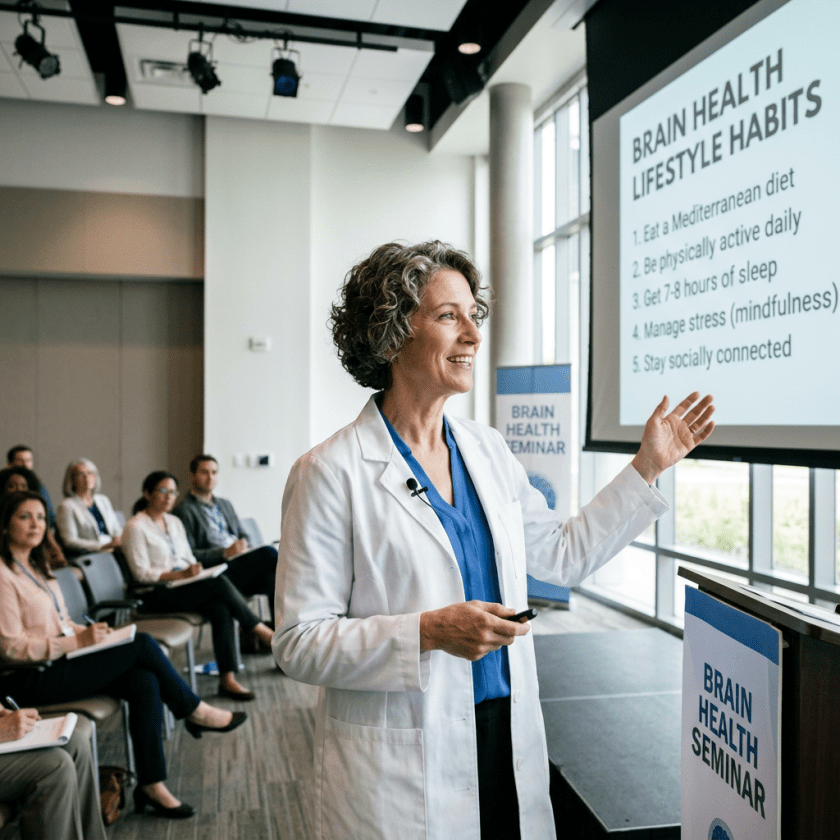
The broad message is sensible: brain health is not built by a single miracle habit, but by the accumulation of everyday behaviours. That said, readers should separate a persuasive lifestyle framework from proof that any one routine will reliably “boost” cognition in the short term. Many links here are based on observational data or biological plausibility, which can suggest direction without proving cause.
Exercise, sleep, diet and stress regulation all have strong support as parts of healthy ageing, but the evidence is rarely all-or-nothing. For example, physical activity is consistently associated with better cognitive outcomes, yet the size of the effect varies and is influenced by baseline fitness, age, medical status and adherence. Similarly, sleep duration and quality matter, but “more” is not always better, and poor sleep can be a marker of other health issues rather than the sole driver.
Nutrition is another area where the nuance matters. Diet patterns such as Mediterranean-style eating are linked with lower cardiometabolic risk and better brain outcomes, but single nutrients are harder to interpret. Omega-3 status, for instance, may reflect overall diet quality or health behaviours as much as one specific supplement habit. The practical takeaway is not perfection, but reducing obvious dietary harms and favouring patterns that are sustainable.
The most useful lens is implementation. Small routines only help if they are realistic enough to repeat: regular movement, consistent sleep timing, early wind-down, and stress-management practices that fit into daily life. Social connection, enjoyment and lower friction are likely to matter because they improve adherence. In other words, the brain benefits of lifestyle change probably come less from a single dramatic gesture and more from making a healthy day easier to repeat tomorrow.
According to neurologist and neuroscientist Dr Majid Fotuhi, the small decisions we make from the moment we wake up to the time we go to bed can have a profound impact on memory, focus, and long-term cognitive health. An adjunct professor at the Mind/Brain Institute at Johns Hopkins University, Dr Fotuhi has spent more than three decades researching brain health and believes it’s never too late to build a healthier brain.
In his most recent book, The Invincible Brain, Fotuhi argues that targeted lifestyle changes can help prevent – and in some cases even reverse – early cognitive decline, improving memory and mental sharpness in as little as 12 weeks. Rather than chasing quick fixes, his philosophy is simple: “the unit of life is one day.” Instead of trying to change the future all at once, he focuses on the five pillars of brain health – exercise, sleep, nutrition, stress management, and brain training – and getting them right every day.
To understand the small but important habits that can make a difference, we asked Dr Fotuhi to walk us through a typical 24 hours in his life, explaining the science behind each part of his routine and the practices he believes can help keep your brain performing at its best.
Morning
©Unsplash
Before I even reach for my phone, I stay in bed for up to 15 minutes, thinking about my plans and envisioning it being a wonderful day.
Exercise is the single most important determinant of brain health and vitality; it’s non-negotiable. I exercise three days a week in the mornings: one hour on a stationary bike, followed by 45 minutes of body weight training – push-ups, sit-ups, chin-ups, core work.
One additional day a week, usually Fridays, I go for a long bike ride of 60 to 100 miles. And I walk whenever I can.
At the molecular level, when you exercise, you increase the number of mitochondria, the energy producing organelles inside cells. The more you stimulate your muscles, the more you release molecules called myokines. They increase BDNF, a brain-derived neurotrophic factor that’s important for the generation and maturation of new neurons in the hippocampus, the part of the brain most important for learning and memory. Only exercise grows new neurons in the hippocampus.
I have a small breakfast high in fiber – oatmeal and a banana, with raisins and milk – which is important for gut and brain health. I sit at my desk while I eat and write my to-do list for the day. I use a small index card, so I can’t write too much.
My work days are varied. I teach at John Hopkins and George Washington University, and also conduct my own research. I travel around the world, giving lectures, and doing TV, radio, and podcast interviews.
I love my job because I empower people to be proactive about brain health, and see longevity as achievable – I spend my days telling people you can live to 90 and remain sharp and independent.
Afternoon
I have a small cup of Greek yogurt with blueberries and mix in 1000mg of omega-3 fatty acids, which are among the best nutrients for the brain. Neurons – the main brain cells – have membranes that are 48 percent made up of omega-3 fatty acids.
I published a study showing that people with higher levels of omega-3 fatty acids in their blood are less likely to develop Alzheimer’s disease. Other studies show that those with higher omega-3 levels have larger brain areas associated with memory.
Throughout the day, I avoid stress, which is harmful for the brain, by doing breathing exercises. I breathe in for a count of six, hold for three, and out for six.
The science behind slow breathing and meditation is compelling. In one experiment, one group did these exercises for 20 minutes, four or five times a week, while another listened to music. Over time, the breathing group showed fewer footprints of Alzheimer’s, amyloid plaques, in their brains.
Slow breathing lowers cortisol, the stress hormone, and slows the brain’s rhythm to help it relax. Throughout the day, I also appreciate how wonderful life is. I left Iran 40 years ago, and I feel lucky every day.
Evening
©Unsplash
I eat dinner early, no later than 6:30pm. My wife prepares it each night: quinoa and chicken, grilled vegetables with salmon, and steak once a week. I follow a Mediterranean diet of mostly fruits, vegetables, legumes, and leafy greens.
To me, food is like medicine. If you eat the right foods, your brain will be healthy. But eat poorly and inflammation levels in the brain will rise, which is not good for you in the long term.
There’s also a linear relationship between fat and the size of the hippocampus: higher levels of visceral fat are associated with increased footprints of Alzheimer’s disease in the brain. So, I never eat junk – although, I do have a scoop of ice cream once in a while.
If I have deadlines, I work in the evening. Other nights, I spend time with my wife. We take dance classes, watch movies, play cards, and go for walks when the weather’s nice. Our social calendar is hectic, with something usually happening on Friday and Saturday evenings.
I drink one or two glasses of wine at gatherings, usually twice a week. If you drink a little, there’s no significant harm to brain health, as long as you follow the five pillars [I mentioned earlier.
Before bed (around 10/11pm), I read and do slow breathing exercises. I sleep seven to eight hours as sleeping fewer than six is associated with an increased risk of stroke and cognitive decline. Sleeping too much isn’t good either – more than ten or eleven hours means something is wrong.
I can’t remember the last time I had trouble falling asleep. If you wake up in the middle of the night, don’t toss and turn. Sit up. Or better yet, get out of bed. Read or write down what’s keeping you awake. Unload the thoughts onto paper or your phone, then read until you fall asleep.
Enjoyed this article? Sign up for our newsletter to receive regular insights and stay connected.