
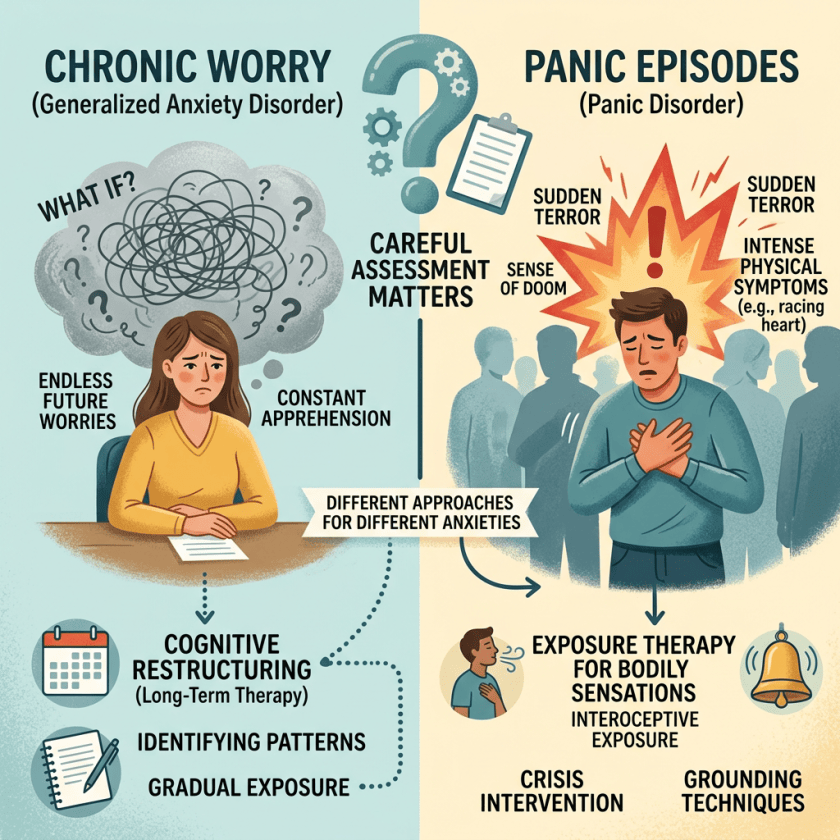
The useful distinction here is not simply diagnostic jargon; it affects what people may expect from treatment and why some “anxiety tips” feel unhelpful. Ongoing, wide-ranging worry and brief surges of intense fear can both fall under the everyday label of anxiety, but they do not necessarily respond to the same therapeutic emphasis. That matters because frustration with treatment is not always a sign that someone is “doing it wrong” — sometimes the approach is targeting the wrong pattern.
It is also worth noting what this article does and does not establish. It reasonably explains that panic symptoms and generalized worry often need different clinical strategies, but it does not mean readers can accurately sort this out on symptoms alone. Overlap is common, and panic-like symptoms can also occur alongside other mental or physical conditions. Chest discomfort, dizziness, breathlessness, sleep disruption and constant tension are not exclusive to one anxiety presentation, which is one reason assessment matters before assuming a self-diagnosis.
For readers, the practical takeaway is less about choosing a technique immediately and more about noticing the pattern: Is distress mainly a constant stream of hard-to-control worry across many areas of life, or sudden episodes of intense physical alarm, or both? That kind of observation can make conversations with a qualified clinician more productive. It can also help set realistic expectations: progress may depend not just on receiving therapy, but on whether the therapy is matched to the main drivers of symptoms.
“Anxiety” gets used as a catch-all term, but the experience of a panic attack and the experience of chronic, generalized worry are clinically distinct, and treating them the same way tends to fall short for both. Understanding the difference matters because effective anxiety treatment depends on identifying which pattern is actually present, not applying a generic approach to anything labeled anxious.
What Generalized Anxiety Actually Looks Like
Generalized Anxiety Disorder (GAD) involves persistent, hard-to-control worry that spans multiple areas of life, work, health, relationships, finances, often without a single clear trigger. The worry tends to be chronic rather than episodic, showing up as a low-grade hum of unease that rarely fully resolves, along with physical symptoms like muscle tension, fatigue, and disrupted sleep. People with GAD often describe feeling like their mind is constantly scanning for what might go wrong next, even when nothing specific is happening.
What Panic Attacks Actually Involve
Panic attacks are different in both character and timeline. They involve sudden, intense episodes of physical fear symptoms, racing heart, shortness of breath, dizziness, a sense of losing control or impending doom, that peak within minutes and then subside. Unlike the chronic hum of generalized anxiety, panic attacks are acute and episodic, and they often occur without an obvious external trigger, which can make them especially disorienting. Someone can have panic disorder without generalized anxiety, and vice versa, though the two frequently co-occur.
Why the Distinction Changes Treatment
Cognitive Behavioral Therapy (CBT) forms the foundation of treatment for both conditions, but how it’s applied differs. For generalized anxiety, treatment tends to focus on identifying and restructuring the chronic worry patterns and catastrophic thinking that sustain persistent anxiety, along with building tolerance for uncertainty. For panic disorder, treatment more often incorporates exposure-based techniques, gradually and safely reintroducing the physical sensations or situations that trigger panic, so the nervous system learns those sensations aren’t actually dangerous. Applying a panic-specific exposure protocol to someone with generalized anxiety, or vice versa, tends to miss what’s actually driving each person’s symptoms.
Why Misdiagnosis or Mislabeling Delays Progress
It’s common for people to describe all of their anxiety symptoms under one label, sometimes because that’s simply how they’ve always talked about it, sometimes because panic and generalized anxiety genuinely do overlap. But a treatment plan built without clarifying which pattern, or which combination, is actually present tends to move more slowly, since the specific techniques that work well for one don’t always transfer cleanly to the other. This is why a thorough clinical assessment at the start of treatment matters more than picking a generic anxiety protocol.
What This Means for Choosing Treatment
A clinical evaluation should clarify not just that anxiety is present, but which specific pattern, or combination of patterns, someone is experiencing. This shapes everything from which therapeutic techniques get used first to whether exposure work is incorporated and how quickly. Peak Mental Health & Wellness in Marlton, New Jersey builds its anxiety treatment plans around this kind of specificity, starting with an assessment that distinguishes between panic disorder, generalized anxiety, and other anxiety presentations before recommending a treatment approach.
The Bottom Line
Panic attacks and generalized anxiety are related but distinct experiences, and effective treatment reflects that distinction rather than treating all anxiety as interchangeable. Getting an accurate picture of which pattern is actually present, through a real clinical assessment rather than a generic label, is what allows treatment to target the right thing from the start.
Enjoyed this article? Sign up for our newsletter to receive regular insights and stay connected.