
WCBR: A Megatrend That Won’t Go Away

WCBR is best understood as a narrow thematic satellite, not a broad technology proxy. For ETF investors, that distinction matters because the portfolio is built around a specific business problem rather than the wider digital economy. The index framework screens for companies tied to cybersecurity themes and growth characteristics, which can improve thematic purity but also reduce diversification compared with a wider tech fund.
That concentration is the main portfolio issue. When an ETF clusters around a single industry, a few holdings can have an outsized influence on results and volatility. Investors should therefore think less about whether cybersecurity is a durable theme, and more about whether this slice already exists elsewhere in the portfolio through software, cloud, or large-cap tech exposure. If so, WCBR may duplicate risk rather than add a new one.
Structure also matters. A rules-based ETF can provide efficient access to a hard-to-reach segment, but thematic funds are often more sensitive to index rebalances, style shifts, and changing constituent quality than broad-market funds. In practice, that means the fund’s composition can evolve meaningfully even when the theme itself remains intact.
For long-term allocators, the key question is portfolio role. WCBR is most useful when an investor wants explicit exposure to cybersecurity as a separate decision from general growth or tech allocation. The right framing is not “core holding,” but “measured satellite position” sized to fit overall diversification, concentration tolerance, and rebalancing discipline.
A Look At The Holdings
Because this is a narrowly focused fund, it should come as no surprise that over half the portfolio is in the top 10, with the largest position making up 6.54%.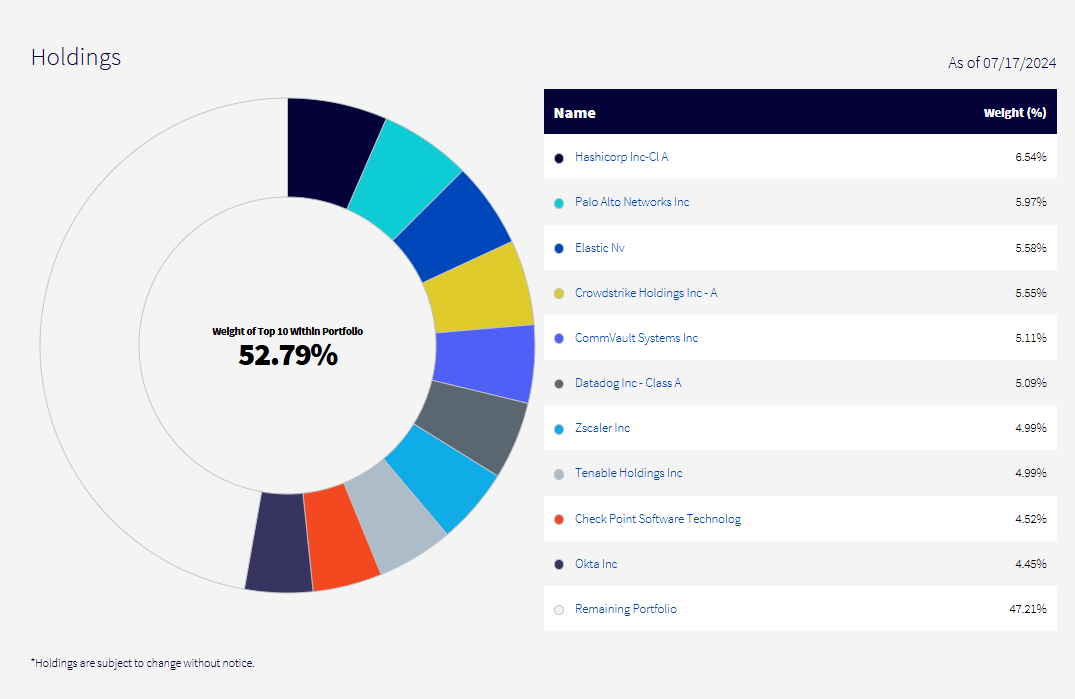
Sector Composition and Global Weighting
No surprises here, this is a Tech fund. All companies are classified in the sector. What is perhaps more important is the country allocation. This does have global exposure. Yes, the US is the dominant country, but some of these stocks are based out of Israel, Japan, the UK, and China.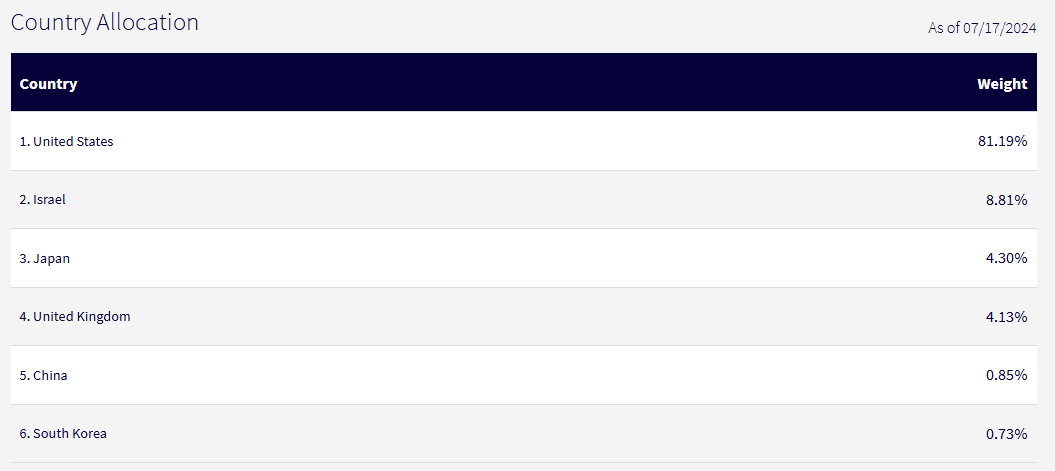
Peer Comparison
One fund worth comparing this against is the First Trust NASDAQ Cybersecurity ETF (CIBR). Both are attempting to provide exposure to the space. CIBR has slightly more holdings than WCBR, but overall the portfolios are similar. When we look at the price ratio of the two, overall performance on a relative basis is largely the same over the last 2 years. I am not sure if there is any clear differentiation from that alone.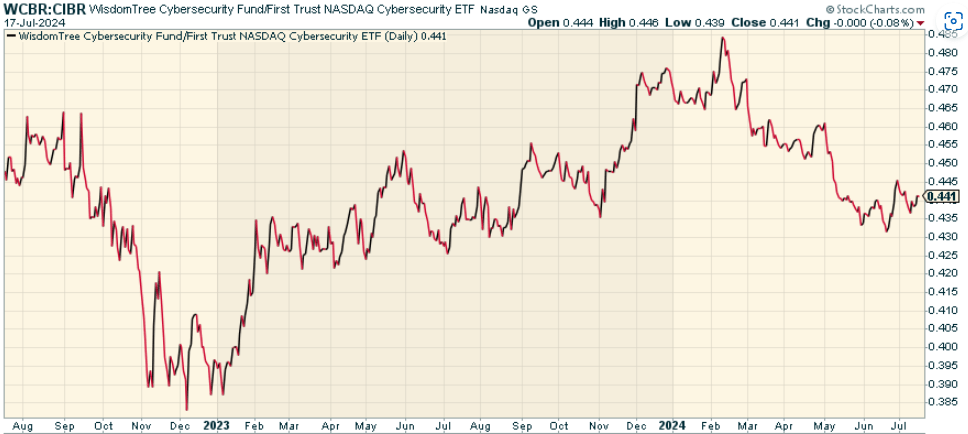
Pros and Cons
On the positive side, the relentless pace of technological change and deepening digitalization of the global economy creates a massive demand for strong cybersecurity solutions. As attack vectors multiply, businesses in all industries are forced to enhance their digital defenses, and the cybersecurity sector gets a sizable boost as a result. WCBR’s focus on high-growth, high-margin names thus makes it a play on this megatrend. The partnership with the world’s leading cybersecurity specialist, Team8, gives it a further edge; by virtue of its proprietary data and in-depth understanding of consumer and industry trends, Team8 is in a prime position to spot fresh trends and startups that could be the next wave of transformation in the sector. But that narrow focus on a high-growth sector comes with risks of its own. Investors could ultimately face a triple whammy of technology obsolescence, intense competition, and potential regulatory changes. Moreover, nearly all companies in the cybersecurity industry are reliant to a large degree on intellectual property, making them vulnerable to cyberattacks that could harm their key profit generators. In addition, its sector concentration – i.e., heavy investment in a single industry – in cybersecurity could cause significant volatility.Conclusion
In an age where data is king, and everyone is connected, the need for robust cybersecurity defenses is something that we can no longer avoid. The WisdomTree Cybersecurity Fund offers investors concentrated exposure to the key beneficiaries of perhaps the most important megatrend of our modern age. I like the fund and think it’s a good long-term allocation.Enjoyed this article? Sign up for our newsletter to receive regular insights and stay connected.