
GNR: A Strong Way To Access Materials

GNR is best understood as a sector-and-factor blend rather than a pure commodity proxy. For ETF investors, that matters because the underlying index combines operating businesses across agriculture, energy, and metals/mining instead of direct exposure to spot prices. That structure can smooth some of the noise that comes with raw commodities, but it also means returns will still be tied to earnings cycles, capital spending, and global demand trends.
The portfolio construction is also doing more work than a simple “natural resources” label suggests. The fund spreads exposure across a set of large and mid-cap companies, which can reduce single-name risk, yet the opportunity set remains inherently concentrated in cyclical industries. That makes index methodology important: the balance between subsectors can materially change how the ETF behaves when energy, materials, or agriculture lead or lag each other.
For long-term allocators, the main question is how this sleeve fits beside equities you already own. Natural-resource holdings often look diversified by sector, but they can still overlap with broader equity risk during recessions or risk-off episodes. Investors using the fund as a portfolio building block should think about whether they want a standalone allocation, a inflation-sensitive tilt, or a complement to domestic equity exposure rather than a replacement for it.
One practical point is to separate business exposure from macro exposure. Because the fund holds international companies, currency movements can influence results even when the underlying businesses are stable. That makes GNR less about chasing a theme and more about deciding whether your portfolio needs a disciplined way to access global resource producers with equity-market liquidity.
A Look At The Holdings
When we look at the holdings, we find that Energy shows up at the top of the list with the largest position, Shell, making up 5.42% of the fund. This is fairly well diversified overall.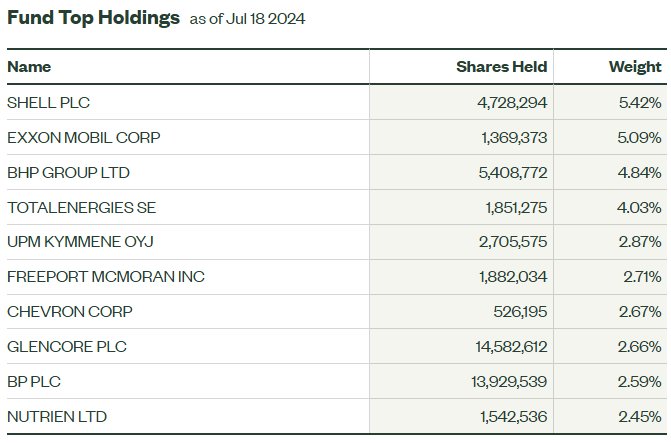
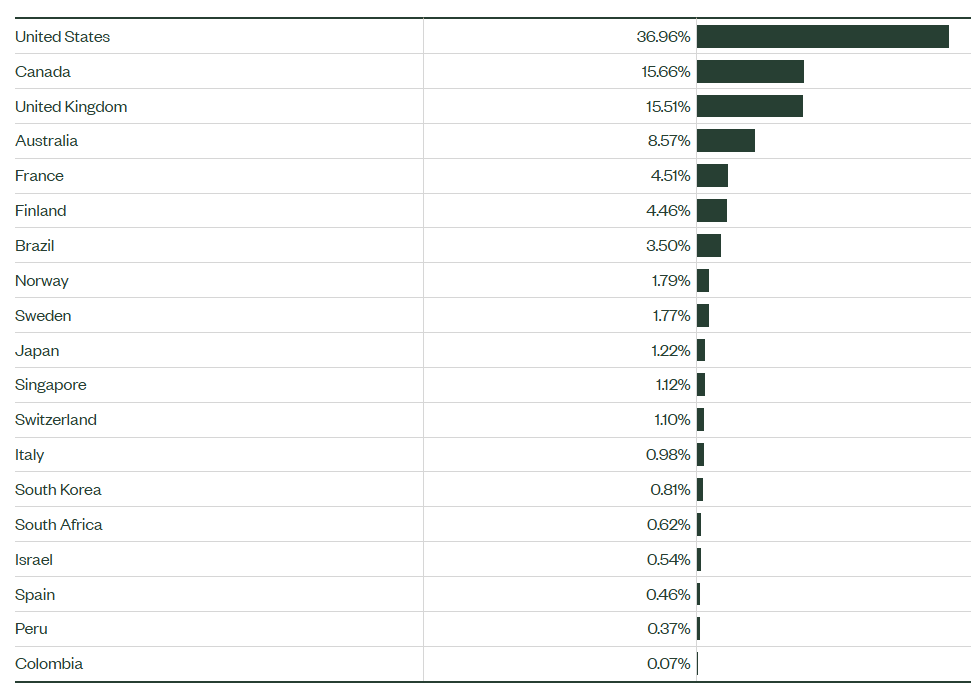
Sector Breakdown And Geography
The portfolio of the GNR ETF is well-balanced between three main sectors, which account for the most important domains of the global economy. The Materials sector makes up the largest allocation (no surprise) followed by Energy.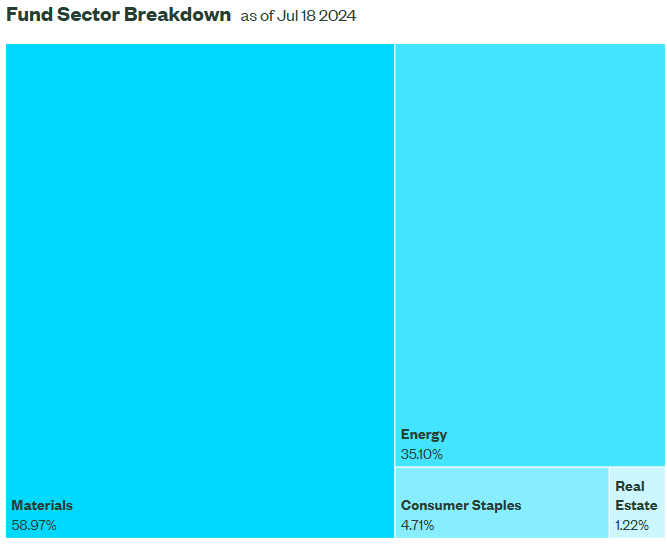
Peer Comparison
One fund worth comparing GNR to is the iShares North American Natural Resources ETF (IGE). This ETF also offers natural resources exposure. When we look at the price ratio of GNR to IGE, we find that GNR has underperformed in the last several years after leading into 2021. The reason? Much more energy exposure in IGE, and its North American focus, has helped from a momentum and outperformance perspective. I would still choose GNR over IGE though as I suspect Materials outperform, alongside international.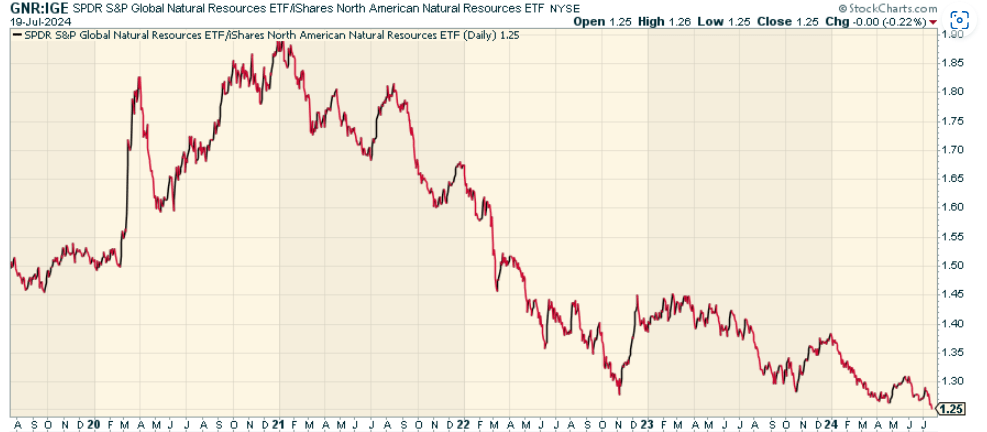
Pros And Cons
On the positive side is the space the fund is playing in. Global natural resources include gold, silver, copper, coal, oil, timber, and water. These are critical components of the world economy and unloved from an investment perspective. As global growth potentially re-asserts with China being a driver of that economically, all these areas should perform quite well. On the other hand, the disadvantage of this investment vehicle is that it is highly sensitive to cyclical activity. If we enter a broad-based recession, international diversification and valuations should help, but this fund could get disproportionately hit as demand is pulled back. That isn’t my base case, but is something to consider from a risk perspective overall. Keep in mind also that the international exposure, while a positive in my view, does introduce with it currency risk as these stocks are unhedged to forex movements.Conclusion
I like the SPDR® S&P Global Natural Resources ETF. It allows for access to a dynamic and vitally important part of the global economy: the natural resources sector, through a diversified portfolio of companies spanning agriculture, energy, and metals and mining from across the world. I think it’s worth considering and would much favor this than anything Tech-focused now.Enjoyed this article? Sign up for our newsletter to receive regular insights and stay connected.