
Pimple popper
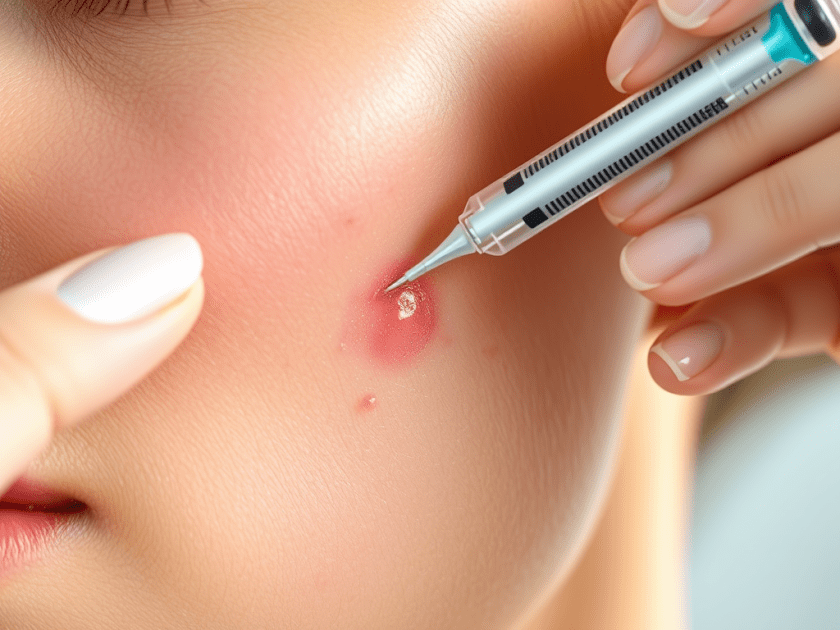
Cortisone injections are one of the best-kept secrets for stubborn, hard-to-treat acne. Using a tiny needle, dermatologists inject a small amount of a low-concentration steroid into the center of your zit and it works like magic, alleviating redness and swelling faster than the best creams and pimple patches on the market.
And the best part? The shots can be covered by insurance.
There are some minor risks, of course. The injections can cause bruising and even small indentations in the skin, which resolve naturally on their own. For most people, however, the biggest downside is that cortisone shots are only available at the dermatologist’s office.
Rick Bente is hoping to change that.
For the past three years, Bente, a former Medtronic executive, has been building a new company, Indomo, that aims to make prescription-strength treatments available at home. Its inaugural product, ClearPen, is an easy-to-use, at-home cortisone shot that includes a prefilled cartridge and reusable injector device. Patients will simply place the device over a zit, push the button and voilà.
“With things like GLP-1s and insulin, it’s given consumers a much higher degree of confidence today more so than ever to be able to do these types of treatments,” Bente said in an interview.
But ClearPen is still years away from reaching consumers. To help finance mid-stage studies next year, the company has secured $25 million from investors including Atomic Labs, the startup incubator that helped launch Hims & Hers Health. Atomic Lab’s cofounder, Jack Abraham, helped created Indomo alongside Bente and Starface alumn Cara Davis. While the startup has just five full-time staff, its can count some skincare superstars as advisors. That includes Botox-maker Allergan’s former Chief Executive Officer Brent Saunders and Chief Science Officer Patricia Walker.
Just a few short years ago, investors (and consumers) may have cringed at the idea of at-home acne shots, but injectables have entered the mainstream thanks to the popularity of weight-loss drugs like Zepbound and Wegovy.
“The ability to shift the point of care out of a physician’s office and into the home is something that really empowers those patients,” Bente said in an interview. “It also empowers physicians, it gives them a much better toolbox to help people.”
Yet some doctors aren’t convinced that easy access to steroid injections are the answer.
Nicholas Brownstone, an assistant professor of dermatology at the Icahn School of Medicine at Mount Sinai, administers steroid injections sparingly, like in the case of a special event, and mostly just to patients already on acne treatment such as the oral drug Accutane. That’s because steroid injections can have side effects like skin atrophy.
“They work pretty quickly, but it’s not a long-term solution,” he said.
Indomo is planning to study ClearPen’s safety and effectiveness in upcoming studies. The product is also designed to go just about a millimeter under the skin’s surface, controlling the amount of drug that’s distributed to avoid potential administration issues.
For patients like Marissa Stahl, who’s detailed her skincare journey to more than 11,000 followers on TikTok, cortisone injections have been effective, though she doesn’t get them regularly.
“Every once in a while, there’s just a huge, underground cystic pimple that, knowing me and my body, will not go away for a very long time unless I take drastic measures,” she said.
The shots can cost as much as $400 at some med spas and dermatologists’ offices, Stahl said.
While ClearPen’s price won’t be known until it’s approved for use, Bente sees a big potential market. About one million patients in the US get cortisone shots for acne on a somewhat regular basis, Bente said, yet there are millions more who’d be good candidates for treatment, but can’t get an appointment at a dermatologist. — Madison Muller and Uma Bhat
| |
|
Enjoyed this article? Sign up for our newsletter to receive regular insights and stay connected.