
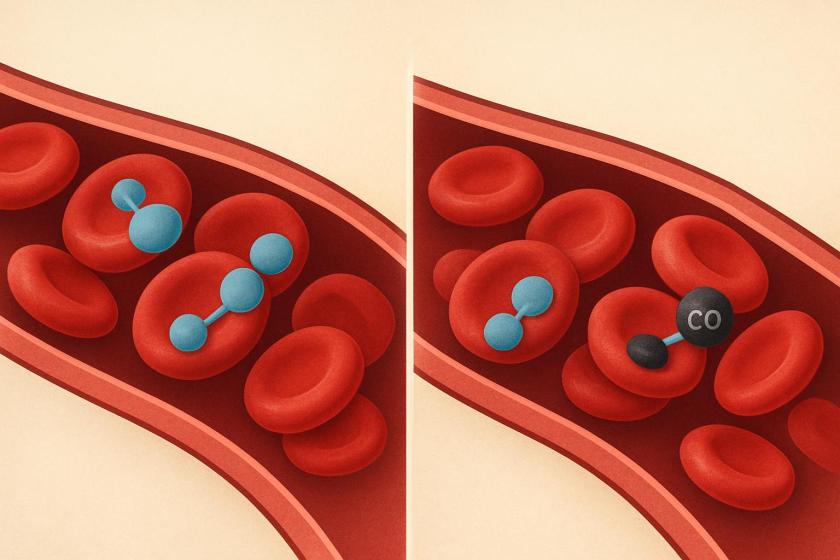
Carbon monoxide sits in an awkward place between physiology and risk. At very low, controlled exposures it can be used to estimate changes in hemoglobin, which is why some endurance programs are interested in it. But that does not mean the gas is a harmless training aid. The central question is whether the observed oxygen-transport changes translate into meaningful performance gains, or whether the apparent benefit is mostly an effect of mimicking altitude stress in a way that is difficult to separate from other training factors.
That distinction matters because association is not the same as causation. Athletes who use carbon-monoxide testing are often already engaged in carefully planned altitude or performance programs, so any improvement could reflect the training environment, coaching, recovery, or selection of highly optimized athletes rather than the gas itself. When a method is tied to elite sport, it can look impressive long before the evidence is strong enough to show a clear, repeatable, and safe advantage.
The practical issue is safety, not just fairness. Carbon monoxide binds to hemoglobin, so even brief overexposure can reduce oxygen delivery instead of improving it. That makes repeated use a poor fit for routine self-experimentation, especially outside a medical or laboratory setting. For readers, the useful takeaway is broader than this single gas: interventions that alter oxygen handling can sound like smart biohacks, but their real-world value depends on dose, monitoring, and whether benefits outweigh physiological cost.
In short, the most defensible role here is diagnostic, not performance-enhancing. If a tool helps measure adaptation, it may inform training decisions; if it becomes a way to chase marginal gains without clear safety data, the line between monitoring and doping quickly blurs.
Secret Stuff
In the world of endurance sports, a well-known compound is causing a stir over its potentially performance-enhancing properties: carbon monoxide.
That’s right — the odorless gas that most people associate with freak poisoning events. The compound is often emitted when things burn, from car engines to gas stoves to cigarettes. It’s dangerous because it latches onto hemoglobin, the protein in red blood cells that ordinarily transports oxygen throughout our body. If we inhale too much carbon monoxide, our body can no longer supply our organs with sufficient oxygen, leading to problems ranging from dizziness to brain damage to death.
It’s obvious why this gas gets a bad rap. But our bodies actually need low levels of carbon monoxide to properly carry out certain metabolic functions. Plus, carbon monoxide is emerging as a potential diagnostic tool that can be used for everything from chronic liver disease to sleep apnea to, yes, endurance sports.
Top runners and cyclists often choose to train in high-altitude settings. The idea is that the lower oxygen levels in the air prompt their bodies to ratchet up the production of red blood cells. That means more hemoglobin flowing through their veins on race day, delivering more oxygen to muscles just when they need a boost.
The ability to transport oxygen through the body is a “key determinant for endurance exercise performance,” says Wolfgang Schobersberger, director of the Institute for Sports Medicine, Alpine Medicine & Health Tourism in Hall in Tirol, Austria.
To optimize their training, some athletes are turning to carbon monoxide tests that can calculate their levels of hemoglobin. If an athlete uses such a test (which involves a certain amount of gas inhalation) before and after a stint of high-altitude training, they can better understand how their body has adapted to the unusual conditions and tailor their future training efforts.
However, some research suggests that inhaling carbon monoxide can by itself boost performance. That’s because the gas — like altitude — deprives the body of crucial oxygen, inciting it to produce more hemoglobin as compensation. If you think this sounds suspiciously close to blood doping, you’re not alone.
The ethics of carbon-monoxide use turned into a flash point during last year’s Tour de France, when top cyclists including Tadej Pogačar acknowledged having taken such a test. In February, cycling’s governing body restricted the use of carbon monoxide to diagnostic purposes — and only every two weeks at most. Late last month, the World Anti-Doping Agency enacted a similar policy.
While there’s no evidence that athletes are abusing carbon monoxide, restrictions are important to protect athletes’ health and promote fair competition in the future, according to Schobersberger, who is also a WADA advisor.
Limiting the tests to every two weeks or so makes sense, he says. More frequent use, he says, is about as clinically useful as subjecting yourself to a dozen X-rays to understand an ordinary headache. In other words, it looks a lot like doping.– Tim Loh
| |
|
Enjoyed this article? Sign up for our newsletter to receive regular insights and stay connected.