
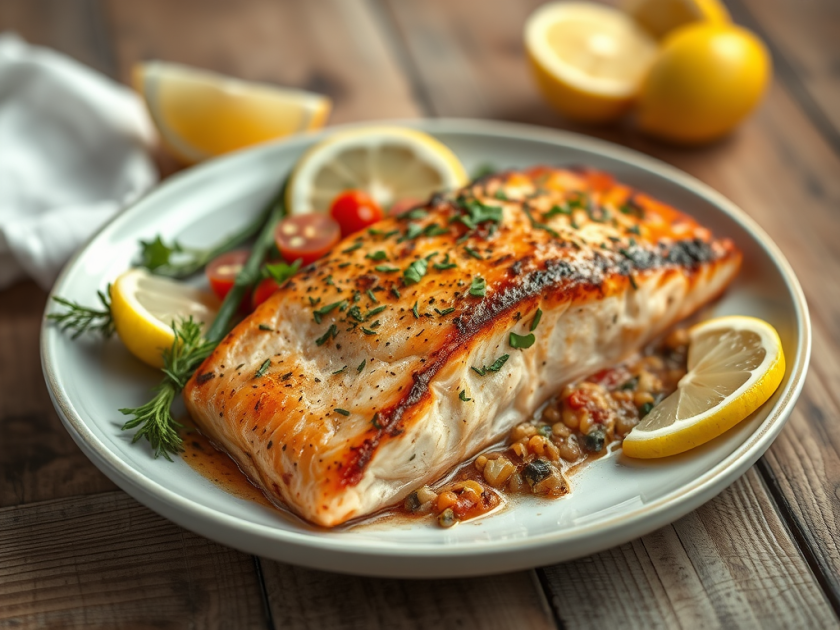
Baked salmon, anyone?
For years, the US government has offered pregnant women complicated advice when it comes to consuming fish: Eat some, but not too much, and avoid high-mercury choices like shark or swordfish.
But a growing number of scientists and public health officials now say that advice is botching the main point. Pregnant women should really be eating more fish, not less.
“It’s confusing and misleading and not helpful,” said Mike Bolger, a retired Food and Drug Administration official involved in shaping the original government advice for pregnant women. “They’re not eating enough fish — that’s the bottom line here.”
The federal guidelines were created based only on mercury levels in seafood, without considering “the harm created by depriving babies of brain-critical nutrients,” said Joe Hibbeln, a retired National Institutes of Health neuroscientist.
Fish contains omega-3 fatty acids that prevent preterm birth and boost brain development, which outweigh any risks from mercury, according to an increasingly vocal group of scientists. Taken together, babies could gain, on average, up to six IQ points if their mothers ate an optimal amount of fish during pregnancy, compared with those whose mothers consumed no fish, according to a 2023 analysis published in Neurotoxicology.
The current federal guidelines recommend pregnant women eat between two and three 4-ounce servings a week of cooked fish with the least mercury, such as salmon, anchovies and cod, or one serving a week of fish higher in mercury, like bluefish and Chilean sea bass. They should avoid raw fish, like sushi, since it can contain bacteria and parasites.
The original federal advisory, issued in 2001, was more ominous, if not more restrictive: Pregnant women should limit fish to no more than 12 ounces per week, on average, to “prevent any harm to your unborn child.”
Back then, the FDA was under pressure after a National Academy of Sciences report noted that “over 60,000 newborns annually might be at risk for adverse neurodevelopmental effects” from in utero exposure to mercury. But that was based on exposure to mercury using the Environmental Protection Agency’s conservative estimate of daily levels that are not expected to cause harm over a lifetime. It didn’t reflect an annual number of children who had actually been harmed, the group’s chair said in a letter to the FDA.
The agency was essentially saying they didn’t know if anyone was getting hurt, said Phil Spiller, director of the FDA’s office of seafood at the time.
Beliefs about mercury’s dangers for developing babies stem from a study of pilot whale consumption in the Faroe Islands and industrial poisoning from a chemical plant in Minamata, Japan, discovered during the 1950s. Very high levels of methylmercury contamination caused a host of neurological symptoms in thousands of people. Babies exposed in the womb displayed symptoms similar to cerebral infantile paralysis.
But other studies, including in the Seychelles Islands where people ate copious amounts of fish, did not find any consistent adverse effects.
In 2014, the FDA analyzed the overall effects and found eating commercial fish during pregnancy is “net beneficial” for most children in the United States.
“The narrative has been changing,” said Gary Myers, a professor emeritus of neurology at the University of Rochester Medical Center, who coauthored the Seychelles studies. “It’s pretty clear now that almost all of these studies are finding positive benefits of fish as a whole nutrient package.”
The US Dietary Guidelines are slated to be updated before year’s end, but the seafood recommendations have been slow to change. The government and panels it has tasked with investigating the issue have been reluctant to roll back the crux of its guidance. A 2024 report from the National Academy of Sciences noted both that most pregnant women don’t eat enough fish, and said there was insufficient evidence to change the current guidelines.
Shifting the cultural fish stigma is proving difficult: An FDA analysis found half of pregnant women ate fewer than two ounces of fish per week.
“It’s like turning a battleship,” Myers said. — Kristina Peterson
Enjoyed this article? Sign up for our newsletter to receive regular insights and stay connected.