
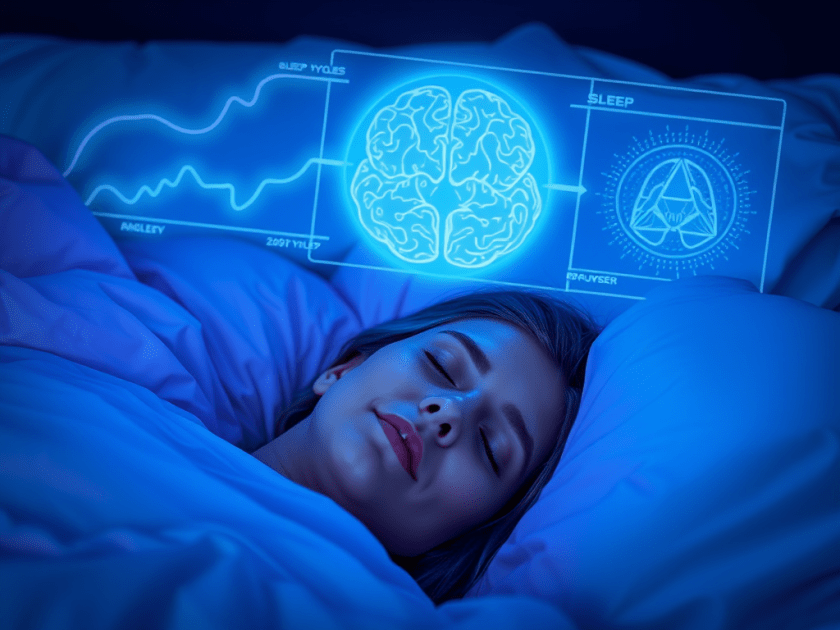
Deep-cleaning your sleep
It’s no secret that sleep is important to our health. What’s becoming increasingly clear is that what matters isn’t just quantity, but quality.
That’s one piece of information that gadgets like the Oura ring bank on, delivering a daily tally of exactly how much deep, light and REM sleep its user got in colorful charts, along with praise for getting enough restorative hours. Now biotechs are going beyond the gathering and mining of the information in the hope of supporting and even restoring those natural sleep functions to treat diseases.
Deep sleep may be the most important. The short slumber stage can be populated by some dreams, but it’s mostly about restoration.
Deep sleep is critical for two things, says Jane Rhodes, the CEO of AstronauTx, a biotech working on treatments for neurodegenerative diseases. First, it helps with memory consolidation, moving memories from the brain’s “short-stay parking lot,” as Rhodes describes it, to the “long-stay parking lot.”
The other key feature of deep sleep is something called glymphatic flow. That’s the flushing out of metabolic waste from the brain — a process that also removes proteins that can clump into so-called amyloid plaques or tau tangles, both of which are associated with Alzheimer’s disease.
Glymphatic flow is a relatively recent finding. Maiken Nedergaard, professor of neuroscience and neurology at the University of Rochester Medical Center, is credited with discovering the system in mice in 2012.
“Restorative sleep is actually a function of glymphatic flow,” she says. “You actually remember better because your brain has been cleaned.” She compares the effect of glymphatic flow to oiling a bicycle chain during an annual tune-up. “With all of the dirt — in this case the protein waste of the brain — cleaned out it’s so much easier to bike.”
Doctors are now finding significant reductions in glymphatic flow in all kinds of neurological diseases, fueling efforts to figure out how to measure the flow — how to give patients a non-invasive “glymphogram,” so to speak.
A range of companies are also working on figuring out how to stimulate this crucial flow. Some try to use electrical stimulation on the vagal nerve, or rely on ultrasound. A pill would be more convenient for patients, Nedergaard says. She’s started her own company, CNS2 Bio, and based on her lab’s work in recent years, she expects to have a drug candidate in early trials by within the next year.
Rhodes from AstronauTx is also working in this area. The UK biotech aims to develop a drug that drops patients into the deep sleep state and prolongs the time they stay there. When AstronauTx gave mice with plaque build up in their brains (the kind associated with advanced Alzheimer’s) their experimental drug, the rodents showed a significant reduction in plaque levels — the same magnitude of effect that you would see in experiments of drugs approved to treat Alzheimer’s, says Rhodes.
Focusing on sleep “could be a way to prevent the onset and progression of the biggest disease of our time,” she says.
These experimental products are years away from reaching consumers. In the meantime, there are some simple strategies people can also use to support the brain in cleaning itself. The Cleveland Clinic advises going to bed at the same time each night, turning off screens before bed and not eating a heavy meal right before sleep.
Nedergaard says the key to sleep that supports that glymphatic system starts long before bedtime. “My advice is to try to have a really good, fulfilling day,” she says. “Sleep is regulated by that. If you had a great day, you sleep well.” — Ashleigh Furlong and Naomi Kresge
Enjoyed this article? Sign up for our newsletter to receive regular insights and stay connected.