
Here’s where billionaires are seeing the best investment opportunities in 2026

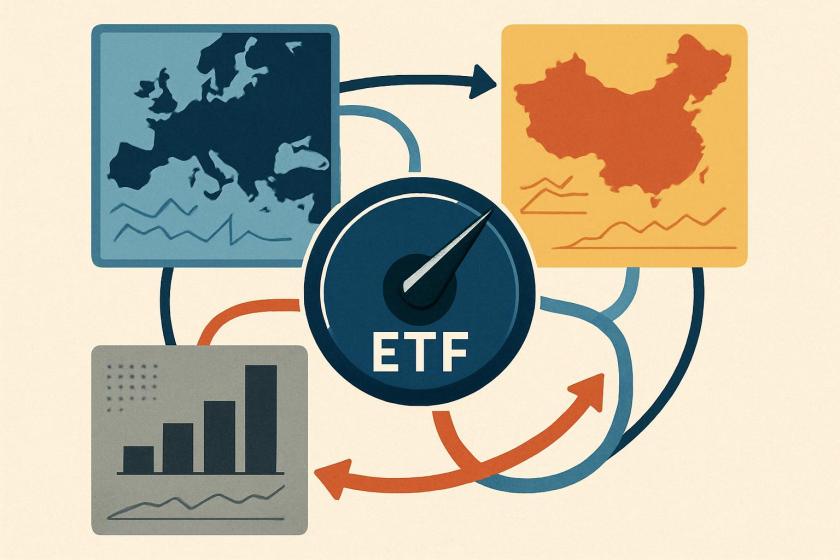
For ETF investors, the interesting takeaway is not that wealthy allocators are rotating regions, but why they do it: concentration risk, policy uncertainty and inflation sensitivity. That is the same framework most long-term portfolios should use when comparing broad regional funds. A regional ETF is not a prediction engine; it is a way to express a deliberate weight to a market factor, then keep that weight disciplined through rebalancing.

The second issue is structure. The surveyโ€™s tilt toward private equity highlights a reminder that not all โ€œopportunityโ€ is equally accessible or liquid. Public ETFs can offer daily pricing, transparency and easier portfolio integration, while private assets may lock up capital and make diversification harder to manage. For many investors, that liquidity difference is itself part of the risk budget.

Finally, regional ETF exposure should be viewed in context, not isolation. A fund focused on Europe, China or developed markets can reduce home-country concentration, but it also introduces currency exposure, sector mix differences and policy sensitivity that may not line up with an investorโ€™s existing holdings. The practical question is less โ€œwhich market is best?โ€ and more โ€œhow much of the portfolio should be tied to any one region, and how will that weight be maintained over time?โ€


  • Want to invest like a billionaire? UBS has you covered.
  • The bank surveyed its billionaire clients, who said they’re starting to lean away from US assets.
  • They’re turning to markets in Western Europe and China.
Over the last few months, we’ve written about where billionaires live and how the uber-rich spend their money. What about how they invest? A new report from UBS has the answers. This year, the bank conducted its annual survey of billionaire clients on several topics, including where they plan to invest their money for 12-month and five-year periods. Optimism in the near term seems to be highest around two areas in particular compared to 2024: Western Europe and China. Forty percent of respondents said they see opportunity in Western Europe over the next 12 months, up from 18% in 2024. For China, 34% of respondents see opportunity versus 11% last year. The Asia Pacific region, excluding China, also saw an eight percentage point jump in interest, with 33% of respondents bullish. On the flip side, North America has dipped the most in popularity. While 80% of respondents liked the region in the 2024 survey, just 63% said they did in 2025 The shifts in sentiment are due to a number of risks that worry billionaires, the primary among them being tariffs. Sixty-six percent of respondents cited tariffs as one of the factors “most likely to negatively impact the market environment over 12 months.” That was followed by a potential major geopolitical conflict at 63%, policy uncertainty at 59%, and higher inflation at 44%. “I do not see North America as the top investment destination, even though its markets remain deep and innovative,” one of UBS’s European clients said. “For us, geographic concentration creates risk, and the better opportunity lies in diversification. We prefer to shift focus toward real assets, which offer more tangible value and protection in volatile or inflationary environments. Equities over bonds can make sense in the current cycle, but our approach emphasizes stability and resilience rather than short-term market moves.” Still, while shorter-term outlooks have changed since last year, views for the next five years have generally stayed the same for most regions compared to 2024.billionaire investors UBS The report also shared which assets exactly billionaire investors plan to put their money into. Private, not public, equity was the most common asset where respondents said they intend to put their money over the next 12 months. Forty-nine percent said they plan to have their money in direct private equity investments. The next most common places to invest were in hedge funds and public developed market equities, both at 43%. Emerging market public equities (37%) and private equity funds (35%) were the next most popular answers. At the same time, respondents also showed higher intentions of pulling their money out of private equity than publicly traded stocks.
  • Want to invest like a billionaire? UBS has you covered.
  • The bank surveyed its billionaire clients, who said they’re starting to lean away from US assets.
  • They’re turning to markets in Western Europe and China.
Over the last few months, we’ve written about where billionaires live and how the uber-rich spend their money. What about how they invest? A new report from UBS has the answers. This year, the bank conducted its annual survey of billionaire clients on several topics, including where they plan to invest their money for 12-month and five-year periods. Optimism in the near term seems to be highest around two areas in particular compared to 2024: Western Europe and China. Forty percent of respondents said they see opportunity in Western Europe over the next 12 months, up from 18% in 2024. For China, 34% of respondents see opportunity versus 11% last year. The Asia Pacific region, excluding China, also saw an eight percentage point jump in interest, with 33% of respondents bullish. On the flip side, North America has dipped the most in popularity. While 80% of respondents liked the region in the 2024 survey, just 63% said they did in 2025 The shifts in sentiment are due to a number of risks that worry billionaires, the primary among them being tariffs. Sixty-six percent of respondents cited tariffs as one of the factors “most likely to negatively impact the market environment over 12 months.” That was followed by a potential major geopolitical conflict at 63%, policy uncertainty at 59%, and higher inflation at 44%. “I do not see North America as the top investment destination, even though its markets remain deep and innovative,” one of UBS’s European clients said. “For us, geographic concentration creates risk, and the better opportunity lies in diversification. We prefer to shift focus toward real assets, which offer more tangible value and protection in volatile or inflationary environments. Equities over bonds can make sense in the current cycle, but our approach emphasizes stability and resilience rather than short-term market moves.” Still, while shorter-term outlooks have changed since last year, views for the next five years have generally stayed the same for most regions compared to 2024.billionaire investors UBS The report also shared which assets exactly billionaire investors plan to put their money into. Private, not public, equity was the most common asset where respondents said they intend to put their money over the next 12 months. Forty-nine percent said they plan to have their money in direct private equity investments. The next most common places to invest were in hedge funds and public developed market equities, both at 43%. Emerging market public equities (37%) and private equity funds (35%) were the next most popular answers. At the same time, respondents also showed higher intentions of pulling their money out of private equity than publicly traded stocks. billionaire investors UBS Examples of funds that offer exposure to the public assets billionaire investors are most bullish on for the year ahead include the iShares MSCI Eurozone ETF (EZU), iShares MSCI China ETF (MCHI), the Global X Emerging Markets ex-China ETF (EMM), and the Vanguard Tax Managed Fund FTSE Developed Markets ETF (VEA).
https://www.businessinsider.com/where-do-billionaires-invest-best-opportunities-europe-china-private-markets-2025-12

Enjoyed this article? Sign up for our newsletter to receive regular insights and stay connected.